IPPF urges governments, United Nations agencies, multi-lateral institutions and civil society to:
1. Support an enabling environment so that sexual and reproductive health and rights and gender equality become a reality.
- Governments must prioritize the inclusion of sexual and reproductive health and rights within global agendas such as the post-2015 sustainable development framework. Governments should include sexual and reproductive health and rights in national plans to ensure political prioritization and continued investment in sexual and reproductive health and rights.
- Governments must prioritize sexual and reproductive health and rights within the context of both health and gender equality. At the national level, this requires commitment and investment from the ministry of health and the ministry of gender/women, as sexual and reproductive health and rights span the range of women’s human rights.
- Governments, UN agencies, multi-lateral institutions and civil society mustprioritize sexual and reproductive health and rights in order to tackle harmful gender norms. They should establish policies and deliver programmes which support not only the health of women and girls, but also their socio-economic development more broadly. There must be a strong focus on girls and the prevention of sexual and gender-based violence, including harmful traditional practices that compromise their health and limit development in other areas of their lives.
- Governments must include sexual and reproductive health and rights in regulatory frameworks that support women’s access to decent work. Such frameworks should be expanded across the formal and informal economy.
- e. Donors and civil society must include sexual and reproductive health and rights in programming on women’s economic empowerment in order to support women’s access to decent work.
Access to safe and legal abortion in France
We need laws that defend our sexual and reproductive health and rights and that protect us from harm.
This is the story of Juliette in France. Although French law permits abortion on wide grounds, she found it extremely difficult to find the correct legal and medical information when faced with an unplanned pregnancy.
2. Continue and increase financial and political commitment to sexual and reproductive health and rights in order to sustain the success of health interventions and to expand and increase possibilities for gender equality and the empowerment of girls and women.
- Donors, multi-lateral institutions and national governments should continue and increase investment in the full range of sexual and reproductive health and rights services, including rights-based family planning. Particular attention should be paid to investing in maternal health and HIV prevention, both of which are leading causes of death among women of reproductive age in low and middle-income countries.
- Governments and civil society must ensure that the post-2015 sustainable development financing mechanisms and strategies that detail what financing will cover – such as the Global Financing Facility and the updated strategy on women’s and children’s health – prioritize the sexual and reproductive health of women and girls. Donors and multi-lateral institutions must engage civil society meaningfully in the creation of these financing structures as well as national financing plans.
Delivering family planning in Kenya
This is the story of Beatrice Akoth in Kenya who has had no access to family planning and has struggled to cope with 9 children. Her daughter is determined to have a different life and has been happy with the family planning services she received from IPPF's member, Family Health Options Kenya.
Kenya's government made a commitment in 2012 to make sure everyone had access to affordable reproductive health services. Their investment in family planning increased to US $8 million.
3. Measure the things that matter.
- Governments must prioritize greater investment and effort to fill knowledge gaps and collect robust data. UN agencies and multi-lateral institutions should work with governments to increase data collection, disaggregated by sex and age, on sexual and reproductive health and rights and other core areas relating to gender equality.
- Donors and multi-lateral institutions should increase investment to support civil society and academic networks to examine the links between sexual and reproductive health and the empowerment of girls and women. More rigorous research is needed on the impact of sexual and reproductive health and rights interventions in education, and the links with women’s economic participation (particularly in agriculture) and representation in political and public life. Establishing these links could have a significant impact on policy and programme interventions related to sexual and reproductive health and rights, gender equality, and the empowerment of women and girls.
Measuring gender equality and empowerment
We now have a unique opportunity to end gender inequality. But to achieve this we must have accurate data which reflects the true status of women's sexual and reproductive health and rights. Collecting the missing information on the the issues which really matter will make a difference on what programmes are funded and how can achieve proper empowerment of women
4. Engage men and boys as partners in gender transformative change by ensuring that sexual and reproductive health and rights are a reality for all.
Civil society organizations, donors and multi-lateral institutions must involve men and boys as partners in programmes on sexual and reproductive health and rights, gender equality, and the empowerment of women and girls.
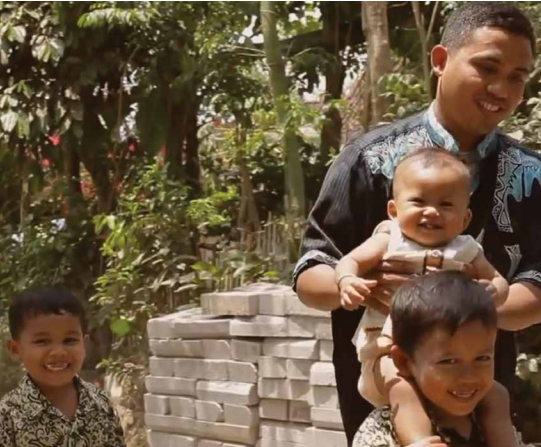
Men as champions for gender justice
Evidence shows that where men and boys are engaged in tackling gender inequality and promoting women’s choices, the resulting outcomes are positive and men and women are able to enjoy equitable, healthy and happy relationships.
This is Ustaz Muhammad Nursalim's story. He is an imam born and raised in Madura, an island in East Java:
"My wife is busy as head teacher of the village kindergarten, so I handle all the domestic duties. We hear of cases of husbands abusing their wives. They don’t know how to manage their anger. So our home has become the emergency consultation room for couples. I give advice based on what I apply daily in my own marriage. Besides teaching, I often give talks at boys’ circumcision or coming of age celebrations. I tailor my words to the people I meet. Yesterday, for instance, I talked about how to respect our daughters and girls in general.”
5. Take steps to eliminate sexual and gender-based violence against women and girls by ensuring implementation of legislation that protects women from violence, and ensuring access to sexual and reproductive health services that meet the needs of women and girls, particularly in fragile and conflict affected contexts.
- Governments must ensure that domestic laws protect women from sexual and gender- based violence in line with international obligations and commitments under human rights treaties and that these laws are enforced at all times.
- Governments, donors and civil society should support the integration of sexual and reproductive health, HIV, and sexual and gender-based violence services in order to promote women’s health and empowerment.
- Governments, donors and civil society must ensure that sexual violence is addressed as part of promoting women’s political participation and engagement in peace building and post-conflict reconstruction.
Escaping sexual and gender based violence in Syria
This is the story of Layla. At 15, she was forced into marriage then was beaten and raped by her husband’s brother. She fled from her home and was forced into sex work. Luckily, Layla received counselling and sexual health services from IPPF's Member Association, the Syrian Family Planning Association. She regained her health and confidence and now helps other young women who are survivors of sexual and gender based violence.
6. Continue and increase investment at the grassroots level, to build women’s individual and collective capacity to participate in political and public life.
Donors, multi-lateral institutions and civil society should continue and increase funding to grassroots organizations that build the capacity of women to participate individually and collectively across social, economic, political and public life.
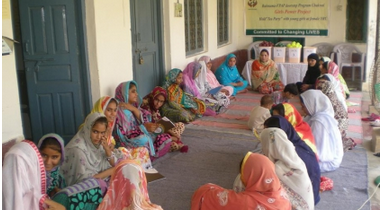
Tea parties breaking down taboos in Pakistan
Umm e Kalsoom is a 23-year-old woman in the Muzaffarabad region of Pakistan. She started to run tea parties for girls in her local area so that young women could share their sexual and reproductive health concerns in a safe environment without discrimination. Talking about these issues is a cultural taboo for these girls. She also wanted to inspire young girls within the communities to mobilize other girls and women. She says: "If I ever have my own daughter I would like her to be a confident and empowered girl, who knows and exercises her rights to make informed decision in her life." At first the community was very reluctant to participate. But now they discuss issues such as HIV, early marriage and sexual abuse, as well as abortion and contraceptives. For most women the tea parties taught them that these are their human rights.