


Spotlight
A selection of news from across the Federation

Thailand
News item
Statement of the Sex Work Consortium on the Death of Tunchanok Donhomla
The murder of 17-year-old Tunchanok Donhomla in Pattaya, Thailand is a tragedy that demands justice. Every young person deserves to live free from violence, discrimination, and fear.
Most Popular This Week
Thailand

News item
|
Statement of the Sex Work Consortium on the Death of Tunchanok Donhomla
The murder of 17-year-old Tunchanok Donhomla in Pattaya, Thailand is a tragedy that demands justice.

News item
|
UN Human Rights Council adopts first negotiated resolution naming reproductive violence as a distinct form of gender-based violence
Geneva, 7 July 2026: The Human Rights Council today

News item
|
Feminist Joint Statement on the 2026 Political Declaration on HIV/AIDS
Statement on behalf of APHA, ATHENA Network, AWPCAB, DIVA for Equality, EWNA, FEIM, Frontline AIDS, Gestos, Harm Reduction International, International Community of Women Living w

News item
|
2026 High-Level Meeting on HIV and AIDS
The International Planned Parenthood Federation (IPPF) welcomes the opportunity of the 2026 High- Level Meeting (HLM) on HIV and AIDS to review progress and renew the engagement an

News item
|
IPPF’s response to the UNFPA-UN Women merger assessment
IPPF recognizes the need for the long-overdue need for UN reform and to transform the institution to more effectively respond to real-world challenges and to the needs of the people

News item
|
IPPF announces new Chair of the Board of Trustees
The IPPF Board of Trustees has appointed Jon Lomøy as its next Chair, effective 16 May 2026. He has served as a Trustee since June 2023.

News item
|
Statement from the International Sexual and Reproductive Rights Coalition (ISRRC).
The space is the UN and the moment is now.We are deeply frustrated and concerned that Member States were unable to reach a consensus on an outcome resolution for the fifty-ninth session of
Iran

News item
|
Toxic Air, Lasting Harm: The Hidden Reproductive Cost of Bombing Iran’s Oil Infrastructure
As Israeli and US strikes on oil infrastructure blanketed Tehran in toxic smoke, IPPF is warning of serious, lasting risks to maternal and reproductive health - risks that are now spr
Filter our news by:

news item
| 10 July 2026
Statement of the Sex Work Consortium on the Death of Tunchanok Donhomla
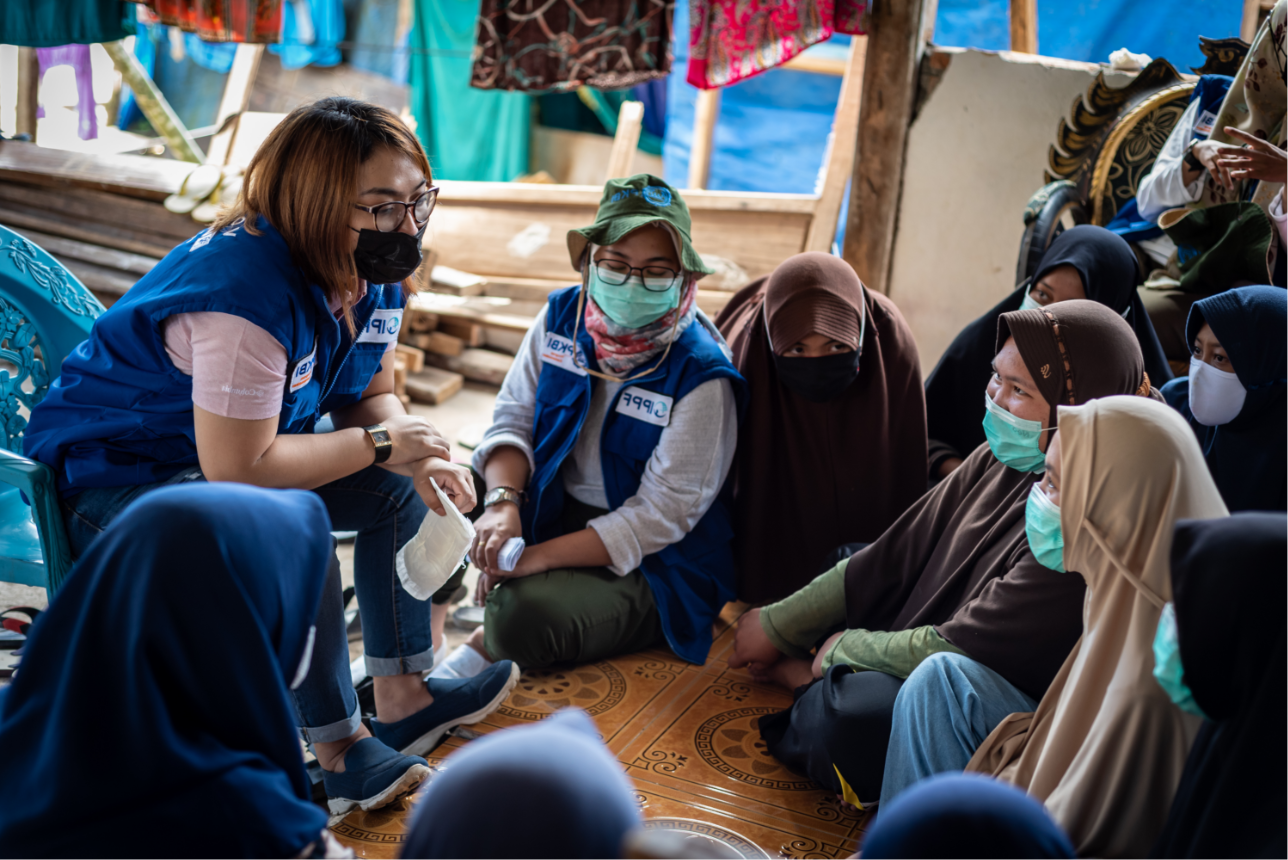
The murder of 17-year-old Tunchanok Donhomla in Pattaya, Thailand is a tragedy that demands justice. Every young person deserves to live free from violence, discrimination, and fear.Deeply embedded gender-based discrimination means that women - including young women like Tunchanok - often face unequal access to power, resources, justice, healthcare, and economic opportunity. These inequalities are reinforced by patriarchal norms that seek to control bodily autonomy and sexuality while devaluing the lives of those who do not conform to social expectations. This case is a moment to confront the structural conditions that expose marginalized communities to violence and perpetuate systems of oppression and injustice. When gender inequality intersects with other forms of development injustice like poverty, discrimination, criminalization, homophobia, transphobia, racism, migration status, disability, amongst others; marginalized communities are exposed to violence while simultaneously facing greater barriers to seek help, report abuse, or receive justice. This also disproportionately affects groups whose work is still criminalized in many contexts, such as sex workers. When consensual sex work is criminalized or heavily policed, workers are often pushed into unsafe conditions, isolated from support, and discouraged from reporting violence for fear of arrest, harassment, or discrimination. Stigma and criminalization do not prevent violence—they only make it easier for perpetrators to act with impunity.If we are serious about ending violence, we must be serious about protecting the people most at risk. That includes through listening to sex workers and supporting the decriminalization of consensual sex work alongside stronger labor protections, access to healthcare including sexual and reproductive heath and rights (SRHR), and freedom from abuse and exploitation.These principles are also increasingly reflected in international human rights standards[1]. The most recent report of the UN Independent Expert on protection against violence and discrimination based on SOGI recommends that States "decriminalize sex work and remove criminal and administrative sanctions"[2] recognizing that criminalization undermines the safety, health, dignity, and human rights of sex workers. The Sex Work Consortium is calling for:A full, transparent investigation into Tunchanok's death and accountability for those responsible. Ensuring access to comprehensive sexuality education (CSE) for children, adolescents and young people, with age-appropriate information about human development, anatomy, relationships, consent, and sexual health. CSE empowers youth to make informed decisions, prevents unintended pregnancies and sexually transmitted infections, and protects them against violence and abuse.The full decriminalization of consensual adult sex work in all jurisdictions where it remains criminalized, in line with international human rights recommendations from the IE SOGI, amongst others. Enactment of legal recognition of sex workers' bodily autonomy, labour rights, and human rights, including the right to organize, work safely, and access justice without fear of arrest or discrimination.Universal access to comprehensive SRHR, including gender-affirming healthcare, and mental health services. Addressing the widespread stigma and discrimination that prevents sex workers from accessing social protection services at all levels[3].Implementing effective measures to prevent and respond to gender-based violence against women, girls, transgender and gender-diverse people, and sex workers, including survivor-centred policing and access to legal remedies.Enabling meaningful participation of sex workers and sex worker-led organizations in the development, implementation, and evaluation of laws and policies that affect their lives.An end to stigma, discrimination, and violence against sex workers through public education, human rights fulfillment, and evidence-based policymaking.About the Sex Work ConsortiumThe Sex Work Consortium (SWC) is a global initiative led by the Planned Parenthood Association of Thailand under the International Planned Parenthood Federation. Grounded in feminist, rights-based, and community-led principles, the SWC promotes equity, transparency, and meaningful participation of sex workers in governance, service delivery, and advocacy; bringing together IPPF Member Associations, sex worker-led organizations, and regional and global networks. [1] For example: CEDAW Committee, General Recommendation No. 24: Article 12 of the Convention (Women and Health), para. 5, U.N. Doc. A/54/38/Rev.1 (Aug. 20, 1999). Special Rapporteur on the right of everyone to the enjoyment of the highest attainable standard of physical and mental health, Report on Right to health and criminalization of same-sex conduct and sexual orientation, sex work and HIV transmission, paras. 12–14, U.N. Doc. A/HRC/14/20 (Apr. 27, 2010).2 E/C.12/ZAF/CO/1, para. 83 (d).Report of the Working Group on the issue of discrimination against women in law and in practice, A/HRC/32/44, para 106 (e).Working Group on discrimination against women and girls, Eliminating discrimination against sex workers and securing their human rights, available at: https://www.ohchr.org/sites/default/files/documents/issues/women/wg/sex-work-pp-fin-proofread-24sept.pdf.[2] Independent Expert on protection against violence and discrimination based on sexual orientation and gender identity. Violence and discrimination experienced by lesbian, bisexual and queer women, para. 63 (c). U.N. Doc. A/HRC/62/46 (29 April 2026).[3] For more information, please see: NSWP, The Smart Sex Worker’s Guide, available at: https://www.nswp.org/sites/default/files/sg_to_social_protection_sw_prf02.pdf
news_item
| 10 July 2026
Statement of the Sex Work Consortium on the Death of Tunchanok Donhomla
The murder of 17-year-old Tunchanok Donhomla in Pattaya, Thailand is a tragedy that demands justice. Every young person deserves to live free from violence, discrimination, and fear.Deeply embedded gender-based discrimination means that women - including young women like Tunchanok - often face unequal access to power, resources, justice, healthcare, and economic opportunity. These inequalities are reinforced by patriarchal norms that seek to control bodily autonomy and sexuality while devaluing the lives of those who do not conform to social expectations. This case is a moment to confront the structural conditions that expose marginalized communities to violence and perpetuate systems of oppression and injustice. When gender inequality intersects with other forms of development injustice like poverty, discrimination, criminalization, homophobia, transphobia, racism, migration status, disability, amongst others; marginalized communities are exposed to violence while simultaneously facing greater barriers to seek help, report abuse, or receive justice. This also disproportionately affects groups whose work is still criminalized in many contexts, such as sex workers. When consensual sex work is criminalized or heavily policed, workers are often pushed into unsafe conditions, isolated from support, and discouraged from reporting violence for fear of arrest, harassment, or discrimination. Stigma and criminalization do not prevent violence—they only make it easier for perpetrators to act with impunity.If we are serious about ending violence, we must be serious about protecting the people most at risk. That includes through listening to sex workers and supporting the decriminalization of consensual sex work alongside stronger labor protections, access to healthcare including sexual and reproductive heath and rights (SRHR), and freedom from abuse and exploitation.These principles are also increasingly reflected in international human rights standards[1]. The most recent report of the UN Independent Expert on protection against violence and discrimination based on SOGI recommends that States "decriminalize sex work and remove criminal and administrative sanctions"[2] recognizing that criminalization undermines the safety, health, dignity, and human rights of sex workers. The Sex Work Consortium is calling for:A full, transparent investigation into Tunchanok's death and accountability for those responsible. Ensuring access to comprehensive sexuality education (CSE) for children, adolescents and young people, with age-appropriate information about human development, anatomy, relationships, consent, and sexual health. CSE empowers youth to make informed decisions, prevents unintended pregnancies and sexually transmitted infections, and protects them against violence and abuse.The full decriminalization of consensual adult sex work in all jurisdictions where it remains criminalized, in line with international human rights recommendations from the IE SOGI, amongst others. Enactment of legal recognition of sex workers' bodily autonomy, labour rights, and human rights, including the right to organize, work safely, and access justice without fear of arrest or discrimination.Universal access to comprehensive SRHR, including gender-affirming healthcare, and mental health services. Addressing the widespread stigma and discrimination that prevents sex workers from accessing social protection services at all levels[3].Implementing effective measures to prevent and respond to gender-based violence against women, girls, transgender and gender-diverse people, and sex workers, including survivor-centred policing and access to legal remedies.Enabling meaningful participation of sex workers and sex worker-led organizations in the development, implementation, and evaluation of laws and policies that affect their lives.An end to stigma, discrimination, and violence against sex workers through public education, human rights fulfillment, and evidence-based policymaking.About the Sex Work ConsortiumThe Sex Work Consortium (SWC) is a global initiative led by the Planned Parenthood Association of Thailand under the International Planned Parenthood Federation. Grounded in feminist, rights-based, and community-led principles, the SWC promotes equity, transparency, and meaningful participation of sex workers in governance, service delivery, and advocacy; bringing together IPPF Member Associations, sex worker-led organizations, and regional and global networks. [1] For example: CEDAW Committee, General Recommendation No. 24: Article 12 of the Convention (Women and Health), para. 5, U.N. Doc. A/54/38/Rev.1 (Aug. 20, 1999). Special Rapporteur on the right of everyone to the enjoyment of the highest attainable standard of physical and mental health, Report on Right to health and criminalization of same-sex conduct and sexual orientation, sex work and HIV transmission, paras. 12–14, U.N. Doc. A/HRC/14/20 (Apr. 27, 2010).2 E/C.12/ZAF/CO/1, para. 83 (d).Report of the Working Group on the issue of discrimination against women in law and in practice, A/HRC/32/44, para 106 (e).Working Group on discrimination against women and girls, Eliminating discrimination against sex workers and securing their human rights, available at: https://www.ohchr.org/sites/default/files/documents/issues/women/wg/sex-work-pp-fin-proofread-24sept.pdf.[2] Independent Expert on protection against violence and discrimination based on sexual orientation and gender identity. Violence and discrimination experienced by lesbian, bisexual and queer women, para. 63 (c). U.N. Doc. A/HRC/62/46 (29 April 2026).[3] For more information, please see: NSWP, The Smart Sex Worker’s Guide, available at: https://www.nswp.org/sites/default/files/sg_to_social_protection_sw_prf02.pdf
news item
| 02 June 2025
From St Nizier to Today: 50 Years of Sex Worker Resistance and Solidarity
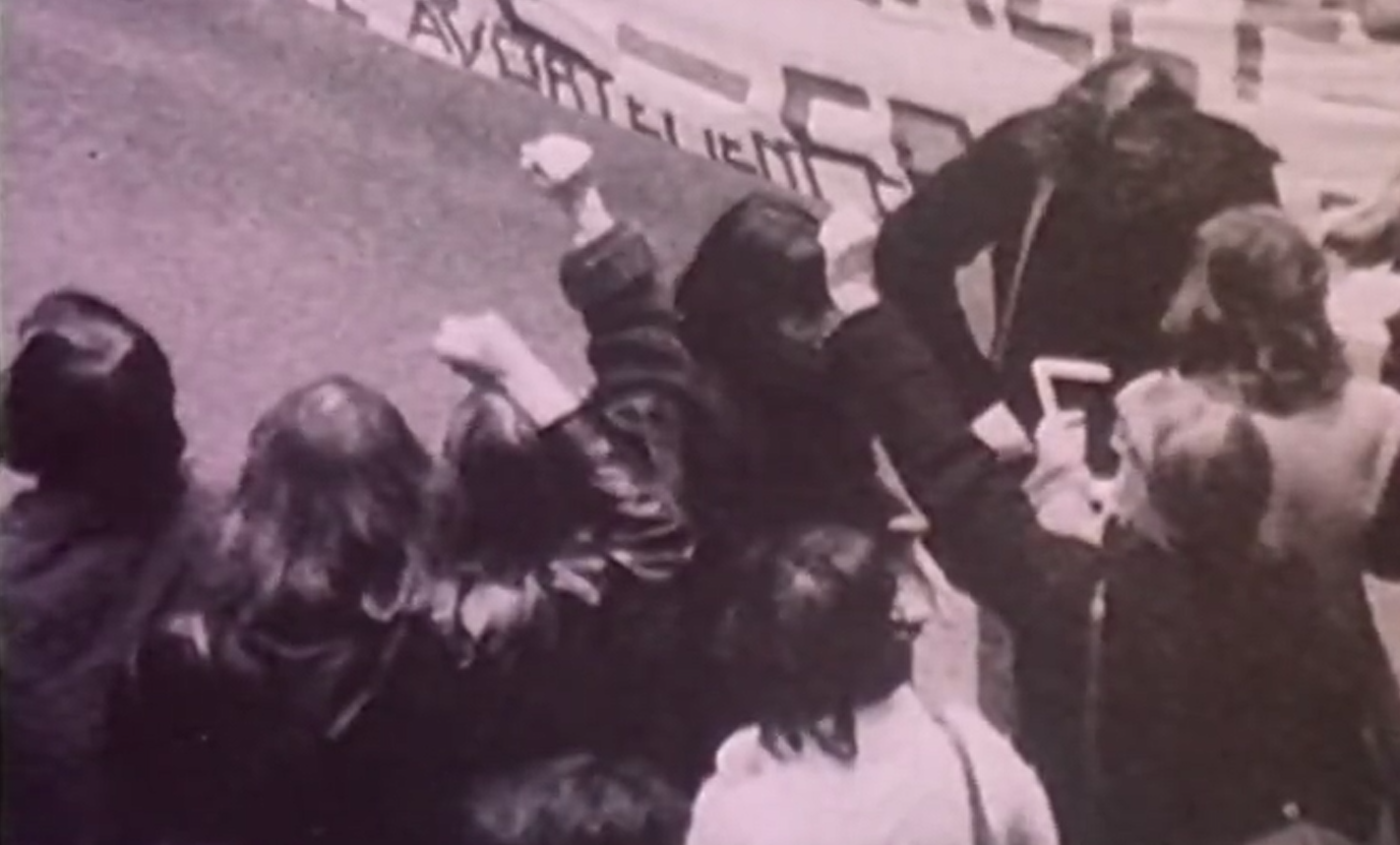
On the 2 June 1975, 100 women occupied the Church of St Nizier in the centre of Lyon, France’s second biggest city. Their reason: police brutality and corruption, violence and discrimination. Their work: sex work. For several days, these women protested, resisted and organised, demanding respect and rights. Their act of resistance sparked a movement. Their words: “Our children don’t want their mothers in prison” remain a call to this day for dignity, protection, decriminalisation and recognition. In the years since, IPPF’s French Member Association, Le Planning familial, has supported sex workers by hosting their meetings, assisting in the registration of the first sex workers’ association, and standing side by side when sex workers took their exploiters to court. Today, exactly 50 years since the St Nizier occupation, IPPF continues to stand in solidarity with sex workers of all genders who stand up and fight for their rights. We defend the rights of sex workers - whether they sell sex because of choice, circumstances and coercion. We believe sex workers when they tell us sex work is work. And we believe them when they speak of abuse. Sex workers know the difference. We ask feminist movements, organisations and activists to believe them too - in solidarity. Today, in France, Kenya, Colombia, India - and across the world, sex workers are organising - for the same goals that spurred the 1975 protest: to end criminalisation and police violence, to shift public attitudes, and to ensure that those who sell sex are respected. And to demand justice, resources, and choices — especially for women and marginalised communities.
news_item
| 02 June 2025
From St Nizier to Today: 50 Years of Sex Worker Resistance and Solidarity
On the 2 June 1975, 100 women occupied the Church of St Nizier in the centre of Lyon, France’s second biggest city. Their reason: police brutality and corruption, violence and discrimination. Their work: sex work. For several days, these women protested, resisted and organised, demanding respect and rights. Their act of resistance sparked a movement. Their words: “Our children don’t want their mothers in prison” remain a call to this day for dignity, protection, decriminalisation and recognition. In the years since, IPPF’s French Member Association, Le Planning familial, has supported sex workers by hosting their meetings, assisting in the registration of the first sex workers’ association, and standing side by side when sex workers took their exploiters to court. Today, exactly 50 years since the St Nizier occupation, IPPF continues to stand in solidarity with sex workers of all genders who stand up and fight for their rights. We defend the rights of sex workers - whether they sell sex because of choice, circumstances and coercion. We believe sex workers when they tell us sex work is work. And we believe them when they speak of abuse. Sex workers know the difference. We ask feminist movements, organisations and activists to believe them too - in solidarity. Today, in France, Kenya, Colombia, India - and across the world, sex workers are organising - for the same goals that spurred the 1975 protest: to end criminalisation and police violence, to shift public attitudes, and to ensure that those who sell sex are respected. And to demand justice, resources, and choices — especially for women and marginalised communities.

news item
| 26 June 2024
IPPF Statement Reacting to the SR VAWG's Report on Prostitution and Violence Against women and Girls
Stigmatising. Ideologically driven. Damaging. These are just a few words that can describe this report. The International Planned Parenthood Federation is a global feminist, sexual and reproductive health and rights organisation with decades of experience providing services to sex workers’ of all genders. We denounce in the strongest terms the content of this report and the ideologically driven process that led to it. The report ignores decades of international evidence and global recommendations by WHO, UNAIDS, Amnesty International - and more importantly sex workers themselves. Sex workers' voices have deliberately been ignored in the drafting of this report, reproducing the patriarchal silencing and exclusion that sex workers face in their daily lives. At times of increasing attacks on women’s and LGBTQI communities, this report is fuelling misconceptions and harmful stigmatisation. The report promotes policies consistently proven to violate sex workers’ human rights using human rights rhetoric and erase sex workers consent, agency and humanity At a time when racialised and migrant communities are increasingly calling to end police brutality and impunity, this report only offers more criminalisation and policing - putting the lives of most marginalised sex workers at risk. The International Planned Parenthood Federation support the full decriminalisation of sex work. and stands in full solidarity with sex workers, their organisations and their struggles for human rights. There is no feminism without sex workers. Sex work is work.
news_item
| 26 June 2024
IPPF Statement Reacting to the SR VAWG's Report on Prostitution and Violence Against women and Girls
Stigmatising. Ideologically driven. Damaging. These are just a few words that can describe this report. The International Planned Parenthood Federation is a global feminist, sexual and reproductive health and rights organisation with decades of experience providing services to sex workers’ of all genders. We denounce in the strongest terms the content of this report and the ideologically driven process that led to it. The report ignores decades of international evidence and global recommendations by WHO, UNAIDS, Amnesty International - and more importantly sex workers themselves. Sex workers' voices have deliberately been ignored in the drafting of this report, reproducing the patriarchal silencing and exclusion that sex workers face in their daily lives. At times of increasing attacks on women’s and LGBTQI communities, this report is fuelling misconceptions and harmful stigmatisation. The report promotes policies consistently proven to violate sex workers’ human rights using human rights rhetoric and erase sex workers consent, agency and humanity At a time when racialised and migrant communities are increasingly calling to end police brutality and impunity, this report only offers more criminalisation and policing - putting the lives of most marginalised sex workers at risk. The International Planned Parenthood Federation support the full decriminalisation of sex work. and stands in full solidarity with sex workers, their organisations and their struggles for human rights. There is no feminism without sex workers. Sex work is work.
news item
| 10 July 2026
Statement of the Sex Work Consortium on the Death of Tunchanok Donhomla
The murder of 17-year-old Tunchanok Donhomla in Pattaya, Thailand is a tragedy that demands justice. Every young person deserves to live free from violence, discrimination, and fear.Deeply embedded gender-based discrimination means that women - including young women like Tunchanok - often face unequal access to power, resources, justice, healthcare, and economic opportunity. These inequalities are reinforced by patriarchal norms that seek to control bodily autonomy and sexuality while devaluing the lives of those who do not conform to social expectations. This case is a moment to confront the structural conditions that expose marginalized communities to violence and perpetuate systems of oppression and injustice. When gender inequality intersects with other forms of development injustice like poverty, discrimination, criminalization, homophobia, transphobia, racism, migration status, disability, amongst others; marginalized communities are exposed to violence while simultaneously facing greater barriers to seek help, report abuse, or receive justice. This also disproportionately affects groups whose work is still criminalized in many contexts, such as sex workers. When consensual sex work is criminalized or heavily policed, workers are often pushed into unsafe conditions, isolated from support, and discouraged from reporting violence for fear of arrest, harassment, or discrimination. Stigma and criminalization do not prevent violence—they only make it easier for perpetrators to act with impunity.If we are serious about ending violence, we must be serious about protecting the people most at risk. That includes through listening to sex workers and supporting the decriminalization of consensual sex work alongside stronger labor protections, access to healthcare including sexual and reproductive heath and rights (SRHR), and freedom from abuse and exploitation.These principles are also increasingly reflected in international human rights standards[1]. The most recent report of the UN Independent Expert on protection against violence and discrimination based on SOGI recommends that States "decriminalize sex work and remove criminal and administrative sanctions"[2] recognizing that criminalization undermines the safety, health, dignity, and human rights of sex workers. The Sex Work Consortium is calling for:A full, transparent investigation into Tunchanok's death and accountability for those responsible. Ensuring access to comprehensive sexuality education (CSE) for children, adolescents and young people, with age-appropriate information about human development, anatomy, relationships, consent, and sexual health. CSE empowers youth to make informed decisions, prevents unintended pregnancies and sexually transmitted infections, and protects them against violence and abuse.The full decriminalization of consensual adult sex work in all jurisdictions where it remains criminalized, in line with international human rights recommendations from the IE SOGI, amongst others. Enactment of legal recognition of sex workers' bodily autonomy, labour rights, and human rights, including the right to organize, work safely, and access justice without fear of arrest or discrimination.Universal access to comprehensive SRHR, including gender-affirming healthcare, and mental health services. Addressing the widespread stigma and discrimination that prevents sex workers from accessing social protection services at all levels[3].Implementing effective measures to prevent and respond to gender-based violence against women, girls, transgender and gender-diverse people, and sex workers, including survivor-centred policing and access to legal remedies.Enabling meaningful participation of sex workers and sex worker-led organizations in the development, implementation, and evaluation of laws and policies that affect their lives.An end to stigma, discrimination, and violence against sex workers through public education, human rights fulfillment, and evidence-based policymaking.About the Sex Work ConsortiumThe Sex Work Consortium (SWC) is a global initiative led by the Planned Parenthood Association of Thailand under the International Planned Parenthood Federation. Grounded in feminist, rights-based, and community-led principles, the SWC promotes equity, transparency, and meaningful participation of sex workers in governance, service delivery, and advocacy; bringing together IPPF Member Associations, sex worker-led organizations, and regional and global networks. [1] For example: CEDAW Committee, General Recommendation No. 24: Article 12 of the Convention (Women and Health), para. 5, U.N. Doc. A/54/38/Rev.1 (Aug. 20, 1999). Special Rapporteur on the right of everyone to the enjoyment of the highest attainable standard of physical and mental health, Report on Right to health and criminalization of same-sex conduct and sexual orientation, sex work and HIV transmission, paras. 12–14, U.N. Doc. A/HRC/14/20 (Apr. 27, 2010).2 E/C.12/ZAF/CO/1, para. 83 (d).Report of the Working Group on the issue of discrimination against women in law and in practice, A/HRC/32/44, para 106 (e).Working Group on discrimination against women and girls, Eliminating discrimination against sex workers and securing their human rights, available at: https://www.ohchr.org/sites/default/files/documents/issues/women/wg/sex-work-pp-fin-proofread-24sept.pdf.[2] Independent Expert on protection against violence and discrimination based on sexual orientation and gender identity. Violence and discrimination experienced by lesbian, bisexual and queer women, para. 63 (c). U.N. Doc. A/HRC/62/46 (29 April 2026).[3] For more information, please see: NSWP, The Smart Sex Worker’s Guide, available at: https://www.nswp.org/sites/default/files/sg_to_social_protection_sw_prf02.pdf
news_item
| 10 July 2026
Statement of the Sex Work Consortium on the Death of Tunchanok Donhomla
The murder of 17-year-old Tunchanok Donhomla in Pattaya, Thailand is a tragedy that demands justice. Every young person deserves to live free from violence, discrimination, and fear.Deeply embedded gender-based discrimination means that women - including young women like Tunchanok - often face unequal access to power, resources, justice, healthcare, and economic opportunity. These inequalities are reinforced by patriarchal norms that seek to control bodily autonomy and sexuality while devaluing the lives of those who do not conform to social expectations. This case is a moment to confront the structural conditions that expose marginalized communities to violence and perpetuate systems of oppression and injustice. When gender inequality intersects with other forms of development injustice like poverty, discrimination, criminalization, homophobia, transphobia, racism, migration status, disability, amongst others; marginalized communities are exposed to violence while simultaneously facing greater barriers to seek help, report abuse, or receive justice. This also disproportionately affects groups whose work is still criminalized in many contexts, such as sex workers. When consensual sex work is criminalized or heavily policed, workers are often pushed into unsafe conditions, isolated from support, and discouraged from reporting violence for fear of arrest, harassment, or discrimination. Stigma and criminalization do not prevent violence—they only make it easier for perpetrators to act with impunity.If we are serious about ending violence, we must be serious about protecting the people most at risk. That includes through listening to sex workers and supporting the decriminalization of consensual sex work alongside stronger labor protections, access to healthcare including sexual and reproductive heath and rights (SRHR), and freedom from abuse and exploitation.These principles are also increasingly reflected in international human rights standards[1]. The most recent report of the UN Independent Expert on protection against violence and discrimination based on SOGI recommends that States "decriminalize sex work and remove criminal and administrative sanctions"[2] recognizing that criminalization undermines the safety, health, dignity, and human rights of sex workers. The Sex Work Consortium is calling for:A full, transparent investigation into Tunchanok's death and accountability for those responsible. Ensuring access to comprehensive sexuality education (CSE) for children, adolescents and young people, with age-appropriate information about human development, anatomy, relationships, consent, and sexual health. CSE empowers youth to make informed decisions, prevents unintended pregnancies and sexually transmitted infections, and protects them against violence and abuse.The full decriminalization of consensual adult sex work in all jurisdictions where it remains criminalized, in line with international human rights recommendations from the IE SOGI, amongst others. Enactment of legal recognition of sex workers' bodily autonomy, labour rights, and human rights, including the right to organize, work safely, and access justice without fear of arrest or discrimination.Universal access to comprehensive SRHR, including gender-affirming healthcare, and mental health services. Addressing the widespread stigma and discrimination that prevents sex workers from accessing social protection services at all levels[3].Implementing effective measures to prevent and respond to gender-based violence against women, girls, transgender and gender-diverse people, and sex workers, including survivor-centred policing and access to legal remedies.Enabling meaningful participation of sex workers and sex worker-led organizations in the development, implementation, and evaluation of laws and policies that affect their lives.An end to stigma, discrimination, and violence against sex workers through public education, human rights fulfillment, and evidence-based policymaking.About the Sex Work ConsortiumThe Sex Work Consortium (SWC) is a global initiative led by the Planned Parenthood Association of Thailand under the International Planned Parenthood Federation. Grounded in feminist, rights-based, and community-led principles, the SWC promotes equity, transparency, and meaningful participation of sex workers in governance, service delivery, and advocacy; bringing together IPPF Member Associations, sex worker-led organizations, and regional and global networks. [1] For example: CEDAW Committee, General Recommendation No. 24: Article 12 of the Convention (Women and Health), para. 5, U.N. Doc. A/54/38/Rev.1 (Aug. 20, 1999). Special Rapporteur on the right of everyone to the enjoyment of the highest attainable standard of physical and mental health, Report on Right to health and criminalization of same-sex conduct and sexual orientation, sex work and HIV transmission, paras. 12–14, U.N. Doc. A/HRC/14/20 (Apr. 27, 2010).2 E/C.12/ZAF/CO/1, para. 83 (d).Report of the Working Group on the issue of discrimination against women in law and in practice, A/HRC/32/44, para 106 (e).Working Group on discrimination against women and girls, Eliminating discrimination against sex workers and securing their human rights, available at: https://www.ohchr.org/sites/default/files/documents/issues/women/wg/sex-work-pp-fin-proofread-24sept.pdf.[2] Independent Expert on protection against violence and discrimination based on sexual orientation and gender identity. Violence and discrimination experienced by lesbian, bisexual and queer women, para. 63 (c). U.N. Doc. A/HRC/62/46 (29 April 2026).[3] For more information, please see: NSWP, The Smart Sex Worker’s Guide, available at: https://www.nswp.org/sites/default/files/sg_to_social_protection_sw_prf02.pdf
news item
| 02 June 2025
From St Nizier to Today: 50 Years of Sex Worker Resistance and Solidarity
On the 2 June 1975, 100 women occupied the Church of St Nizier in the centre of Lyon, France’s second biggest city. Their reason: police brutality and corruption, violence and discrimination. Their work: sex work. For several days, these women protested, resisted and organised, demanding respect and rights. Their act of resistance sparked a movement. Their words: “Our children don’t want their mothers in prison” remain a call to this day for dignity, protection, decriminalisation and recognition. In the years since, IPPF’s French Member Association, Le Planning familial, has supported sex workers by hosting their meetings, assisting in the registration of the first sex workers’ association, and standing side by side when sex workers took their exploiters to court. Today, exactly 50 years since the St Nizier occupation, IPPF continues to stand in solidarity with sex workers of all genders who stand up and fight for their rights. We defend the rights of sex workers - whether they sell sex because of choice, circumstances and coercion. We believe sex workers when they tell us sex work is work. And we believe them when they speak of abuse. Sex workers know the difference. We ask feminist movements, organisations and activists to believe them too - in solidarity. Today, in France, Kenya, Colombia, India - and across the world, sex workers are organising - for the same goals that spurred the 1975 protest: to end criminalisation and police violence, to shift public attitudes, and to ensure that those who sell sex are respected. And to demand justice, resources, and choices — especially for women and marginalised communities.
news_item
| 02 June 2025
From St Nizier to Today: 50 Years of Sex Worker Resistance and Solidarity
On the 2 June 1975, 100 women occupied the Church of St Nizier in the centre of Lyon, France’s second biggest city. Their reason: police brutality and corruption, violence and discrimination. Their work: sex work. For several days, these women protested, resisted and organised, demanding respect and rights. Their act of resistance sparked a movement. Their words: “Our children don’t want their mothers in prison” remain a call to this day for dignity, protection, decriminalisation and recognition. In the years since, IPPF’s French Member Association, Le Planning familial, has supported sex workers by hosting their meetings, assisting in the registration of the first sex workers’ association, and standing side by side when sex workers took their exploiters to court. Today, exactly 50 years since the St Nizier occupation, IPPF continues to stand in solidarity with sex workers of all genders who stand up and fight for their rights. We defend the rights of sex workers - whether they sell sex because of choice, circumstances and coercion. We believe sex workers when they tell us sex work is work. And we believe them when they speak of abuse. Sex workers know the difference. We ask feminist movements, organisations and activists to believe them too - in solidarity. Today, in France, Kenya, Colombia, India - and across the world, sex workers are organising - for the same goals that spurred the 1975 protest: to end criminalisation and police violence, to shift public attitudes, and to ensure that those who sell sex are respected. And to demand justice, resources, and choices — especially for women and marginalised communities.
news item
| 26 June 2024
IPPF Statement Reacting to the SR VAWG's Report on Prostitution and Violence Against women and Girls
Stigmatising. Ideologically driven. Damaging. These are just a few words that can describe this report. The International Planned Parenthood Federation is a global feminist, sexual and reproductive health and rights organisation with decades of experience providing services to sex workers’ of all genders. We denounce in the strongest terms the content of this report and the ideologically driven process that led to it. The report ignores decades of international evidence and global recommendations by WHO, UNAIDS, Amnesty International - and more importantly sex workers themselves. Sex workers' voices have deliberately been ignored in the drafting of this report, reproducing the patriarchal silencing and exclusion that sex workers face in their daily lives. At times of increasing attacks on women’s and LGBTQI communities, this report is fuelling misconceptions and harmful stigmatisation. The report promotes policies consistently proven to violate sex workers’ human rights using human rights rhetoric and erase sex workers consent, agency and humanity At a time when racialised and migrant communities are increasingly calling to end police brutality and impunity, this report only offers more criminalisation and policing - putting the lives of most marginalised sex workers at risk. The International Planned Parenthood Federation support the full decriminalisation of sex work. and stands in full solidarity with sex workers, their organisations and their struggles for human rights. There is no feminism without sex workers. Sex work is work.
news_item
| 26 June 2024
IPPF Statement Reacting to the SR VAWG's Report on Prostitution and Violence Against women and Girls
Stigmatising. Ideologically driven. Damaging. These are just a few words that can describe this report. The International Planned Parenthood Federation is a global feminist, sexual and reproductive health and rights organisation with decades of experience providing services to sex workers’ of all genders. We denounce in the strongest terms the content of this report and the ideologically driven process that led to it. The report ignores decades of international evidence and global recommendations by WHO, UNAIDS, Amnesty International - and more importantly sex workers themselves. Sex workers' voices have deliberately been ignored in the drafting of this report, reproducing the patriarchal silencing and exclusion that sex workers face in their daily lives. At times of increasing attacks on women’s and LGBTQI communities, this report is fuelling misconceptions and harmful stigmatisation. The report promotes policies consistently proven to violate sex workers’ human rights using human rights rhetoric and erase sex workers consent, agency and humanity At a time when racialised and migrant communities are increasingly calling to end police brutality and impunity, this report only offers more criminalisation and policing - putting the lives of most marginalised sex workers at risk. The International Planned Parenthood Federation support the full decriminalisation of sex work. and stands in full solidarity with sex workers, their organisations and their struggles for human rights. There is no feminism without sex workers. Sex work is work.
