


226.9m
Total services delivered
145.9m
Non-contraceptive services delivered
80.9m
Contraceptive services delivered
Sexual and reproductive health services delivered
IPPF delivers quality, integrated sexual and reproductive health services with a focus on reaching the poor and vulnerable to ensure that no one is denied the services they need due to service provider attitudes, stigma, discrimination or inability to pay.
80.9m
Contraceptive, including counselling
28.3m
Gynaecological
4.2m
Urological
47.2m
HIV-related, including STIs
9.7m
Specialized counselling
7.5m
SRH medical
41.4m
Maternal and child health
5.0m
Abortion-related
2.5m
Infertility
People receiving clinical services from IPPF
IPPF provides quality integrated sexual and reproductive health services to those who are most in need and who are more likely to be socially-excluded and underserved.
71.4m
Received services from IPPF
8 in 10
Poor or vulnerable


Couple years of protection
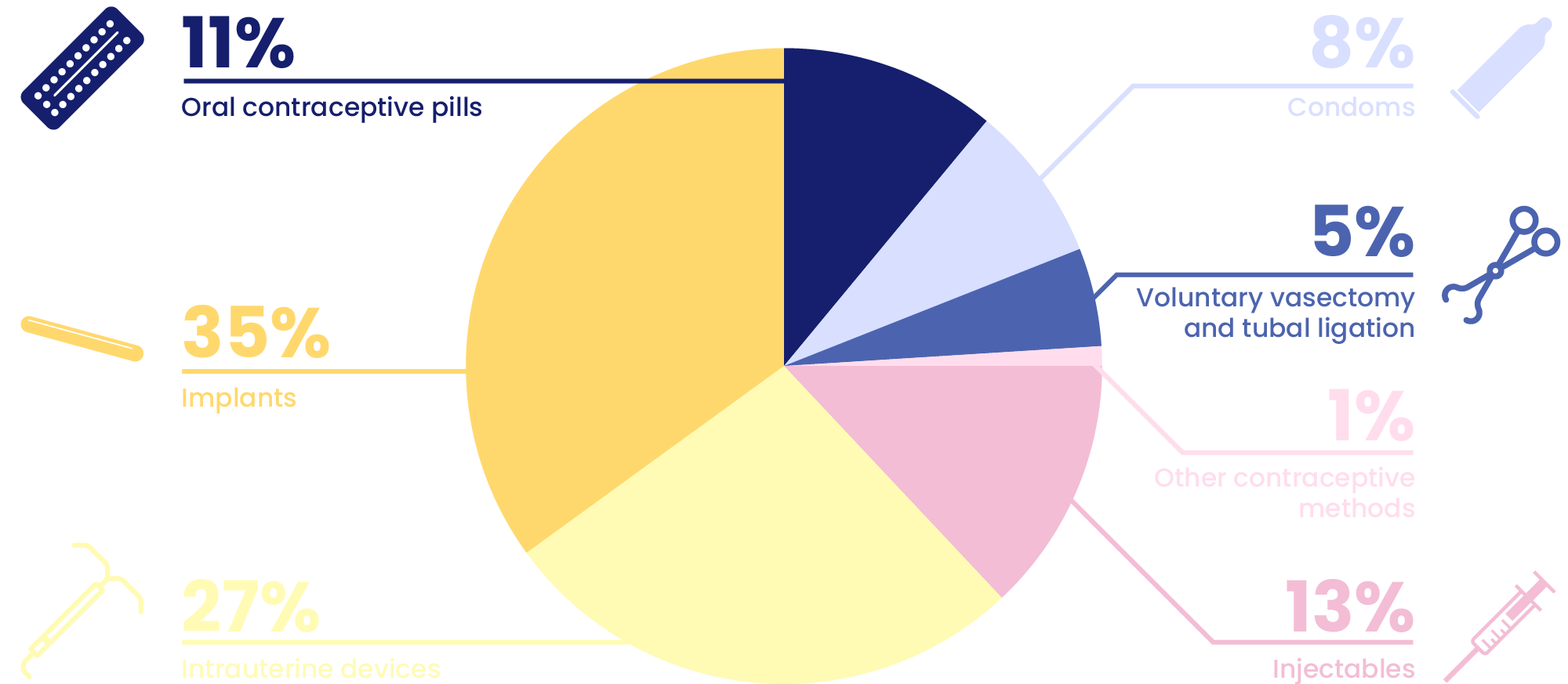
Couple years of protection (CYP) refers to the total number of years of contraceptive protection provided to a couple. The majority of IPPF's CYP comes from long-acting and permanent methods, with intrauterine devices being the largest contributor.
IPPF’s service delivery model
IPPF provides sexual and reproductive health services in static clinics, and mobile and outreach facilities that are owned and operated by Member Associations as well as through a large network of IPPF community-based distributors. We also enable services in associated health facilities and support other public and private providers to distribute contraceptive methods. Many of our service delivery points operate in remote locations to reach those with greatest unmet need.
20,311
IPPF-owned service delivery points
6,325
Associated health facilities are enabled by IPPF to provide SRH services
7,020
Public and private partners receive contraceptive commodities from IPPF
75%
of our service points are community-owned distributors
57%
Are in rural or peri-urban locations
Other key results
IPPF’s provision of contraception averted millions of unintended pregnancy and unsafe abortion. IPPF delivered comprehensive sexuality education programmes to young people in both in school and out of school settings, and almost half of all clinical services are delivered to young people.
11.2m
Unintended pregnancies averted
10.0m
People received SRH services in humanitarian settings
3.3m
Unsafe abortions averted
35.0m
Young people completed a quality-assured CSE programme
265.1m
Condoms distributed
45%
Services delivered to people under 25 years old
Policy and legislative changes, by theme
IPPF's advocacy creates an enabling environment to increase access to services, promote sexual and reproductive rights and gender equality, and reduce stigma and discrimination. IPPF makes a significant difference to the lives of millions by advocating for changes to laws and policies in support of sexual and reproductive health and rights, and opposing those that are harmful.
23
Access to SRH services
23
Education and services to young people
5
Support for people living with HIV
19
Preventing sexual and gender-based violence
12
Promoting gender equality
7
Budget allocations for SRH, including contraception
28
Access to safe and legal abortion
11
Access to contraception
9
Promoting sexual and gender diversity
12
Promoting sexual and reproductive rights
1
Prioritizing SRH in crisis settings
when