


Spotlight
A selection of resources from across the Federation

Resource
IPPF Annual Report and Financial Statements 2025
Read our Annual Report and Financial Statements 2025.
Most Popular This Week

Resource
|
IPPF Annual Report and Financial Statements 2025
IPPF is a global federation and movement of 100+ locally led Member Associations and Collaborative Partnersin 150+ countries, dedicated to sexual and reproductive health, rights

Resource
|
Annual Performance Report 2025
The IPPF Annual Performance Report 2025 tells a story of resilience, solidarity and shared leadership across our Federation.


Resource
|
Review of IPPF’s Governance Reform
Following IPPF’s governance reform in 2019/2020, a review of the reform process was conducted, which provided important insights for the new Board of Trustees and the Secretariat to support the cha

Resource
|
IMAP Statement on Sex Worker-Centred Sexual and Reproductive Health Services
This statement is intended to provide guidance to Member Associations and Collaborative Partners across the Federation on delivering comprehensive, evidence‑based sexual and reproductive health (SR


Resource
|
IPPF in 2024: Financial Statements
We are a worldwide federation of national SRHR organizations working with and for communities and individuals. Our 119 Member Associations and 39 Collaborative Partners span 153 countries.
Filter our resources by:
Resource
| 10 June 2021
IMAP Statement Abortion Self-Care
IPPF understands abortion self-care as the right of women and girls to lead, in part or entirely, their abortion process, with or without support from health providers. Guided by the existing evidence and practices, this statement provides practical recommendations for IPPF Member Associations and other sexual and reproductive health stakeholders on how to manage abortion care within a people-centred model which empowers individuals and is supported by community collectives and social networks, however still backed-up by the healthcare system whenever needed or required. This statement also serves as an advocacy tool to create an enabling environment for abortion self-care.
Resource
| 10 June 2021
IMAP Statement Abortion Self-Care
IPPF understands abortion self-care as the right of women and girls to lead, in part or entirely, their abortion process, with or without support from health providers. Guided by the existing evidence and practices, this statement provides practical recommendations for IPPF Member Associations and other sexual and reproductive health stakeholders on how to manage abortion care within a people-centred model which empowers individuals and is supported by community collectives and social networks, however still backed-up by the healthcare system whenever needed or required. This statement also serves as an advocacy tool to create an enabling environment for abortion self-care.

Resource
| 28 April 2021
Stigma-Free Abortion Services in Ghana - A report
From August 2019 to January 2021, Youth Development Labs (YLabs) partnered with Planned Parenthood Association of Ghana (PPAG) on the Stigma-Free Abortion Services (StigFAS) project, with the goal of increasing access to safe abortion services for young women and girls in Accra, Ghana. The project approach involved exploring the challenge through participatory qualitative research, developing an intervention through a youth-driven design process, and implementing a small pilot program. The intervention consisted of three complementary elements designed to increase girls’ awareness of safe abortion options and improve their linkage to sexual health services, including safe abortion care. These elements were Girl Boss, a future-focused outreach program led by female peer mentors Sister Support, a free phone/text confidential counseling and referral service Safe Pass, a partnership with local pharmacists to guide girls to safe abortion services. Take a look at our final report on this project via the link attached above.
Resource
| 28 April 2021
Stigma-Free Abortion Services in Ghana - A report
From August 2019 to January 2021, Youth Development Labs (YLabs) partnered with Planned Parenthood Association of Ghana (PPAG) on the Stigma-Free Abortion Services (StigFAS) project, with the goal of increasing access to safe abortion services for young women and girls in Accra, Ghana. The project approach involved exploring the challenge through participatory qualitative research, developing an intervention through a youth-driven design process, and implementing a small pilot program. The intervention consisted of three complementary elements designed to increase girls’ awareness of safe abortion options and improve their linkage to sexual health services, including safe abortion care. These elements were Girl Boss, a future-focused outreach program led by female peer mentors Sister Support, a free phone/text confidential counseling and referral service Safe Pass, a partnership with local pharmacists to guide girls to safe abortion services. Take a look at our final report on this project via the link attached above.
Resource
| 10 February 2021
Reducing Abortion Stigma: Global Achievements since 2014
Abortion stigma affects everyone: individuals, communities and service providers. Young women and adolescent girls bear the brunt of abortion stigma. It causes delays in people seeking abortion and stops others from accessing it, leading to unintended pregnancies. Stigma drives abortion underground, where it is more likely to be unsafe. Since 2014, the support of the David & Lucile Packard Foundation has enabled IPPF to reduce abortion stigma affecting young people around the world, working directly with Member Associations in six countries (Bénin, Burkina Faso, India, Pakistan, Ghana and Nepal). Meaningful youth participation has ensured that young people’s lived experiences were central in every aspect of this work. This project has also supported smaller ground-breaking youth-led projects in 14 different countries: Albania, Colombia, Ghana, Guinea, Kenya, Macedonia, Nepal, Nigeria, Palestine, Puerto Rico, Sierra Leone, Spain, Tanzania and Venezuela. This document highlights the achievements and learnings from the Abortion Stigma Project between 2014 and 2020, including case studies, research and evidence generated around abortion stigma, and popular resources and tools developed throughout the project, and more. We invite you to read more on this ground-breaking work in Reducing Abortion Stigma: Global Achievements since 2014
Resource
| 10 February 2021
Reducing Abortion Stigma: Global Achievements since 2014
Abortion stigma affects everyone: individuals, communities and service providers. Young women and adolescent girls bear the brunt of abortion stigma. It causes delays in people seeking abortion and stops others from accessing it, leading to unintended pregnancies. Stigma drives abortion underground, where it is more likely to be unsafe. Since 2014, the support of the David & Lucile Packard Foundation has enabled IPPF to reduce abortion stigma affecting young people around the world, working directly with Member Associations in six countries (Bénin, Burkina Faso, India, Pakistan, Ghana and Nepal). Meaningful youth participation has ensured that young people’s lived experiences were central in every aspect of this work. This project has also supported smaller ground-breaking youth-led projects in 14 different countries: Albania, Colombia, Ghana, Guinea, Kenya, Macedonia, Nepal, Nigeria, Palestine, Puerto Rico, Sierra Leone, Spain, Tanzania and Venezuela. This document highlights the achievements and learnings from the Abortion Stigma Project between 2014 and 2020, including case studies, research and evidence generated around abortion stigma, and popular resources and tools developed throughout the project, and more. We invite you to read more on this ground-breaking work in Reducing Abortion Stigma: Global Achievements since 2014
Resource
| 09 February 2021
Policy brief: Engaging men and boys in sexual and reproductive health and rights – learning from three diverse contexts
This policy brief summarises learning from three IPPF Member Association research projects on engaging men as clients, partners and change agents between 2016–2020. Despite diverse settings, common key insights include the primary importance of changing norms to enable engagement; identifying key influencers and networks to achieve this; and centralising positive masculinity. Initiatives should involve men and boys initially to localise approaches to the context and establish the most effective entry point to engage men and boys as clients, partners and agents of change.
Resource
| 09 February 2021
Policy brief: Engaging men and boys in sexual and reproductive health and rights – learning from three diverse contexts
This policy brief summarises learning from three IPPF Member Association research projects on engaging men as clients, partners and change agents between 2016–2020. Despite diverse settings, common key insights include the primary importance of changing norms to enable engagement; identifying key influencers and networks to achieve this; and centralising positive masculinity. Initiatives should involve men and boys initially to localise approaches to the context and establish the most effective entry point to engage men and boys as clients, partners and agents of change.
Resource
| 25 January 2021
U.S. 990 2021
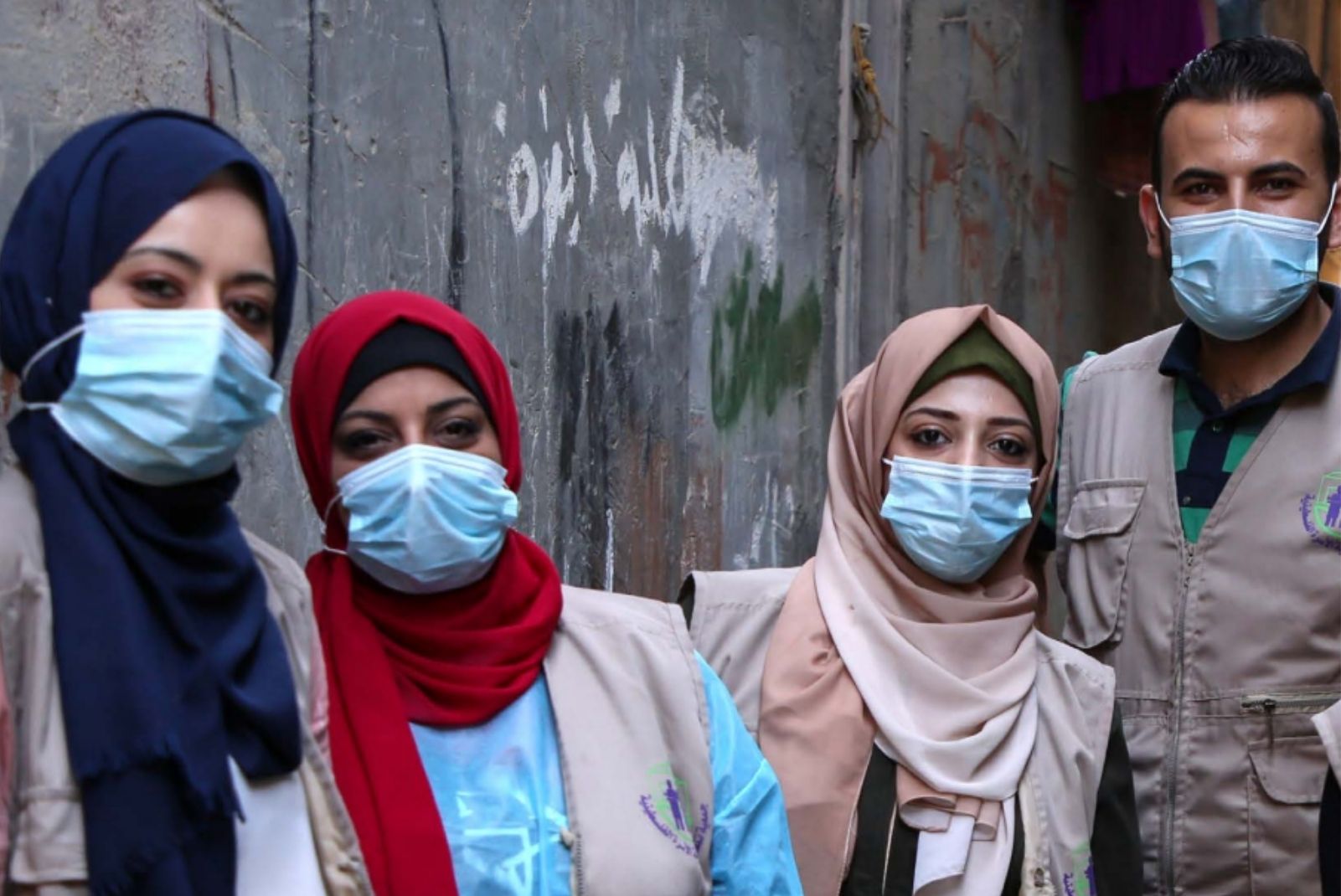
Download the IPPF's 2021 "Return of Organization Exempt From Income Tax" U.S. 990 report below.
Resource
| 01 July 2026
U.S. 990 2021
Download the IPPF's 2021 "Return of Organization Exempt From Income Tax" U.S. 990 report below.
Resource
| 01 January 2021
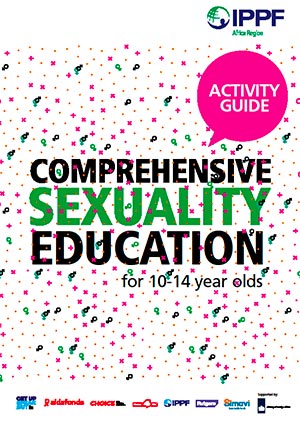
CSE Activity guide 10-14 years old
Resource
| 01 January 2021
CSE Activity guide 10-14 years old
Resource
| 03 December 2020
Sex Q&A with Joy and Jake
Let us introduce you to Joy and Jake – who are sight/visually-impaired – as they discuss the highs, lows and everything in between of navigating sex, dating and relationships, while living with a disability.
Resource
| 03 December 2020
Sex Q&A with Joy and Jake
Let us introduce you to Joy and Jake – who are sight/visually-impaired – as they discuss the highs, lows and everything in between of navigating sex, dating and relationships, while living with a disability.
Resource
| 01 October 2020
IMAP Statement on UHC & SRHR
Achieving UHC represents an ambitious global effort which currently receives significant traction and political momentum. Although each country is at a different stage of implementation, as they take steps on the path towards UHC, new opportunities arise to advance and integrate a comprehensive approach to SRHR and essential SRH services. UHC reforms are inherently complex, but a people‑centred and a health systems approach can help to identify key areas and actions that can be taken to advance SRHR integration in UHC. This IMAP statement highlights some of these areas and actions and, as a deeper understanding of local circumstances and the specific needs of those currently left behind are crucial, IPPF MAs are well placed to play a leading role in this process.
Resource
| 01 October 2020
IMAP Statement on UHC & SRHR
Achieving UHC represents an ambitious global effort which currently receives significant traction and political momentum. Although each country is at a different stage of implementation, as they take steps on the path towards UHC, new opportunities arise to advance and integrate a comprehensive approach to SRHR and essential SRH services. UHC reforms are inherently complex, but a people‑centred and a health systems approach can help to identify key areas and actions that can be taken to advance SRHR integration in UHC. This IMAP statement highlights some of these areas and actions and, as a deeper understanding of local circumstances and the specific needs of those currently left behind are crucial, IPPF MAs are well placed to play a leading role in this process.
Resource
| 24 September 2020
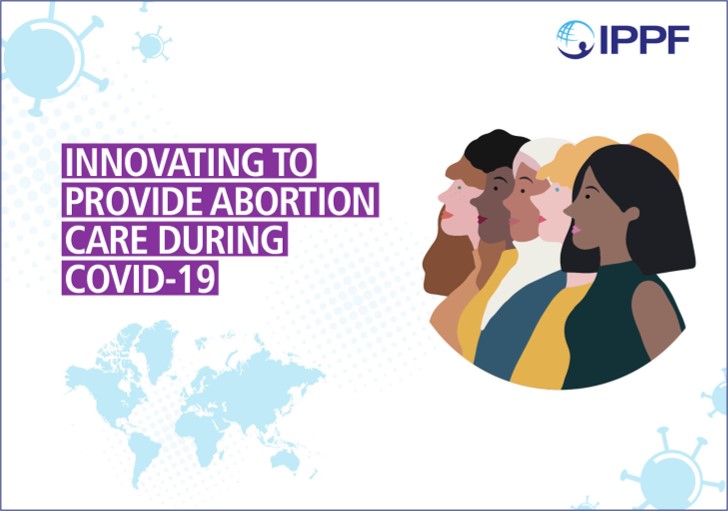
Innovating to provide abortion care during COVID-19
During the COVID-19 pandemic, women globally face compounded barriers to accessing safe abortion care. The de-prioritization of sexual and reproductive health services including abortion care, overwhelmed health systems, restrictions on movement and fear of visiting health facilities have all created additional challenges for women to safely end a pregnancy. However, recognizing the need to adapt to ensure women have access to the care they need, this crisis has sparked innovation among IPPF Member Associations. They developed new approaches to reach women with safe abortion information and care, while keeping women’s choice and quality of care at the centre of their work. This document illustrates some of the innovative approaches used to ensure continued access to quality abortion care during the pandemic.
Resource
| 24 September 2020
Innovating to provide abortion care during COVID-19
During the COVID-19 pandemic, women globally face compounded barriers to accessing safe abortion care. The de-prioritization of sexual and reproductive health services including abortion care, overwhelmed health systems, restrictions on movement and fear of visiting health facilities have all created additional challenges for women to safely end a pregnancy. However, recognizing the need to adapt to ensure women have access to the care they need, this crisis has sparked innovation among IPPF Member Associations. They developed new approaches to reach women with safe abortion information and care, while keeping women’s choice and quality of care at the centre of their work. This document illustrates some of the innovative approaches used to ensure continued access to quality abortion care during the pandemic.
Resource
| 21 September 2020
It's All One Curriculum
Researchers have identified gender inequality as a key factor driving the AIDS pandemic. Policymakers have called for sexuality and HIV education that emphasizes gender equality and human rights. Educators want to teach young people the critical thinking skills needed to build compassionate and just societies. It's All One Curriculum responds to these calls.
Resource
| 21 September 2020
It's All One Curriculum
Researchers have identified gender inequality as a key factor driving the AIDS pandemic. Policymakers have called for sexuality and HIV education that emphasizes gender equality and human rights. Educators want to teach young people the critical thinking skills needed to build compassionate and just societies. It's All One Curriculum responds to these calls.
Resource
| 10 June 2021
IMAP Statement Abortion Self-Care
IPPF understands abortion self-care as the right of women and girls to lead, in part or entirely, their abortion process, with or without support from health providers. Guided by the existing evidence and practices, this statement provides practical recommendations for IPPF Member Associations and other sexual and reproductive health stakeholders on how to manage abortion care within a people-centred model which empowers individuals and is supported by community collectives and social networks, however still backed-up by the healthcare system whenever needed or required. This statement also serves as an advocacy tool to create an enabling environment for abortion self-care.
Resource
| 10 June 2021
IMAP Statement Abortion Self-Care
IPPF understands abortion self-care as the right of women and girls to lead, in part or entirely, their abortion process, with or without support from health providers. Guided by the existing evidence and practices, this statement provides practical recommendations for IPPF Member Associations and other sexual and reproductive health stakeholders on how to manage abortion care within a people-centred model which empowers individuals and is supported by community collectives and social networks, however still backed-up by the healthcare system whenever needed or required. This statement also serves as an advocacy tool to create an enabling environment for abortion self-care.
Resource
| 28 April 2021
Stigma-Free Abortion Services in Ghana - A report
From August 2019 to January 2021, Youth Development Labs (YLabs) partnered with Planned Parenthood Association of Ghana (PPAG) on the Stigma-Free Abortion Services (StigFAS) project, with the goal of increasing access to safe abortion services for young women and girls in Accra, Ghana. The project approach involved exploring the challenge through participatory qualitative research, developing an intervention through a youth-driven design process, and implementing a small pilot program. The intervention consisted of three complementary elements designed to increase girls’ awareness of safe abortion options and improve their linkage to sexual health services, including safe abortion care. These elements were Girl Boss, a future-focused outreach program led by female peer mentors Sister Support, a free phone/text confidential counseling and referral service Safe Pass, a partnership with local pharmacists to guide girls to safe abortion services. Take a look at our final report on this project via the link attached above.
Resource
| 28 April 2021
Stigma-Free Abortion Services in Ghana - A report
From August 2019 to January 2021, Youth Development Labs (YLabs) partnered with Planned Parenthood Association of Ghana (PPAG) on the Stigma-Free Abortion Services (StigFAS) project, with the goal of increasing access to safe abortion services for young women and girls in Accra, Ghana. The project approach involved exploring the challenge through participatory qualitative research, developing an intervention through a youth-driven design process, and implementing a small pilot program. The intervention consisted of three complementary elements designed to increase girls’ awareness of safe abortion options and improve their linkage to sexual health services, including safe abortion care. These elements were Girl Boss, a future-focused outreach program led by female peer mentors Sister Support, a free phone/text confidential counseling and referral service Safe Pass, a partnership with local pharmacists to guide girls to safe abortion services. Take a look at our final report on this project via the link attached above.
Resource
| 10 February 2021
Reducing Abortion Stigma: Global Achievements since 2014
Abortion stigma affects everyone: individuals, communities and service providers. Young women and adolescent girls bear the brunt of abortion stigma. It causes delays in people seeking abortion and stops others from accessing it, leading to unintended pregnancies. Stigma drives abortion underground, where it is more likely to be unsafe. Since 2014, the support of the David & Lucile Packard Foundation has enabled IPPF to reduce abortion stigma affecting young people around the world, working directly with Member Associations in six countries (Bénin, Burkina Faso, India, Pakistan, Ghana and Nepal). Meaningful youth participation has ensured that young people’s lived experiences were central in every aspect of this work. This project has also supported smaller ground-breaking youth-led projects in 14 different countries: Albania, Colombia, Ghana, Guinea, Kenya, Macedonia, Nepal, Nigeria, Palestine, Puerto Rico, Sierra Leone, Spain, Tanzania and Venezuela. This document highlights the achievements and learnings from the Abortion Stigma Project between 2014 and 2020, including case studies, research and evidence generated around abortion stigma, and popular resources and tools developed throughout the project, and more. We invite you to read more on this ground-breaking work in Reducing Abortion Stigma: Global Achievements since 2014
Resource
| 10 February 2021
Reducing Abortion Stigma: Global Achievements since 2014
Abortion stigma affects everyone: individuals, communities and service providers. Young women and adolescent girls bear the brunt of abortion stigma. It causes delays in people seeking abortion and stops others from accessing it, leading to unintended pregnancies. Stigma drives abortion underground, where it is more likely to be unsafe. Since 2014, the support of the David & Lucile Packard Foundation has enabled IPPF to reduce abortion stigma affecting young people around the world, working directly with Member Associations in six countries (Bénin, Burkina Faso, India, Pakistan, Ghana and Nepal). Meaningful youth participation has ensured that young people’s lived experiences were central in every aspect of this work. This project has also supported smaller ground-breaking youth-led projects in 14 different countries: Albania, Colombia, Ghana, Guinea, Kenya, Macedonia, Nepal, Nigeria, Palestine, Puerto Rico, Sierra Leone, Spain, Tanzania and Venezuela. This document highlights the achievements and learnings from the Abortion Stigma Project between 2014 and 2020, including case studies, research and evidence generated around abortion stigma, and popular resources and tools developed throughout the project, and more. We invite you to read more on this ground-breaking work in Reducing Abortion Stigma: Global Achievements since 2014
Resource
| 09 February 2021
Policy brief: Engaging men and boys in sexual and reproductive health and rights – learning from three diverse contexts
This policy brief summarises learning from three IPPF Member Association research projects on engaging men as clients, partners and change agents between 2016–2020. Despite diverse settings, common key insights include the primary importance of changing norms to enable engagement; identifying key influencers and networks to achieve this; and centralising positive masculinity. Initiatives should involve men and boys initially to localise approaches to the context and establish the most effective entry point to engage men and boys as clients, partners and agents of change.
Resource
| 09 February 2021
Policy brief: Engaging men and boys in sexual and reproductive health and rights – learning from three diverse contexts
This policy brief summarises learning from three IPPF Member Association research projects on engaging men as clients, partners and change agents between 2016–2020. Despite diverse settings, common key insights include the primary importance of changing norms to enable engagement; identifying key influencers and networks to achieve this; and centralising positive masculinity. Initiatives should involve men and boys initially to localise approaches to the context and establish the most effective entry point to engage men and boys as clients, partners and agents of change.
Resource
| 25 January 2021
U.S. 990 2021
Download the IPPF's 2021 "Return of Organization Exempt From Income Tax" U.S. 990 report below.
Resource
| 01 July 2026
U.S. 990 2021
Download the IPPF's 2021 "Return of Organization Exempt From Income Tax" U.S. 990 report below.
Resource
| 01 January 2021
CSE Activity guide 10-14 years old
Resource
| 01 January 2021
CSE Activity guide 10-14 years old
Resource
| 03 December 2020
Sex Q&A with Joy and Jake
Let us introduce you to Joy and Jake – who are sight/visually-impaired – as they discuss the highs, lows and everything in between of navigating sex, dating and relationships, while living with a disability.
Resource
| 03 December 2020
Sex Q&A with Joy and Jake
Let us introduce you to Joy and Jake – who are sight/visually-impaired – as they discuss the highs, lows and everything in between of navigating sex, dating and relationships, while living with a disability.
Resource
| 01 October 2020
IMAP Statement on UHC & SRHR
Achieving UHC represents an ambitious global effort which currently receives significant traction and political momentum. Although each country is at a different stage of implementation, as they take steps on the path towards UHC, new opportunities arise to advance and integrate a comprehensive approach to SRHR and essential SRH services. UHC reforms are inherently complex, but a people‑centred and a health systems approach can help to identify key areas and actions that can be taken to advance SRHR integration in UHC. This IMAP statement highlights some of these areas and actions and, as a deeper understanding of local circumstances and the specific needs of those currently left behind are crucial, IPPF MAs are well placed to play a leading role in this process.
Resource
| 01 October 2020
IMAP Statement on UHC & SRHR
Achieving UHC represents an ambitious global effort which currently receives significant traction and political momentum. Although each country is at a different stage of implementation, as they take steps on the path towards UHC, new opportunities arise to advance and integrate a comprehensive approach to SRHR and essential SRH services. UHC reforms are inherently complex, but a people‑centred and a health systems approach can help to identify key areas and actions that can be taken to advance SRHR integration in UHC. This IMAP statement highlights some of these areas and actions and, as a deeper understanding of local circumstances and the specific needs of those currently left behind are crucial, IPPF MAs are well placed to play a leading role in this process.
Resource
| 24 September 2020
Innovating to provide abortion care during COVID-19
During the COVID-19 pandemic, women globally face compounded barriers to accessing safe abortion care. The de-prioritization of sexual and reproductive health services including abortion care, overwhelmed health systems, restrictions on movement and fear of visiting health facilities have all created additional challenges for women to safely end a pregnancy. However, recognizing the need to adapt to ensure women have access to the care they need, this crisis has sparked innovation among IPPF Member Associations. They developed new approaches to reach women with safe abortion information and care, while keeping women’s choice and quality of care at the centre of their work. This document illustrates some of the innovative approaches used to ensure continued access to quality abortion care during the pandemic.
Resource
| 24 September 2020
Innovating to provide abortion care during COVID-19
During the COVID-19 pandemic, women globally face compounded barriers to accessing safe abortion care. The de-prioritization of sexual and reproductive health services including abortion care, overwhelmed health systems, restrictions on movement and fear of visiting health facilities have all created additional challenges for women to safely end a pregnancy. However, recognizing the need to adapt to ensure women have access to the care they need, this crisis has sparked innovation among IPPF Member Associations. They developed new approaches to reach women with safe abortion information and care, while keeping women’s choice and quality of care at the centre of their work. This document illustrates some of the innovative approaches used to ensure continued access to quality abortion care during the pandemic.
Resource
| 21 September 2020
It's All One Curriculum
Researchers have identified gender inequality as a key factor driving the AIDS pandemic. Policymakers have called for sexuality and HIV education that emphasizes gender equality and human rights. Educators want to teach young people the critical thinking skills needed to build compassionate and just societies. It's All One Curriculum responds to these calls.
Resource
| 21 September 2020
It's All One Curriculum
Researchers have identified gender inequality as a key factor driving the AIDS pandemic. Policymakers have called for sexuality and HIV education that emphasizes gender equality and human rights. Educators want to teach young people the critical thinking skills needed to build compassionate and just societies. It's All One Curriculum responds to these calls.
