



Articles about Colombia
19 November 2025
Celebrating Transgender Awareness Week: visible, powerful, proud and loved
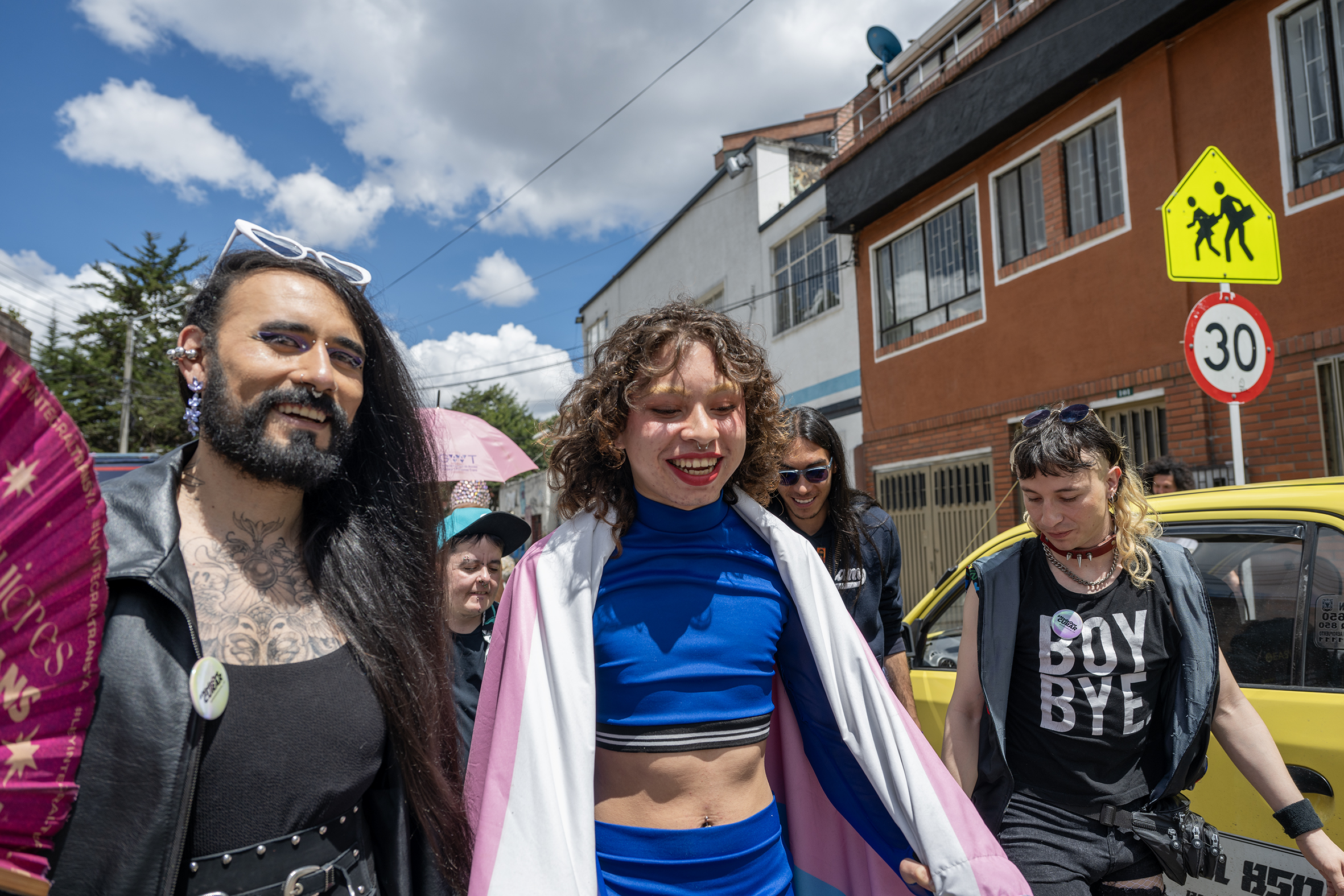
At IPPF we are working for inclusive sexual and reproductive healthcare delivery to transgender and gender diverse people, founded upon the principles of the rights to personal autonomy, bodily integrity and respect for confidentiality and dignity. Yet, around the world, transgender and gender diverse people continue to face widespread stigma, discrimination, violence and exclusion in healthcare settings. As part of IPPF’s commitment to person-centred care at the heart of our Come Together Strategy (2023–2028), we are standing proudly with trans and gender diverse people. We are pushing back against this stigma and violence and to expand the choice of existing or new quality sexual and reproductive health services for transgender and gender diverse people in facility and community settings.So, this week in celebration of Transgender Awareness Week held every November, we are sharing stories from three communities in Colombia, Thailand and Nepal to celebrate the organisations and individuals who stand defiant, working relentlessly and tirelessly, to be visible, powerful, proud and loved.Nothing to Cure - LGBTI in Bogota, ColombiaLa Fundación GAAT (Grupo de Acción y Apoyo a Personas Trans)In Bogotá, where an LGBTQI+ policy now protects rights and visibility, life feels different and slightly better than in many other Colombian cities. But Danne, a proud non-binary person, remembers when that wasn’t the case. Eighteen years ago, she helped open the first LGBTQI+ house in Bogotá, creating a space where people could finally be themselves.A survivor of conversion practices, Danne recalls being subjected to exorcisms and so-called therapies aimed at “fixing” her identity. “It is so hateful,” she says, “they tried to find a way to change my sexual orientation and identity.” That experience led her to become a human-rights activist in 2009. “In Bogota, we have a LGBTQI+ policy so our experience is different - it's better than the other cities. In my childhood, it was complicated to be LGBT as the policy did not exist at that moment. I started the first LGBTQI+ house in Bogota. It was really good as those houses allowed us to be ourselves, 18 years ago”Colombia has progressed since its 1991 Constitution recognised the country as a social state of rights, replacing the “Sacred Heart of Jesus” decree of 1881. Yet the struggle for equality continues. Danne now leads a campaign in Congress to ban conversion practices. Entitled ‘Nada Que Curar’ (Nothing to Cure) for the belief that no one should ever be forced to change who they are. Desfile de las Diversidades – Diversity Parade, Cartagena, ColombiaCasas de Caribe AfirmativoIn Cartagena, the Desfile de las Diversidades is more than a parade, it’s an act of collective visibility, resistance, and joy. Against the backdrop of colonial streets and Caribbean colour, this annual march reclaims public space as a place of belonging for everyone. It’s where laughter, rhythm, and rainbow flags challenge the silence and stigma that too often surround queer lives.At a time when anti-rights movements are growing louder, this march becomes a declaration: that diversity is not something to be merely tolerated but celebrated as a vital force that shapes who we are. Every dance step and banner is a statement of defiance against discrimination and an affirmation of freedom, dignity, and self-expression. Here, visibility itself is an act of courage. People walk not only for themselves, but for those who cannot yet walk safely. Together they create a living mosaic of identities, gay, lesbian, bisexual, transgender, intersex, non-binary, queer, all converging in a single message: we exist, we belong, and we will not be erased.The Desfile de las Diversidades is, at its heart, a celebration of coexistence and a vivid reminder that equality thrives not in uniformity, but in the beauty of difference. I Am Just Me - Bogotá, ColombiaDominica, a non-binary and trans-feminine person from Colombia, speaks with clarity and courage about identity, faith, and resistance in a society still struggling to accept difference.“I am a non-binary person with an experience of life as trans-feminine. I am from a Christian blood-family, they are conservative but hypocritical, as my mother worked in bars and other establishments that weren’t really ‘Christian’. And some of my aunts are not what you would imagine of a Christian person. But apparently being an LGBT person is the worst for them, worse than being a murderer or drug addict. For those reasons, I hid a lot of my life. From when I was born to when I was 18, I didn’t live for myself. I was the person my family wanted me to be. But then, when I graduated high school, I met people who helped me understand what was happening inside me… I was that ‘boy’ my family wanted, but something inside me kept saying ‘that is not me’.I would say I don’t know exactly who I am, but I know my trans family now. They’ve given me the opportunity to explore myself - my mind, my body - and what I am. When I went to university and dressed how I wanted, moving my body the way I wanted, it made people uncomfortable. But I know I’m making them think. They can see me and ask, ‘is he a boy? is she a girl?’ and I just say, I am just me, not a boy, not a girl.”Dominica’s story is a portrait of lived defiance; of claiming space in a world that seeks to define, confine, and ‘correct’. Through visibility, they transform discomfort into reflection, and resistance into self-knowledge. The body is political. We are all political, and we are all performing gender; whether cis, trans or non-binary. When Love Wins, We All Win. Watee Kongbang (she/her) - Issan, Thailand Koen Khan Branch, Planned Parenthood Association of Thailand (PPAT)Thailand is often celebrated for its visible transgender community, yet full equality remains out of reach, from the lack of legal gender recognition to persistent stigma. Within this landscape, proud transgender woman Watee Kongbang stands as a symbol of resilience and joy. “For so long, I dreamed of the day I could stand proudly in a wedding dress, holding the hand of the person I love, without fear, without judgment, and without having to hide who I truly am. It may seem like a simple wish, but for someone like me, it carries a lifetime of struggle, hope, and longing to be seen as equal.Your support, understanding, and belief in equality have given me more than just a dream fulfilled, they’ve given me the right to exist as myself, to love freely, and to be proud of my identity. That single act of acceptance and recognition means more than words can express.Because when love wins, we all win.” Pride Begins Here - Isaan, Thailand Koen Khan Branch, Planned Parenthood Association of Thailand (PPAT) In a high school courtyard in Isaan, these students have built an LGBTIQ-friendly group where acceptance feels natural. Together, they apply their makeup, do each other’s hair, and express themselves freely, simple rituals that will imbue them with confidence as they soon end their high school careers and embark into the world. Their school and teachers are equally supportive, creating an environment where being yourself isn’t a risk but a right. In a region where visibility can still be fraught, this youth club represents a quiet revolution: young people learning that pride can begin in the classroom, and that solidarity can look like friendship, laughter, and the freedom to just be. I am living my truth, and I am proud - Kathmandu, NepalFamily Planning Association of Nepal “I am living my truth, and I am proud of that. Before, I used to hide, but now I live openly,” says 27-year-old trans woman, Suhana Thapa Magar.As a child, Suhana loved to secretly wear her mother’s saree, lipstick, and kajal (kohl), washing her face quickly if anyone came home. “I didn’t even know how to put them on, I was a child” she laughs, “but it felt like me.”Suhana first understood she was a trans woman in grade 10. She had always felt connected to her femininity but didn’t yet have the language for it. Then she heard Pahichan, a radio programme by Blue Diamond Society, a LGBTQIA+ rights organisation in Nepal. “That was when I realised, I am a trans woman,” she shares. Suhana later found the Family Planning Association of Nepal, an IPPF Member Association, and its Rainbow Clinic, where she received counselling and laser services designed specifically for LGBTQI+ people. “For trans women, services like this are rare. At the Rainbow Clinic, I felt seen, respected, and safe. The laser care and counselling gave me the confidence to express the femininity I’ve always carried inside me. The care I received feels precious.”Her journey, however, has also been shaped by pain. “My family did not accept me. Even now they don’t,” she says. She visits them occasionally, but she has chosen her truth. “Even more than that, I chose my life, my identity. I am proud. And I like that.” Suhana carries a message for her own family, and for all families of trans children:“I don’t blame them. I just want them to understand me more. If you are unsure, ask me questions. Let go of society’s judgement and accept your child. And to all families: your trans children need your love, guidance, and the chance to grow strong and independent. Be there for them.”

18 December 2024
Health Without Borders: Supporting Women on the World’s Deadliest Journeys
On this International Migrants Day, we speak with Valerie Dourdin, IPPF’s Humanitarian Director, about her recent visit to the Darién Gap, a perilous crossing linking South and Central America. With decades of humanitarian experience, Valerie highlights the hidden struggles women face on the move, and IPPF’s ambitious plans to deliver lifesaving sexual and reproductive healthcare (SRH) along key migration routes. With a focus on localisation and coordinated support, Valerie outlines a bold vision for ensuring the needs of women on the move are not forgotten. Can you start by telling us about your background and what brought you to IPPF? I have had the privilege to work for 15 years with the Red Cross, 10 years with the UN, and later with Save the Children, with experience across every continent. I was fortunate to work alongside strong local teams at every step of my career. They taught me how to do my job, and that experience shaped my understanding of effective, localised humanitarian work. My move to IPPF was inspired by my previous work in Colombia, where we ran a SRH clinic. Seeing the lifesaving importance of sexual and reproductive healthcare, and the difficulty of securing funding for it, drove me to continue this work. SRH isn’t a luxury, it’s critical for current and future generations, and IPPF provided an opportunity to address that gap globally, especially in humanitarian settings. Who are ‘people on the move’? ‘People on the move’ refers to individuals who are fleeing from conflict, violence, economic hardship or climate change. Many people on the move have simply run out of options in their home countries and are forced to leave in search of safety, opportunity, or survival. These journeys can be incredibly dangerous and take weeks, months, or even years. Without documents, people must take unofficial routes, crossing irregularly into countries, leaving them vulnerable to violence, exploitation, and trafficking. There are currently two major migration routes. The first is across Africa, where people travel north toward the Mediterranean. The second is in the Americas, where journeys often begin in Chile, Argentina, or Haiti, moving north through Colombia and Central America toward the US. Increasingly, people from Africa and as far as China are arriving in South America to follow this route. A critical and perilous passage in this region is the Darién Gap, a treacherous 70-mile stretch of dense jungle between Colombia and Panama. Women and families endure immense hardship on these routes, yet their stories of violence, exploitation, and survival are rarely heard. What was the aim of your recent visit to South and Central America? We wanted to better understand the current situation along migration routes, particularly in Colombia and the Darién Gap, and see how IPPF could scale up support for women and girls on the move, through our Member Association (MA) Profamilia, who are leading the response. Profamilia is a great organisation with decades of experience providing sexual and reproductive health (SRH) services in Colombia. They run over 50 clinics across the country and are well-respected for their work, including in emergency settings. During my visit, we discussed their plans to scale up mobile clinic services in key areas like Necoclí and Capurganá, where many migrants gather before attempting the difficult journey through the Darién Gap. These clinics offer SRH services like family planning, HIV and STI screening. I then travelled to Panama, where the Darién Gap ends, to meet with local and national organisations. My aim was to start building a network of coordinated SRH and particularly SGBV care, so that women have access to support both before they enter the gap and when they emerge on the other side. What did you witness in the Darién Gap, and how are women impacted? The Darién Gap is one of the most dangerous border crossings of the Americas migration route in the world and is controlled by armed criminal groups. For families making the journey, it can turn into a nightmare. Rivers rise without warning, people get lost in the thick forest, and many disappear without a trace. A fit young man might cross in five days, but for mothers with small children, it can take 10 to 15 days or more. When I visited two years ago this route was starting to pick up, in 2023 around 600,000 people attempted the crossing. This year, it has dropped significantly to around 230,000, but what struck me was the increased desperation. You now see many lower-income families, with less access to resources and information. Many families sell everything to pay smugglers only to be ripped off, so they’re stuck in places like Necoclí for weeks or months. Women told me they had nothing left to go back to, so they had no choice but to push forward. I saw mothers with newborn babies in their arms about to start the journey. I spoke to a young child and asked her where she was going, she smiled and said, “To the beach.” Parents do their best to protect their children but can’t prepare them for the unimaginable ordeal ahead. Two years ago, the jungle was impenetrable. Now, there are some rudimentary paths, but it’s still extremely muddy, dangerous, and slow. You see families starting their journey loaded with a heavy backpack, but by the time they reach Panama, they have absolutely nothing. Reports revealed that approximately one in three women making the crossing experienced sexual violence on the route, and over half had been robbed.

EmpowHER: IPPF Announces New Global Initiative to Empower Women, Girls, and Marginalized Communities
The International Planned Parenthood Federation (IPPF) has launched the CAD48 million "EmpowHER" project in partnership with Global Affairs Canada. The initiative aims to improve sexual and reproductive health and rights (SRHR) for marginalised women, girls, and underserved communities across at least 11 countries. EmpowHER will enhance access to sexual and reproductive health (SRH) care, deliver comprehensive sexuality education, and combat growing threats to SRHR through policy reform and advocacy. This partnership aligns with Canada’s commitment to gender equality and empowering young people to make informed choices about their well-being. Ensuring Inclusive SRHR Delivery for Women, Girls and Marginalise Communities (EmpowHER), is a large-scale initiative that will strengthen access to SRHR for the most marginalised and underserved groups, particularly women and girls. It will support millions of women, girls, and vulnerable communities in Burkina Faso, Democratic Republic of Congo, Ghana, Guinea, Guinea-Bissau, Kenya, Mauritania, Sudan, Zambia, Uganda, Togo, Colombia, Ecuador and Pakistan. Through an intersectional, human rights-based feminist approach, EmpowHER will increase access to much needed rights-based SRH care, including access to person-centred safe and legal abortion care. It will deliver critical comprehensive sexuality education (CSE) to empower young people to act on their sexual and reproductive rights (SRR) by expanding their access to quality, rights-based, and gender-sensitive CSE. Furthermore, this initiative will also counteract the growing threats to women’s and girls' sexual and reproductive health rights, by providing urgent support to improve policies and strengthen the capacity of movements and coalitions. Dr. Alvaro Bermejo, Director-General of IPPF, emphasised the critical need to protect and expand access to SRHR. “This new project will continue our mission of empowering women and girls, particularly in Sub Saharan Africa, to make informed decisions about their bodies. We will not only increase access to much needed SRHR services including safe and legal abortion but will also deliver CSE to young people and tackle the rollback of SRHR rights.” “We’re grateful to the Canadian Government for their support and continued partnership.” The funding, unveiled during the United Nations General Assembly (UNGA), is part of Canada’s 10-Year Commitment to Global Health and Rights and aligns with its Feminist International Assistance Policy. Canada is committed to securing a more gender-equal world in which young people are empowered to exercise their rights and make free and informed decisions about their sexuality and well-being. "By supporting the EmpowHER initiative, Canada is taking another step towards achieving gender equality and empowering women and girls, in all their diversity, worldwide. This project will not only improve access to vital sexual and reproductive health services, but also ensure that the most marginalized communities can exercise their rights and make informed choices about their health and future. Together, we will strengthen partnerships that champion these rights and protect the progress we've made", said the Honourable Ahmed Hussen, Minister of International Development, Canada.
Abortion Rights: Latest Decisions and Developments around the World
Over the past 30 years, more than 60 countries and territories have liberalized their abortion laws. Only four have regressed, including the United States. Abortion rights are increasingly becoming recognized as fundamental human rights for millions of people worldwide. The global landscape of abortion rights continues to evolve in 2024, with new legislation and feminist movements fighting for better access. Let's take a trip around the world to see the latest developments.

06 March 2023
From words to action
Earlier this year, on the 22nd of February, ProFamilia was awarded the José Acevedo y Gómez Civil Order of Merit, the highest distinction awarded by the Bogotá Council, in recognition of the hard work that the Organization has carried out for almost 58 years to achieve the effective empowerment of sexuality in Bogotá and in the rest of the country. At times like this, it is inevitable to look back to the mid-1960s, when guaranteeing reproductive autonomy for women, especially the most vulnerable, became the dream and raison d'être of the work of gynaecologist Fernando Tamayo, a dream that materialised with the creation of ProFamilia in Bogotá. We have made progress! Today, several decades later, we are celebrating with a new generation of women, the first anniversary of the decriminalization of abortion in Colombia, a historic decision that has as its essence equity, freedom, autonomy, social justice and the dream with which our Organization was born: that all people can exercise their Sexual and Reproductive Rights. No woman or pregnant woman can ever again be singled out or criminalized for deciding to terminate her pregnancy for whatever reasons she chooses, and the system, of which we are all a part, must allow her rights to become a reality.

Colombia decriminalizes abortion: one year anniversary
Profamilia – an IPPF Member Association and the leading sexual and reproductive rights organization in Colombia – is celebrating the first anniversary of the decriminalization of abortion across the country. The move - Ruling C-055 - which allows abortion up to 24 weeks of gestation under any circumstance is saving lives across Colombia, and means those who have an abortion no longer face prosecution or criminalization. A historic step for the rights of women and pregnant people both in the country and across Latin America. Over the last year, Profamilia via its nationwide network of more than 50 clinics has helped guarantee sexual and reproductive health and rights, focusing on providing safe abortion care services in person as well as the provision of telemedicine for rural women. For a country which sees 132,000 cases annually of complications from unsafe abortions and 70 women lose their lives each year – the shift in focus to abortion as a public health issue means healthcare providers can now focus on providing life-saving care and ending unsafe abortion. Alongside the ruling, the Ministry of Health, has also regulated abortion services throughout Colombia via Resolution 051, reiterating that abortion is an essential and urgent health service, which women, including migrant women, and pregnant people (transgender men, trans masculinities, non-binary people, among others) must be able to access without restriction and for free. Further rulings also embeds the provision of sexual and reproductive health information into Colombian health services. Marta Royo, the Executive Director of ProFamilia, said: "Profamilia's commitment will always be to provide comprehensive, humanized and safe services that allow free and informed decision making, and we reiterate this today” "After one year it is possible to see the progress the country has made in terms of reproductive autonomy and rights for women and pregnant people. However, we must move from text to action, and ensure that decriminalization means healthcare. Profamilia's commitment will always be to provide comprehensive, humanized and safe services that allow free and informed decision making." Eugenia López Uribe, Regional Director of IPPF for the Americas and The Caribbean.

IPPF Office in Bogota
We are overjoyed to announce the opening of the first of two locations of the International Planned Parenthood Federation - Americas and the Caribbean Regional Office (ACRO), in Bogota, Colombia. IPPF Director-General Dr. Alvaro Bermejo, IPPF ACRO's Regional Director Eugenia López Uribe, Deputy Regional Director Dona Da Costa Martinez, and IPPF Director of External Relations Mina Barling were joined by team members from the ACRO and London Offices to reinforce the commitment to the fight for rights and access to sexual and reproductive services in the region. This is an especially exciting time as Colombia stands as the latest champion to step forward to protect the bodily autonomy of everyone with the possibility of gestation, with a recent Constitutional Court victory legalizing access to abortion until 24 weeks. The new IPPF Americas and the Caribbean Regional Office serves Member Associations and Collaborative Partners in over 24 countries across the region, and which are growing in their movement building and service delivery capabilities, including comprehensive sex education, provision of contraceptive, safe abortion, and maternal care and responding to humanitarian crisis. IPPF pride ourselves on being local through our members and global through our network. At the heart of our mission is the provision of – and advocacy in support of – integrated healthcare to anyone who needs it regardless of race, gender, sex, income, and crucially no matter how remote. Volunteerism is central to our healthcare delivery. It underpins the vital work of our members and their teams, whether through community outreach and distribution of contraceptive care or the regional Youth Action Movements championing change.
Colombia decriminalizes abortion
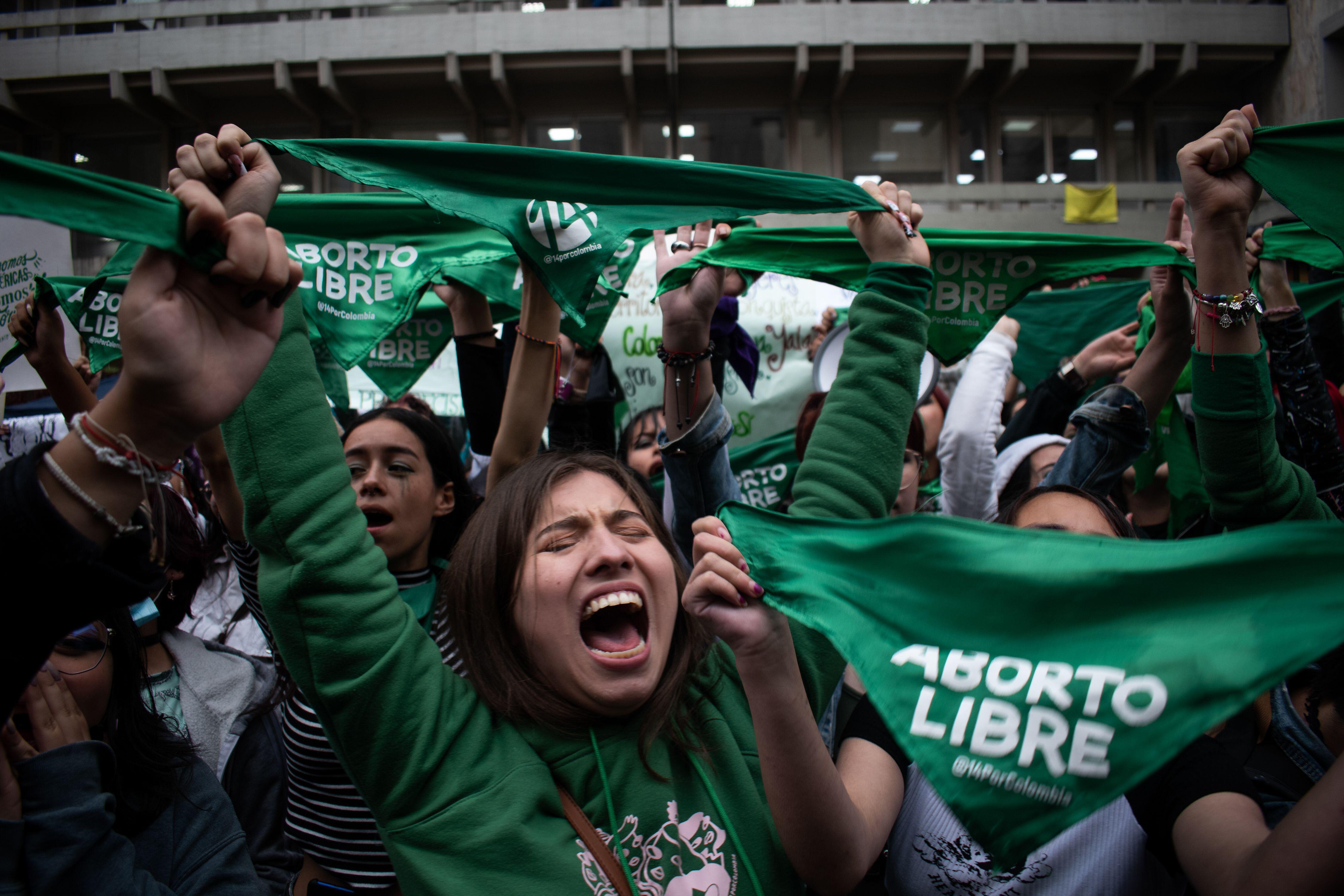
The Colombian Constitutional Court has decriminalized abortion up to 24 weeks in another victory for the Green Wave sweeping through Latin America. The historic decision follows years of campaigning by women's right's activists across Colombia and came off the back of two lawsuits that asked the court to declare article 122 of the penal code, that "the woman who causes her abortion or allows another to cause it, will incur a prison sentence from sixteen (16) to fifty-four (54) months" as unconstitutional. Having delayed several times over the past two years, the court called an extraordinary meeting on Monday 21st February 2022, and took just a few hours to come to its decision - ruling five against four to decriminalize the healthcare procedure. The decision will go into effect immediately. ProFamilia, IPPF's Member Association in Colombia, and Colombia's largest provider of legal abortion care was heavily involved in pushing to extend the rights of those needing to access abortion care. Colombia follows other countries in the region such as Mexico and Argentina, while parliamentarians in Ecuador last week eased regulations to allow access to abortion in cases of rape. Marta Royo, Executive Director for Profamilia, IPPF's Member Association in Colombia, said: "Today is a ground-breaking moment for the people of Colombia and a long-overdue guarantee of reproductive rights and dignity for all those who need abortion care, especially poor and rural women who bear the brunt of restrictive abortion policies. "The decriminalization of abortion up to 24 weeks in Colombia and the Green Wave movement across Latin America is centred not just on public health, but also the full lives, citizenship and human rights of girls, adolescents, and women – who, for multiple reasons, including inequity, access to education, gender-based violence and barriers to healthcare – continue to face unintended pregnancies. "The freedom for women to finally make their own choices about their pregnancies and their bodies is fundamental to disrupting the cycle of poverty that so many in Colombia face. This monumental decision is also a win for the dedicated health care providers, who will finally be recognized as people who simply care about the needs of others." While Colombian women have supposedly been able to access abortion care since 2006 under three circumstances: if their life or health is at risk, in cases of fatal foetal abnormalities, or if the pregnancy is the by-product of rape or incest, in reality, the criminalization of abortion persisted. The Guttmacher Institute found that less than one per cent of the estimated 400,000 abortions carried out each year in Colombia are performed legally, with women, especially poor, rural, vulnerable and marginalized women, facing significant barriers to accessing safe and timely abortion care. Many Colombian women are instead forced to carry their pregnancies to term or else seek other methods to end them. Figures collected by ProFamilia showed that during 2020, there were at least 26,223 unsafe abortions across Colombia, a startling amount for which consequences range from infection to life-changing injuries to death. As per the previous abortion law, other women have been imprisoned for up to four and a half years for having an abortion, even in cases where abortion should have been legal. In a shocking example of discrimination, data collected showed that poor rural women were more likely to be charged, with a third of those who faced charges also survivors of sexual violence. Eugenia Lopez Uribe, IPPF's Regional Director for Americas and the Caribbean Region, said: "Today Colombia took another step in the right direction for gender equality and full human rights for all, and we are incredibly proud of IPPF's Member Association, ProFamilia, for their tireless work alongside thousands of activists across Colombia and Latin America "This 24-week decriminalization is historic in the region and especially remarkable when we consider the current fragility of abortion rights globally and the anti-choice movements which continue to plague nations across the world, including in countries close to home like the United States of America. "While today we are celebrating this historic decision, the Green Wave is strong and growing, and the fight for reproductive rights and justice will not end until every person can access high-quality sexual and reproductive healthcare when and where they need it."
Colombia decriminalizes abortion
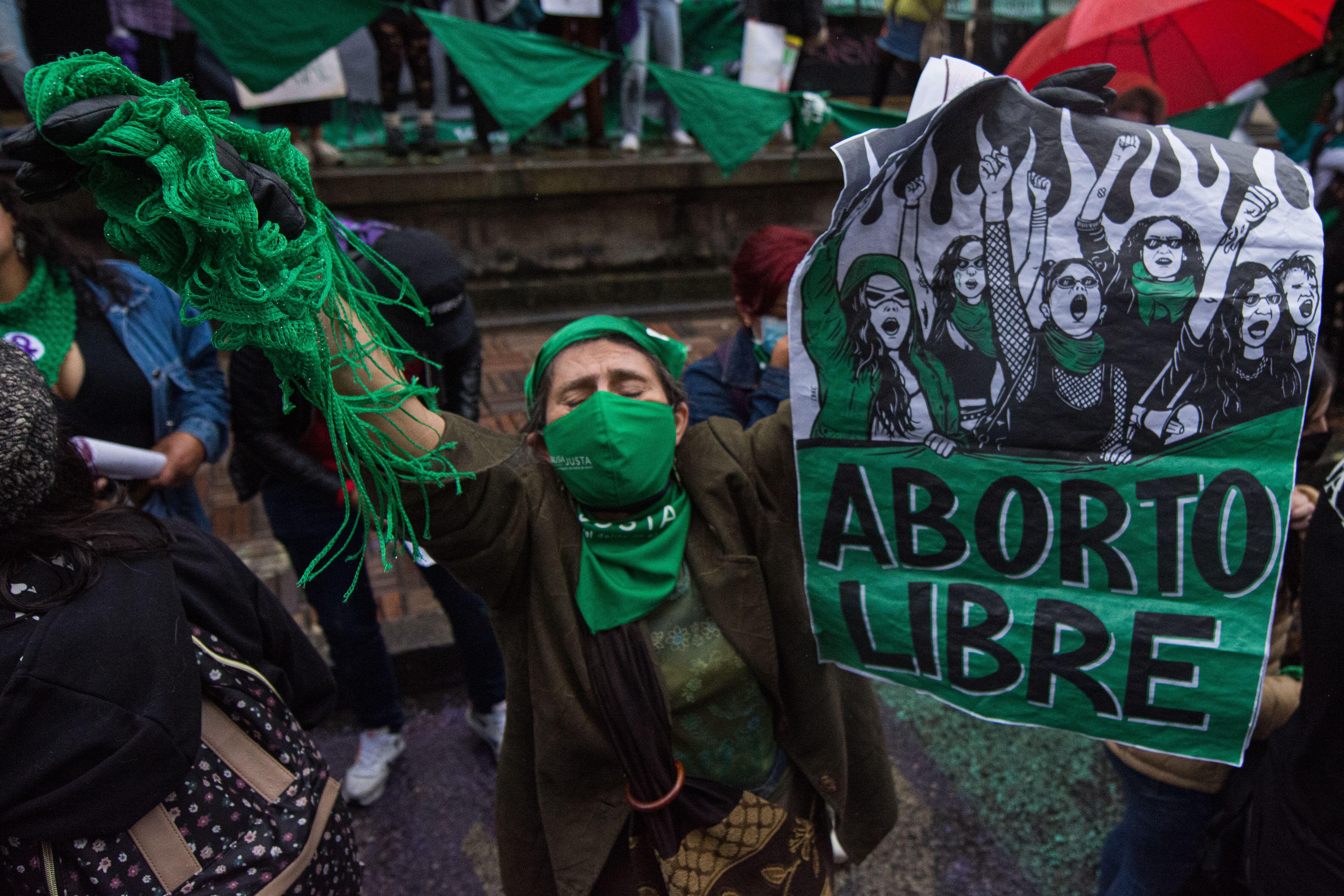
Today, the Colombian Constitutional Court decriminalized abortion up to 24 weeks in another victory for the Green Wave sweeping through Latin America. The historic decision follows years of campaigning by women's right's activists across Colombia and came off the back of two lawsuits that asked the court to declare article 122 of the penal code, that "the woman who causes her abortion or allows another to cause it, will incur a prison sentence from sixteen (16) to fifty-four (54) months" as unconstitutional. The court called an extraordinary meeting today, Monday 21st February, and took just a few hours to come to its decision which will go into effect immediately. ProFamilia, the International Planned Federation's Member Association in Colombia, and Colombia's largest provider of legal abortion care were heavily involved in pushing to extend the rights of those needing to access abortion care. Marta Royo, Executive Director for Profamilia, IPPF's Member Association in Colombia, said: "Today is a ground-breaking moment for the people of Colombia and a long-overdue guarantee of reproductive rights and dignity for all those who need abortion care, especially poor and rural women who bear the brunt of restrictive abortion policies. "The decriminalization of abortion up to 24 weeks in Colombia and the Green Wave movement across Latin America is centred not just on public health, but also the full lives, citizenship and human rights of girls, adolescents, and women – who, for multiple reasons, including inequity, access to education, gender-based violence and barriers to healthcare – continue to face unintended pregnancies. "The freedom for women to finally make their own choices about their pregnancies and their bodies is fundamental to disrupting the cycle of poverty that so many in Colombia face. This monumental decision is also a win for the dedicated health care providers, who will finally be recognized as people who simply care about the needs of others." While Colombian women have supposedly been able to access abortion care since 2006 under three circumstances: if their life or health is at risk, in cases of fatal foetal abnormalities, or if the pregnancy is the by-product of rape or incest, in reality, the criminalization of abortion persisted. The Guttmacher Institute found that less than one per cent of the estimated 400,000 abortions carried out each year in Colombia are performed legally, with women, especially poor, rural, vulnerable and marginalized women, facing significant barriers to accessing safe and timely abortion care. Many Colombian women are instead forced to carry their pregnancies to term or else seek other methods to end them. Figures collected by ProFamilia showed that during 2020, there were at least 26,223 unsafe abortions across Colombia, a startling amount for which consequences range from infection to life-changing injuries to death. As per the previous abortion law, other women have been imprisoned for up to four and a half years for having an abortion, even in cases where abortion should have been legal. In a shocking example of discrimination, data collected showed that poor rural women were more likely to be charged, with a third of those who faced charges also survivors of sexual violence. Eugenia Lopez Uribe, IPPF's Regional Director for Americas and the Caribbean Region, said: "Today Colombia took another step in the right direction for gender equality and full human rights for all, and we are incredibly proud of IPPF's Member Association, ProFamilia, for their tireless work alongside thousands of activists across Colombia and Latin America "This 24-week decriminalization is historic in the region and especially remarkable when we consider the current fragility of abortion rights globally and the anti-choice movements which continue to plague nations across the world, including in countries close to home like the United States of America. "While today we are celebrating this historic decision, the Green Wave is strong and growing, and the fight for reproductive rights and justice will not end until every person can access high-quality sexual and reproductive healthcare when and where they need it." For media enquiries in English, please contact Karmen Ivey on [email protected] or [email protected] For media enquiries in Spanish or during UK night-time hours, please contact Pamela Martin Garcia on [email protected]

23 November 2021
Will Colombia seize this opportunity to decriminalize abortion?
The Colombian Constitutional Court has a historical opportunity in its hands as it decides on whether or not to completely remove the crime of abortion from the penal code, making it a public health matter. Unlike many others in Colombia, I grew up in a home where I wanted for nothing. A fortunate child in a country where meeting basic needs continues to be a matter of privilege, the reflection of an unequal society mired by the infinite cycle of poverty. I grew up amid discussions of politics and human rights in a safe environment where I was encouraged to formulate my own thoughts. Yet even for me, like so many Colombian women and girls, speaking openly about sex and sexuality was strictly forbidden. Despite this, Colombia remains a society that sees motherhood as the only achievable goal in a woman's life. A paradox that is difficult to understand. From a young age, girls face the power of stereotypes and gender roles, coming to understand them as superior to anything else and realizing that when it comes to reproductive autonomy, there is no space to think, express opinions, and much less act. Since 2006, Colombian women have supposedly been able to access abortion care under three circumstances: if their life or health is at risk, in cases of fatal foetal abnormalities, or if the pregnancy is the by-product of rape or incest. Yet in spite of these laws, the criminalization of abortion persists. The Guttmacher Institute found that less than one per cent of the estimated 400,000 abortions carried out each year in Colombia are performed legally, with women, especially poor, rural, vulnerable and marginalized women, facing significant barriers to accessing safe and timely abortion care. Many women are forced to carry their pregnancies to term or else seek other methods to end them. Figures collected by ProFamilia, IPPF's Member Association and the largest provider of legal abortions in Colombia, showed that during 2020, there were at least 26,223 unsafe abortions across Colombia, a startling amount for which consequences range from infection to life-changing injuries to death. Other women have been imprisoned for up to four and a half years for having an abortion, even in cases where abortion should have been legal. In a sickening twist of events, charges actually increased by 320% from 2005 to 2008, with around 400 women prosecuted for procuring an abortion each year. Perhaps the most saddening example of discrimination is that most women charged were poor rural women, and a third, survivors of sexual violence. The decriminalization of abortion and the Green Wave movement is centred on public health, human rights, and the full citizenship and lives of girls, adolescents, and women – who, for multiple reasons, including gender-based violence, inequity, lack of education and barriers to healthcare – continue to face unintended pregnancies. And for whom the freedom to make choices about their pregnancies and their bodies will reduce adolescent and unintended pregnancy, reduce gender-based violence and help break the cycle of poverty that so many in Colombia face. For the dedicated health care providers, who also bear the burden of criminalization and stigma, decriminalization is an opportunity to make reproductive healthcare an integral part of physical, mental and social well-being. And a chance for abortion care providers to finally be recognized as people who simply care about the needs of others. So after a long, rigorous and objective process of data, figures, findings and stories, Colombia is on the cusp of change. To achieve total decriminalization would be groundbreaking, a decision that would change the course of Colombia and Latin America forever. Especially in the face of terrifying anti-choice movements which continue to plague nations across the globe, removing long-held rights from citizens, as we have seen in Texas and Poland. The magistrates should not be afraid of making the right decision. From Uruguay to Argentina, Mexico, and now Colombia, I am hopeful that my country will join the right side of history. Originally published by Thomson Reuters Foundation News
19 November 2025
Celebrating Transgender Awareness Week: visible, powerful, proud and loved
At IPPF we are working for inclusive sexual and reproductive healthcare delivery to transgender and gender diverse people, founded upon the principles of the rights to personal autonomy, bodily integrity and respect for confidentiality and dignity. Yet, around the world, transgender and gender diverse people continue to face widespread stigma, discrimination, violence and exclusion in healthcare settings. As part of IPPF’s commitment to person-centred care at the heart of our Come Together Strategy (2023–2028), we are standing proudly with trans and gender diverse people. We are pushing back against this stigma and violence and to expand the choice of existing or new quality sexual and reproductive health services for transgender and gender diverse people in facility and community settings.So, this week in celebration of Transgender Awareness Week held every November, we are sharing stories from three communities in Colombia, Thailand and Nepal to celebrate the organisations and individuals who stand defiant, working relentlessly and tirelessly, to be visible, powerful, proud and loved.Nothing to Cure - LGBTI in Bogota, ColombiaLa Fundación GAAT (Grupo de Acción y Apoyo a Personas Trans)In Bogotá, where an LGBTQI+ policy now protects rights and visibility, life feels different and slightly better than in many other Colombian cities. But Danne, a proud non-binary person, remembers when that wasn’t the case. Eighteen years ago, she helped open the first LGBTQI+ house in Bogotá, creating a space where people could finally be themselves.A survivor of conversion practices, Danne recalls being subjected to exorcisms and so-called therapies aimed at “fixing” her identity. “It is so hateful,” she says, “they tried to find a way to change my sexual orientation and identity.” That experience led her to become a human-rights activist in 2009. “In Bogota, we have a LGBTQI+ policy so our experience is different - it's better than the other cities. In my childhood, it was complicated to be LGBT as the policy did not exist at that moment. I started the first LGBTQI+ house in Bogota. It was really good as those houses allowed us to be ourselves, 18 years ago”Colombia has progressed since its 1991 Constitution recognised the country as a social state of rights, replacing the “Sacred Heart of Jesus” decree of 1881. Yet the struggle for equality continues. Danne now leads a campaign in Congress to ban conversion practices. Entitled ‘Nada Que Curar’ (Nothing to Cure) for the belief that no one should ever be forced to change who they are. Desfile de las Diversidades – Diversity Parade, Cartagena, ColombiaCasas de Caribe AfirmativoIn Cartagena, the Desfile de las Diversidades is more than a parade, it’s an act of collective visibility, resistance, and joy. Against the backdrop of colonial streets and Caribbean colour, this annual march reclaims public space as a place of belonging for everyone. It’s where laughter, rhythm, and rainbow flags challenge the silence and stigma that too often surround queer lives.At a time when anti-rights movements are growing louder, this march becomes a declaration: that diversity is not something to be merely tolerated but celebrated as a vital force that shapes who we are. Every dance step and banner is a statement of defiance against discrimination and an affirmation of freedom, dignity, and self-expression. Here, visibility itself is an act of courage. People walk not only for themselves, but for those who cannot yet walk safely. Together they create a living mosaic of identities, gay, lesbian, bisexual, transgender, intersex, non-binary, queer, all converging in a single message: we exist, we belong, and we will not be erased.The Desfile de las Diversidades is, at its heart, a celebration of coexistence and a vivid reminder that equality thrives not in uniformity, but in the beauty of difference. I Am Just Me - Bogotá, ColombiaDominica, a non-binary and trans-feminine person from Colombia, speaks with clarity and courage about identity, faith, and resistance in a society still struggling to accept difference.“I am a non-binary person with an experience of life as trans-feminine. I am from a Christian blood-family, they are conservative but hypocritical, as my mother worked in bars and other establishments that weren’t really ‘Christian’. And some of my aunts are not what you would imagine of a Christian person. But apparently being an LGBT person is the worst for them, worse than being a murderer or drug addict. For those reasons, I hid a lot of my life. From when I was born to when I was 18, I didn’t live for myself. I was the person my family wanted me to be. But then, when I graduated high school, I met people who helped me understand what was happening inside me… I was that ‘boy’ my family wanted, but something inside me kept saying ‘that is not me’.I would say I don’t know exactly who I am, but I know my trans family now. They’ve given me the opportunity to explore myself - my mind, my body - and what I am. When I went to university and dressed how I wanted, moving my body the way I wanted, it made people uncomfortable. But I know I’m making them think. They can see me and ask, ‘is he a boy? is she a girl?’ and I just say, I am just me, not a boy, not a girl.”Dominica’s story is a portrait of lived defiance; of claiming space in a world that seeks to define, confine, and ‘correct’. Through visibility, they transform discomfort into reflection, and resistance into self-knowledge. The body is political. We are all political, and we are all performing gender; whether cis, trans or non-binary. When Love Wins, We All Win. Watee Kongbang (she/her) - Issan, Thailand Koen Khan Branch, Planned Parenthood Association of Thailand (PPAT)Thailand is often celebrated for its visible transgender community, yet full equality remains out of reach, from the lack of legal gender recognition to persistent stigma. Within this landscape, proud transgender woman Watee Kongbang stands as a symbol of resilience and joy. “For so long, I dreamed of the day I could stand proudly in a wedding dress, holding the hand of the person I love, without fear, without judgment, and without having to hide who I truly am. It may seem like a simple wish, but for someone like me, it carries a lifetime of struggle, hope, and longing to be seen as equal.Your support, understanding, and belief in equality have given me more than just a dream fulfilled, they’ve given me the right to exist as myself, to love freely, and to be proud of my identity. That single act of acceptance and recognition means more than words can express.Because when love wins, we all win.” Pride Begins Here - Isaan, Thailand Koen Khan Branch, Planned Parenthood Association of Thailand (PPAT) In a high school courtyard in Isaan, these students have built an LGBTIQ-friendly group where acceptance feels natural. Together, they apply their makeup, do each other’s hair, and express themselves freely, simple rituals that will imbue them with confidence as they soon end their high school careers and embark into the world. Their school and teachers are equally supportive, creating an environment where being yourself isn’t a risk but a right. In a region where visibility can still be fraught, this youth club represents a quiet revolution: young people learning that pride can begin in the classroom, and that solidarity can look like friendship, laughter, and the freedom to just be. I am living my truth, and I am proud - Kathmandu, NepalFamily Planning Association of Nepal “I am living my truth, and I am proud of that. Before, I used to hide, but now I live openly,” says 27-year-old trans woman, Suhana Thapa Magar.As a child, Suhana loved to secretly wear her mother’s saree, lipstick, and kajal (kohl), washing her face quickly if anyone came home. “I didn’t even know how to put them on, I was a child” she laughs, “but it felt like me.”Suhana first understood she was a trans woman in grade 10. She had always felt connected to her femininity but didn’t yet have the language for it. Then she heard Pahichan, a radio programme by Blue Diamond Society, a LGBTQIA+ rights organisation in Nepal. “That was when I realised, I am a trans woman,” she shares. Suhana later found the Family Planning Association of Nepal, an IPPF Member Association, and its Rainbow Clinic, where she received counselling and laser services designed specifically for LGBTQI+ people. “For trans women, services like this are rare. At the Rainbow Clinic, I felt seen, respected, and safe. The laser care and counselling gave me the confidence to express the femininity I’ve always carried inside me. The care I received feels precious.”Her journey, however, has also been shaped by pain. “My family did not accept me. Even now they don’t,” she says. She visits them occasionally, but she has chosen her truth. “Even more than that, I chose my life, my identity. I am proud. And I like that.” Suhana carries a message for her own family, and for all families of trans children:“I don’t blame them. I just want them to understand me more. If you are unsure, ask me questions. Let go of society’s judgement and accept your child. And to all families: your trans children need your love, guidance, and the chance to grow strong and independent. Be there for them.”
18 December 2024
Health Without Borders: Supporting Women on the World’s Deadliest Journeys
On this International Migrants Day, we speak with Valerie Dourdin, IPPF’s Humanitarian Director, about her recent visit to the Darién Gap, a perilous crossing linking South and Central America. With decades of humanitarian experience, Valerie highlights the hidden struggles women face on the move, and IPPF’s ambitious plans to deliver lifesaving sexual and reproductive healthcare (SRH) along key migration routes. With a focus on localisation and coordinated support, Valerie outlines a bold vision for ensuring the needs of women on the move are not forgotten. Can you start by telling us about your background and what brought you to IPPF? I have had the privilege to work for 15 years with the Red Cross, 10 years with the UN, and later with Save the Children, with experience across every continent. I was fortunate to work alongside strong local teams at every step of my career. They taught me how to do my job, and that experience shaped my understanding of effective, localised humanitarian work. My move to IPPF was inspired by my previous work in Colombia, where we ran a SRH clinic. Seeing the lifesaving importance of sexual and reproductive healthcare, and the difficulty of securing funding for it, drove me to continue this work. SRH isn’t a luxury, it’s critical for current and future generations, and IPPF provided an opportunity to address that gap globally, especially in humanitarian settings. Who are ‘people on the move’? ‘People on the move’ refers to individuals who are fleeing from conflict, violence, economic hardship or climate change. Many people on the move have simply run out of options in their home countries and are forced to leave in search of safety, opportunity, or survival. These journeys can be incredibly dangerous and take weeks, months, or even years. Without documents, people must take unofficial routes, crossing irregularly into countries, leaving them vulnerable to violence, exploitation, and trafficking. There are currently two major migration routes. The first is across Africa, where people travel north toward the Mediterranean. The second is in the Americas, where journeys often begin in Chile, Argentina, or Haiti, moving north through Colombia and Central America toward the US. Increasingly, people from Africa and as far as China are arriving in South America to follow this route. A critical and perilous passage in this region is the Darién Gap, a treacherous 70-mile stretch of dense jungle between Colombia and Panama. Women and families endure immense hardship on these routes, yet their stories of violence, exploitation, and survival are rarely heard. What was the aim of your recent visit to South and Central America? We wanted to better understand the current situation along migration routes, particularly in Colombia and the Darién Gap, and see how IPPF could scale up support for women and girls on the move, through our Member Association (MA) Profamilia, who are leading the response. Profamilia is a great organisation with decades of experience providing sexual and reproductive health (SRH) services in Colombia. They run over 50 clinics across the country and are well-respected for their work, including in emergency settings. During my visit, we discussed their plans to scale up mobile clinic services in key areas like Necoclí and Capurganá, where many migrants gather before attempting the difficult journey through the Darién Gap. These clinics offer SRH services like family planning, HIV and STI screening. I then travelled to Panama, where the Darién Gap ends, to meet with local and national organisations. My aim was to start building a network of coordinated SRH and particularly SGBV care, so that women have access to support both before they enter the gap and when they emerge on the other side. What did you witness in the Darién Gap, and how are women impacted? The Darién Gap is one of the most dangerous border crossings of the Americas migration route in the world and is controlled by armed criminal groups. For families making the journey, it can turn into a nightmare. Rivers rise without warning, people get lost in the thick forest, and many disappear without a trace. A fit young man might cross in five days, but for mothers with small children, it can take 10 to 15 days or more. When I visited two years ago this route was starting to pick up, in 2023 around 600,000 people attempted the crossing. This year, it has dropped significantly to around 230,000, but what struck me was the increased desperation. You now see many lower-income families, with less access to resources and information. Many families sell everything to pay smugglers only to be ripped off, so they’re stuck in places like Necoclí for weeks or months. Women told me they had nothing left to go back to, so they had no choice but to push forward. I saw mothers with newborn babies in their arms about to start the journey. I spoke to a young child and asked her where she was going, she smiled and said, “To the beach.” Parents do their best to protect their children but can’t prepare them for the unimaginable ordeal ahead. Two years ago, the jungle was impenetrable. Now, there are some rudimentary paths, but it’s still extremely muddy, dangerous, and slow. You see families starting their journey loaded with a heavy backpack, but by the time they reach Panama, they have absolutely nothing. Reports revealed that approximately one in three women making the crossing experienced sexual violence on the route, and over half had been robbed.
EmpowHER: IPPF Announces New Global Initiative to Empower Women, Girls, and Marginalized Communities
The International Planned Parenthood Federation (IPPF) has launched the CAD48 million "EmpowHER" project in partnership with Global Affairs Canada. The initiative aims to improve sexual and reproductive health and rights (SRHR) for marginalised women, girls, and underserved communities across at least 11 countries. EmpowHER will enhance access to sexual and reproductive health (SRH) care, deliver comprehensive sexuality education, and combat growing threats to SRHR through policy reform and advocacy. This partnership aligns with Canada’s commitment to gender equality and empowering young people to make informed choices about their well-being. Ensuring Inclusive SRHR Delivery for Women, Girls and Marginalise Communities (EmpowHER), is a large-scale initiative that will strengthen access to SRHR for the most marginalised and underserved groups, particularly women and girls. It will support millions of women, girls, and vulnerable communities in Burkina Faso, Democratic Republic of Congo, Ghana, Guinea, Guinea-Bissau, Kenya, Mauritania, Sudan, Zambia, Uganda, Togo, Colombia, Ecuador and Pakistan. Through an intersectional, human rights-based feminist approach, EmpowHER will increase access to much needed rights-based SRH care, including access to person-centred safe and legal abortion care. It will deliver critical comprehensive sexuality education (CSE) to empower young people to act on their sexual and reproductive rights (SRR) by expanding their access to quality, rights-based, and gender-sensitive CSE. Furthermore, this initiative will also counteract the growing threats to women’s and girls' sexual and reproductive health rights, by providing urgent support to improve policies and strengthen the capacity of movements and coalitions. Dr. Alvaro Bermejo, Director-General of IPPF, emphasised the critical need to protect and expand access to SRHR. “This new project will continue our mission of empowering women and girls, particularly in Sub Saharan Africa, to make informed decisions about their bodies. We will not only increase access to much needed SRHR services including safe and legal abortion but will also deliver CSE to young people and tackle the rollback of SRHR rights.” “We’re grateful to the Canadian Government for their support and continued partnership.” The funding, unveiled during the United Nations General Assembly (UNGA), is part of Canada’s 10-Year Commitment to Global Health and Rights and aligns with its Feminist International Assistance Policy. Canada is committed to securing a more gender-equal world in which young people are empowered to exercise their rights and make free and informed decisions about their sexuality and well-being. "By supporting the EmpowHER initiative, Canada is taking another step towards achieving gender equality and empowering women and girls, in all their diversity, worldwide. This project will not only improve access to vital sexual and reproductive health services, but also ensure that the most marginalized communities can exercise their rights and make informed choices about their health and future. Together, we will strengthen partnerships that champion these rights and protect the progress we've made", said the Honourable Ahmed Hussen, Minister of International Development, Canada.
Abortion Rights: Latest Decisions and Developments around the World
Over the past 30 years, more than 60 countries and territories have liberalized their abortion laws. Only four have regressed, including the United States. Abortion rights are increasingly becoming recognized as fundamental human rights for millions of people worldwide. The global landscape of abortion rights continues to evolve in 2024, with new legislation and feminist movements fighting for better access. Let's take a trip around the world to see the latest developments.
06 March 2023
From words to action
Earlier this year, on the 22nd of February, ProFamilia was awarded the José Acevedo y Gómez Civil Order of Merit, the highest distinction awarded by the Bogotá Council, in recognition of the hard work that the Organization has carried out for almost 58 years to achieve the effective empowerment of sexuality in Bogotá and in the rest of the country. At times like this, it is inevitable to look back to the mid-1960s, when guaranteeing reproductive autonomy for women, especially the most vulnerable, became the dream and raison d'être of the work of gynaecologist Fernando Tamayo, a dream that materialised with the creation of ProFamilia in Bogotá. We have made progress! Today, several decades later, we are celebrating with a new generation of women, the first anniversary of the decriminalization of abortion in Colombia, a historic decision that has as its essence equity, freedom, autonomy, social justice and the dream with which our Organization was born: that all people can exercise their Sexual and Reproductive Rights. No woman or pregnant woman can ever again be singled out or criminalized for deciding to terminate her pregnancy for whatever reasons she chooses, and the system, of which we are all a part, must allow her rights to become a reality.
Colombia decriminalizes abortion: one year anniversary
Profamilia – an IPPF Member Association and the leading sexual and reproductive rights organization in Colombia – is celebrating the first anniversary of the decriminalization of abortion across the country. The move - Ruling C-055 - which allows abortion up to 24 weeks of gestation under any circumstance is saving lives across Colombia, and means those who have an abortion no longer face prosecution or criminalization. A historic step for the rights of women and pregnant people both in the country and across Latin America. Over the last year, Profamilia via its nationwide network of more than 50 clinics has helped guarantee sexual and reproductive health and rights, focusing on providing safe abortion care services in person as well as the provision of telemedicine for rural women. For a country which sees 132,000 cases annually of complications from unsafe abortions and 70 women lose their lives each year – the shift in focus to abortion as a public health issue means healthcare providers can now focus on providing life-saving care and ending unsafe abortion. Alongside the ruling, the Ministry of Health, has also regulated abortion services throughout Colombia via Resolution 051, reiterating that abortion is an essential and urgent health service, which women, including migrant women, and pregnant people (transgender men, trans masculinities, non-binary people, among others) must be able to access without restriction and for free. Further rulings also embeds the provision of sexual and reproductive health information into Colombian health services. Marta Royo, the Executive Director of ProFamilia, said: "Profamilia's commitment will always be to provide comprehensive, humanized and safe services that allow free and informed decision making, and we reiterate this today” "After one year it is possible to see the progress the country has made in terms of reproductive autonomy and rights for women and pregnant people. However, we must move from text to action, and ensure that decriminalization means healthcare. Profamilia's commitment will always be to provide comprehensive, humanized and safe services that allow free and informed decision making." Eugenia López Uribe, Regional Director of IPPF for the Americas and The Caribbean.
IPPF Office in Bogota
We are overjoyed to announce the opening of the first of two locations of the International Planned Parenthood Federation - Americas and the Caribbean Regional Office (ACRO), in Bogota, Colombia. IPPF Director-General Dr. Alvaro Bermejo, IPPF ACRO's Regional Director Eugenia López Uribe, Deputy Regional Director Dona Da Costa Martinez, and IPPF Director of External Relations Mina Barling were joined by team members from the ACRO and London Offices to reinforce the commitment to the fight for rights and access to sexual and reproductive services in the region. This is an especially exciting time as Colombia stands as the latest champion to step forward to protect the bodily autonomy of everyone with the possibility of gestation, with a recent Constitutional Court victory legalizing access to abortion until 24 weeks. The new IPPF Americas and the Caribbean Regional Office serves Member Associations and Collaborative Partners in over 24 countries across the region, and which are growing in their movement building and service delivery capabilities, including comprehensive sex education, provision of contraceptive, safe abortion, and maternal care and responding to humanitarian crisis. IPPF pride ourselves on being local through our members and global through our network. At the heart of our mission is the provision of – and advocacy in support of – integrated healthcare to anyone who needs it regardless of race, gender, sex, income, and crucially no matter how remote. Volunteerism is central to our healthcare delivery. It underpins the vital work of our members and their teams, whether through community outreach and distribution of contraceptive care or the regional Youth Action Movements championing change.
Colombia decriminalizes abortion
The Colombian Constitutional Court has decriminalized abortion up to 24 weeks in another victory for the Green Wave sweeping through Latin America. The historic decision follows years of campaigning by women's right's activists across Colombia and came off the back of two lawsuits that asked the court to declare article 122 of the penal code, that "the woman who causes her abortion or allows another to cause it, will incur a prison sentence from sixteen (16) to fifty-four (54) months" as unconstitutional. Having delayed several times over the past two years, the court called an extraordinary meeting on Monday 21st February 2022, and took just a few hours to come to its decision - ruling five against four to decriminalize the healthcare procedure. The decision will go into effect immediately. ProFamilia, IPPF's Member Association in Colombia, and Colombia's largest provider of legal abortion care was heavily involved in pushing to extend the rights of those needing to access abortion care. Colombia follows other countries in the region such as Mexico and Argentina, while parliamentarians in Ecuador last week eased regulations to allow access to abortion in cases of rape. Marta Royo, Executive Director for Profamilia, IPPF's Member Association in Colombia, said: "Today is a ground-breaking moment for the people of Colombia and a long-overdue guarantee of reproductive rights and dignity for all those who need abortion care, especially poor and rural women who bear the brunt of restrictive abortion policies. "The decriminalization of abortion up to 24 weeks in Colombia and the Green Wave movement across Latin America is centred not just on public health, but also the full lives, citizenship and human rights of girls, adolescents, and women – who, for multiple reasons, including inequity, access to education, gender-based violence and barriers to healthcare – continue to face unintended pregnancies. "The freedom for women to finally make their own choices about their pregnancies and their bodies is fundamental to disrupting the cycle of poverty that so many in Colombia face. This monumental decision is also a win for the dedicated health care providers, who will finally be recognized as people who simply care about the needs of others." While Colombian women have supposedly been able to access abortion care since 2006 under three circumstances: if their life or health is at risk, in cases of fatal foetal abnormalities, or if the pregnancy is the by-product of rape or incest, in reality, the criminalization of abortion persisted. The Guttmacher Institute found that less than one per cent of the estimated 400,000 abortions carried out each year in Colombia are performed legally, with women, especially poor, rural, vulnerable and marginalized women, facing significant barriers to accessing safe and timely abortion care. Many Colombian women are instead forced to carry their pregnancies to term or else seek other methods to end them. Figures collected by ProFamilia showed that during 2020, there were at least 26,223 unsafe abortions across Colombia, a startling amount for which consequences range from infection to life-changing injuries to death. As per the previous abortion law, other women have been imprisoned for up to four and a half years for having an abortion, even in cases where abortion should have been legal. In a shocking example of discrimination, data collected showed that poor rural women were more likely to be charged, with a third of those who faced charges also survivors of sexual violence. Eugenia Lopez Uribe, IPPF's Regional Director for Americas and the Caribbean Region, said: "Today Colombia took another step in the right direction for gender equality and full human rights for all, and we are incredibly proud of IPPF's Member Association, ProFamilia, for their tireless work alongside thousands of activists across Colombia and Latin America "This 24-week decriminalization is historic in the region and especially remarkable when we consider the current fragility of abortion rights globally and the anti-choice movements which continue to plague nations across the world, including in countries close to home like the United States of America. "While today we are celebrating this historic decision, the Green Wave is strong and growing, and the fight for reproductive rights and justice will not end until every person can access high-quality sexual and reproductive healthcare when and where they need it."
Colombia decriminalizes abortion
Today, the Colombian Constitutional Court decriminalized abortion up to 24 weeks in another victory for the Green Wave sweeping through Latin America. The historic decision follows years of campaigning by women's right's activists across Colombia and came off the back of two lawsuits that asked the court to declare article 122 of the penal code, that "the woman who causes her abortion or allows another to cause it, will incur a prison sentence from sixteen (16) to fifty-four (54) months" as unconstitutional. The court called an extraordinary meeting today, Monday 21st February, and took just a few hours to come to its decision which will go into effect immediately. ProFamilia, the International Planned Federation's Member Association in Colombia, and Colombia's largest provider of legal abortion care were heavily involved in pushing to extend the rights of those needing to access abortion care. Marta Royo, Executive Director for Profamilia, IPPF's Member Association in Colombia, said: "Today is a ground-breaking moment for the people of Colombia and a long-overdue guarantee of reproductive rights and dignity for all those who need abortion care, especially poor and rural women who bear the brunt of restrictive abortion policies. "The decriminalization of abortion up to 24 weeks in Colombia and the Green Wave movement across Latin America is centred not just on public health, but also the full lives, citizenship and human rights of girls, adolescents, and women – who, for multiple reasons, including inequity, access to education, gender-based violence and barriers to healthcare – continue to face unintended pregnancies. "The freedom for women to finally make their own choices about their pregnancies and their bodies is fundamental to disrupting the cycle of poverty that so many in Colombia face. This monumental decision is also a win for the dedicated health care providers, who will finally be recognized as people who simply care about the needs of others." While Colombian women have supposedly been able to access abortion care since 2006 under three circumstances: if their life or health is at risk, in cases of fatal foetal abnormalities, or if the pregnancy is the by-product of rape or incest, in reality, the criminalization of abortion persisted. The Guttmacher Institute found that less than one per cent of the estimated 400,000 abortions carried out each year in Colombia are performed legally, with women, especially poor, rural, vulnerable and marginalized women, facing significant barriers to accessing safe and timely abortion care. Many Colombian women are instead forced to carry their pregnancies to term or else seek other methods to end them. Figures collected by ProFamilia showed that during 2020, there were at least 26,223 unsafe abortions across Colombia, a startling amount for which consequences range from infection to life-changing injuries to death. As per the previous abortion law, other women have been imprisoned for up to four and a half years for having an abortion, even in cases where abortion should have been legal. In a shocking example of discrimination, data collected showed that poor rural women were more likely to be charged, with a third of those who faced charges also survivors of sexual violence. Eugenia Lopez Uribe, IPPF's Regional Director for Americas and the Caribbean Region, said: "Today Colombia took another step in the right direction for gender equality and full human rights for all, and we are incredibly proud of IPPF's Member Association, ProFamilia, for their tireless work alongside thousands of activists across Colombia and Latin America "This 24-week decriminalization is historic in the region and especially remarkable when we consider the current fragility of abortion rights globally and the anti-choice movements which continue to plague nations across the world, including in countries close to home like the United States of America. "While today we are celebrating this historic decision, the Green Wave is strong and growing, and the fight for reproductive rights and justice will not end until every person can access high-quality sexual and reproductive healthcare when and where they need it." For media enquiries in English, please contact Karmen Ivey on [email protected] or [email protected] For media enquiries in Spanish or during UK night-time hours, please contact Pamela Martin Garcia on [email protected]
23 November 2021
Will Colombia seize this opportunity to decriminalize abortion?
The Colombian Constitutional Court has a historical opportunity in its hands as it decides on whether or not to completely remove the crime of abortion from the penal code, making it a public health matter. Unlike many others in Colombia, I grew up in a home where I wanted for nothing. A fortunate child in a country where meeting basic needs continues to be a matter of privilege, the reflection of an unequal society mired by the infinite cycle of poverty. I grew up amid discussions of politics and human rights in a safe environment where I was encouraged to formulate my own thoughts. Yet even for me, like so many Colombian women and girls, speaking openly about sex and sexuality was strictly forbidden. Despite this, Colombia remains a society that sees motherhood as the only achievable goal in a woman's life. A paradox that is difficult to understand. From a young age, girls face the power of stereotypes and gender roles, coming to understand them as superior to anything else and realizing that when it comes to reproductive autonomy, there is no space to think, express opinions, and much less act. Since 2006, Colombian women have supposedly been able to access abortion care under three circumstances: if their life or health is at risk, in cases of fatal foetal abnormalities, or if the pregnancy is the by-product of rape or incest. Yet in spite of these laws, the criminalization of abortion persists. The Guttmacher Institute found that less than one per cent of the estimated 400,000 abortions carried out each year in Colombia are performed legally, with women, especially poor, rural, vulnerable and marginalized women, facing significant barriers to accessing safe and timely abortion care. Many women are forced to carry their pregnancies to term or else seek other methods to end them. Figures collected by ProFamilia, IPPF's Member Association and the largest provider of legal abortions in Colombia, showed that during 2020, there were at least 26,223 unsafe abortions across Colombia, a startling amount for which consequences range from infection to life-changing injuries to death. Other women have been imprisoned for up to four and a half years for having an abortion, even in cases where abortion should have been legal. In a sickening twist of events, charges actually increased by 320% from 2005 to 2008, with around 400 women prosecuted for procuring an abortion each year. Perhaps the most saddening example of discrimination is that most women charged were poor rural women, and a third, survivors of sexual violence. The decriminalization of abortion and the Green Wave movement is centred on public health, human rights, and the full citizenship and lives of girls, adolescents, and women – who, for multiple reasons, including gender-based violence, inequity, lack of education and barriers to healthcare – continue to face unintended pregnancies. And for whom the freedom to make choices about their pregnancies and their bodies will reduce adolescent and unintended pregnancy, reduce gender-based violence and help break the cycle of poverty that so many in Colombia face. For the dedicated health care providers, who also bear the burden of criminalization and stigma, decriminalization is an opportunity to make reproductive healthcare an integral part of physical, mental and social well-being. And a chance for abortion care providers to finally be recognized as people who simply care about the needs of others. So after a long, rigorous and objective process of data, figures, findings and stories, Colombia is on the cusp of change. To achieve total decriminalization would be groundbreaking, a decision that would change the course of Colombia and Latin America forever. Especially in the face of terrifying anti-choice movements which continue to plague nations across the globe, removing long-held rights from citizens, as we have seen in Texas and Poland. The magistrates should not be afraid of making the right decision. From Uruguay to Argentina, Mexico, and now Colombia, I am hopeful that my country will join the right side of history. Originally published by Thomson Reuters Foundation News