



One of our main priorities is to ensure universal access to, and informed use of effective contraception. Millions of people lack the knowledge and information to determine when or whether they have children, and they are unable to protect themselves against sexually transmitted infections (STIs).
Articles about Contraception
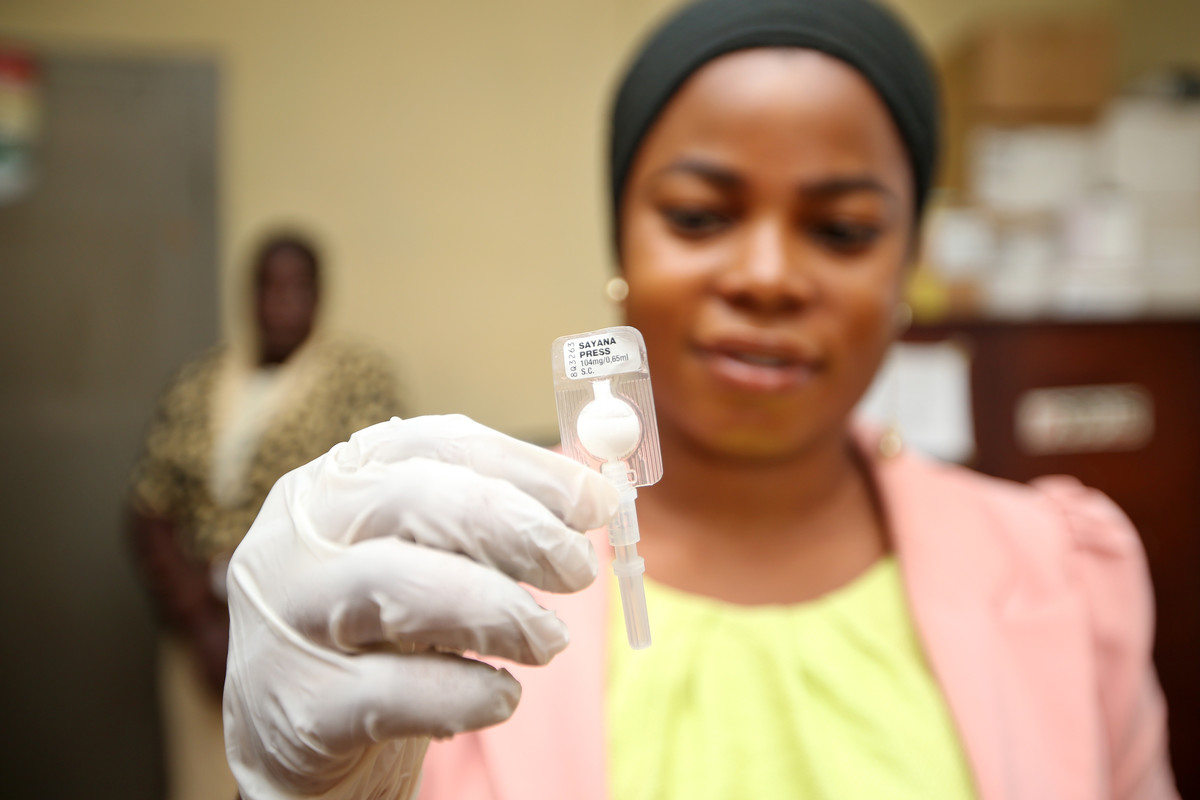
Sayana efforts will help widen contraceptive choice for world’s poorest and neglected women says IPPF
Expanding contraceptive choices offers the potential to put power into women’s hands said the International Planned Parenthood Federation (IPPF) in reaction to the Sayana Press announcement by Pfizer BD, and the Bill and Melinda Gates Foundation, and CIFF today. IPPF is already playing a major role in the introduction of Sayana Press to increase access to the world’s most poorest and underserved women and girls. Sayana Press is offered as part of the contraceptive mix by IPPF’s Member Associations in Uganda, Nigeria, Burkina Faso and Senegal. They are doing this by providing Sayana Press at our extensive network of clinics, and by training community volunteers and government staff to give women Sayana Press in their own communities. Tewodros Melesse, Director General IPPF said; “This announcement is a great opportunity to enable women and girls who are often left behind because they are poor, unable to make decisions because of their partners, too far from a clinic or disabled to access contraception. Sayana Press has the potential to reach those who have never been able to access family planning before. We have seen that Sayana Press is popular with women in remote communities who can’t easily get to a clinic or drug shop. We are keen to see countries move towards community based distribution and ultimately, self-injections. All efforts must truly reach the last mile. Enabling women to administer in their own time and wherever they are is the only way to put power truly into women’s hands. It is a great step in helping to tackle the needs of the most poorest or neglected women and girls. But like any contraceptive, it must be offered as part of a broader mix of methods available and not favored more than others. Choice means every women and girl has the right to choose about their contraception wherever and whoever they are.” IPPF launched its annual global I Decide Campaign on family planning today. IPPF is fighting for a world where women everywhere can say "I decide". Support our call for universal access to contraception! Add your voice

08 May 2017
Under-served and over-looked - Executive summary
The evidence is clear: family planning saves lives. Yet, the poorest and most marginalized women and girls are being left behind during one of the most successful advances in public health in the past half century. IPPF’s report Under-served and Over-looked offers an overview of the women and girls that are being left behind and unable to access the life-saving contraception they want and need. IPPF is fighting for a world where women everywhere can say "I decide". Support our call for universal access to contraception! Add your voice
26 April 2017
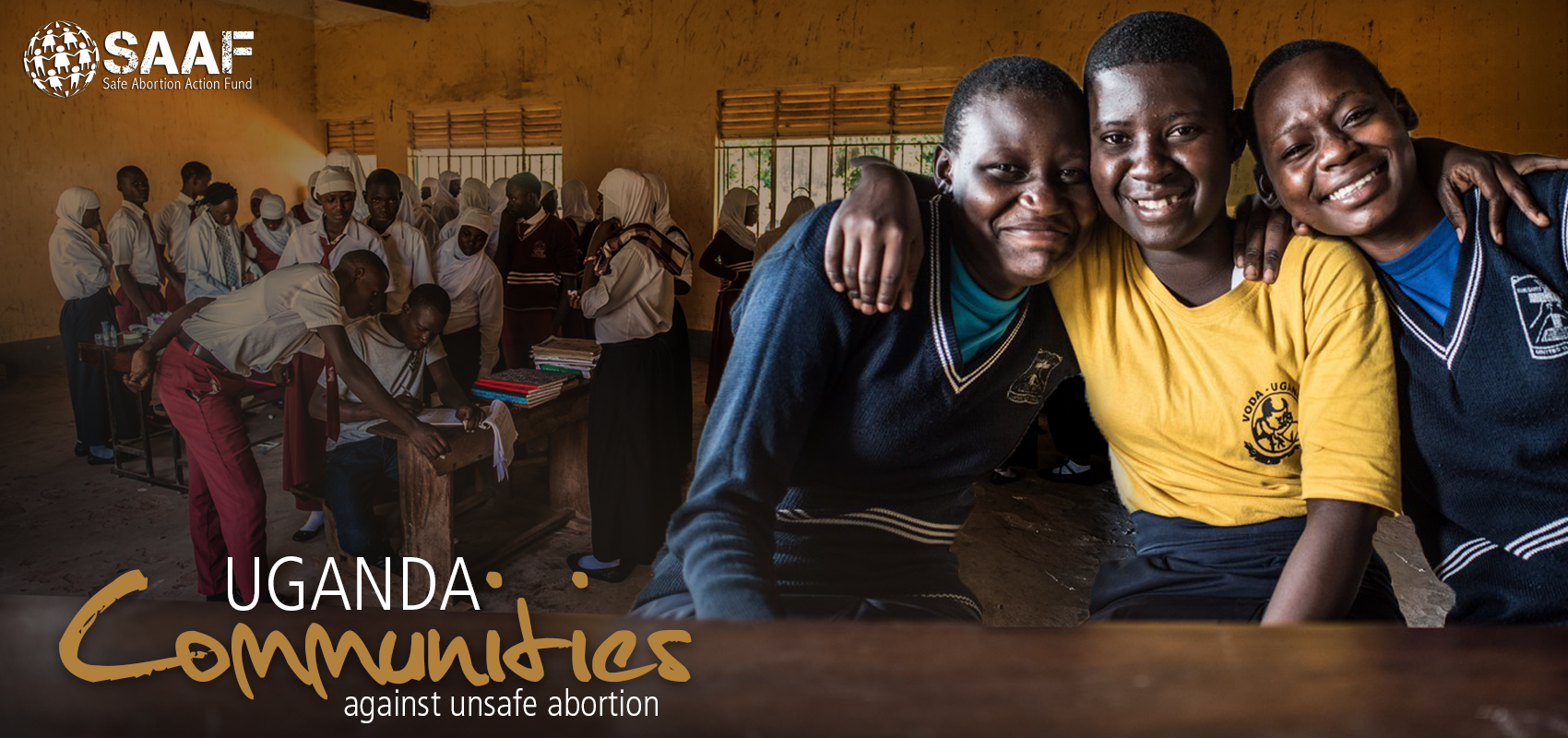
Empowering school students for change
Stopping unsafe abortion and stigma through education Rural communities in Uganda have a high prevalence rate of gender inequality, sexual abuse and incest. There is little provision of sexual and reproductive health services and abortion is highly restricted. The Safe Abortion Action Fund, hosted by IPPF, is financing the grassroots organization, VODA, to empower young people as changemakers in their schools and communities. With training and support, peer educators have been educating friends about sexual and reproductive health, and local health providers are serving women in need. Death from unsafe abortion was once a widespread problem but through the power of peer education, these have almost disappeared and community attitudes towards safe abortion has been transformed. READ MORE Maria Midwife Grace "I took care of Anne after she tried an unsafe abortion, she was bleeding a lot, she may have even died. She had been raped ." READ MY STORY Margret Mother Margret "I lost my daughter, Gladys. She was 16 and studying at senior secondary school. I didn't know she was pregnant" READ MY STORY Mary COUNSELOR Mary "Sometimes we receive cases related to incest. I thank VODA for coming to aid these desperate young girls who have had experiences like mine." READ MY STORY John Owoli RELIGIOUS LEADER John Owoli "I decided to join a campaign that focuses on stopping unsafe abortion because I just want to save lives. Stigma was a very widespread problem here." READ MY STORY See more about the Safe Abortion Action Fund in Uganda
11 April 2017
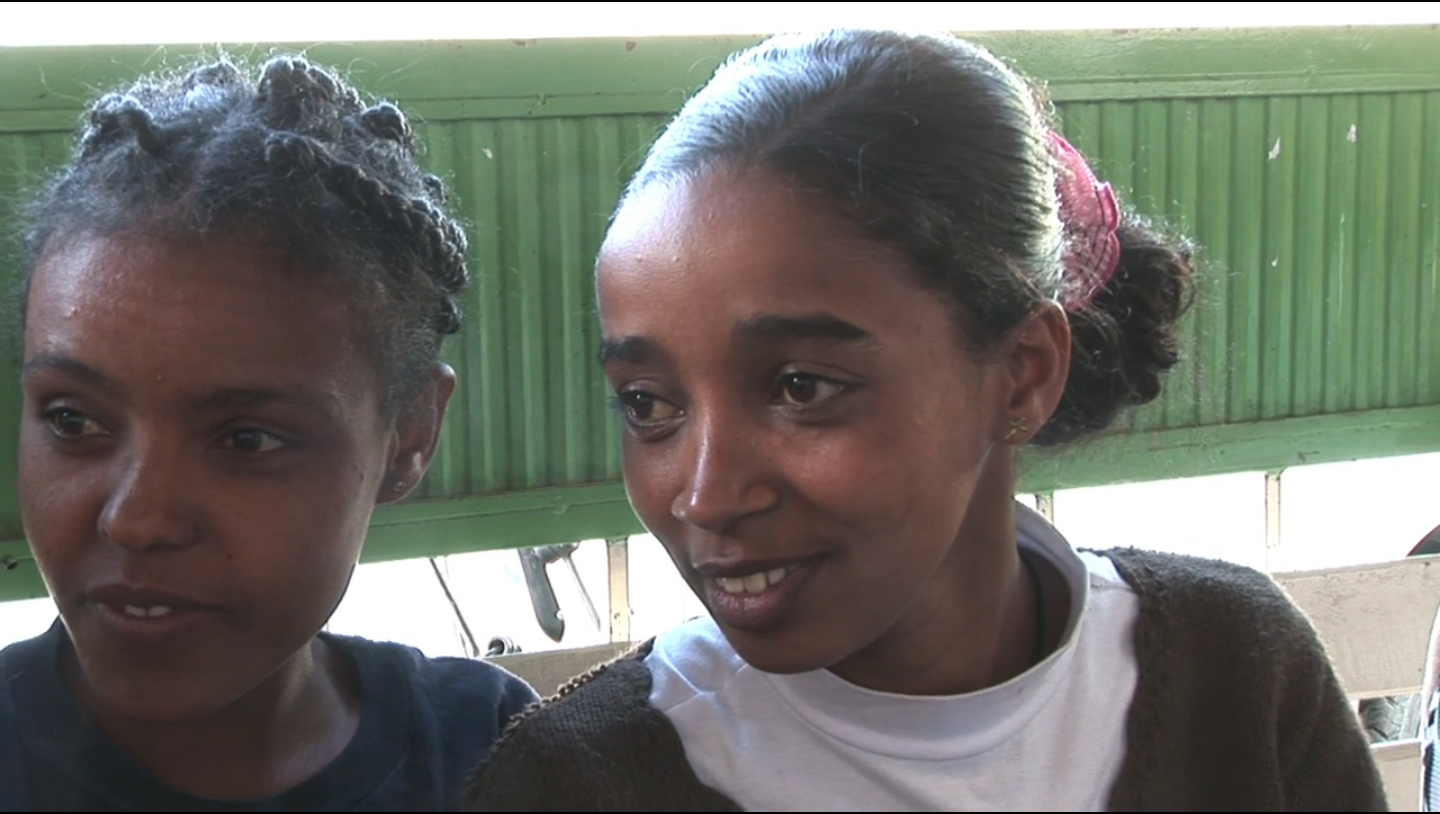
IPPF at the She Decides Conference, Brussels, 2017
In response to President Trump's reinstatement of the Global Gag Rule 50 countries and leading civil society organizations rallied together. The aim of the She Decides Conference was for these governments to reaffirm their commitments to sexual and reproductive health and rights. These are human rights which are now at risk around the world because the Global Gag Rule blocks critical USAID funding to health organizations like IPPF. IPPF is losing $100m in funding from USAID which means programs to deliver life-saving health services will be jeopardised. With increased commitments from other leading governments around the world, civil society organizations like IPPF can continue to provide the access to service and information that millions of women need.
07 April 2017
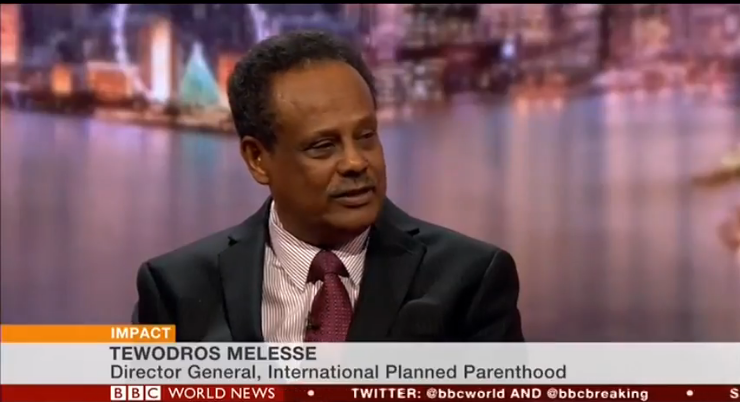
IPPF defends UN agency on BBC World News
IPPF Director General Tewodros Melesse has defended the record of the United Nations Population Fund (UNFPA) in an interview with BBC World News, the BBC’s global television news channel. Speaking to presenter Philippa Thomas on the programme “Impact”, Mr Melesse rubbished claims from the Trump administration – used to justify the withdrawal of US funding – that UNFPA in any way supported coercive family policies in China. He explained that IPPF and UNFPA, with which IPPF partners across the world to provide vital reproductive health care for millions of women and girls – were committed to defending rights and increasing choice. He added that the loss of funding to UNFPA and IPPF – through the re-imposition of the so-called Global Gag Rule by President Trump – would cost the lives of tens of thousands of women and lead to millions of additional unplanned pregnancies and unsafe abortions. Subscribe to IPPF's updates!
IPPF defends UN agency on BBC World News
IPPF Director General Tewodros Melesse has defended the record of the United Nations Population Fund (UNFPA) in an interview with BBC World News, the BBC’s global television news channel. Speaking to presenter Philippa Thomas on the programme “Impact”, Mr Melesse rubbished claims from the Trump administration – used to justify the withdrawal of US funding – that UNFPA in any way supported coercive family policies in China. He explained that IPPF and UNFPA, with which IPPF partners across the world to provide vital reproductive health care for millions of women and girls – were committed to defending rights and increasing choice. He added that the loss of funding to UNFPA and IPPF – through the re-imposition of the so-called Global Gag Rule by President Trump – would cost the lives of tens of thousands of women and lead to millions of additional unplanned pregnancies and unsafe abortions. Subscribe to IPPF's updates!
05 April 2017
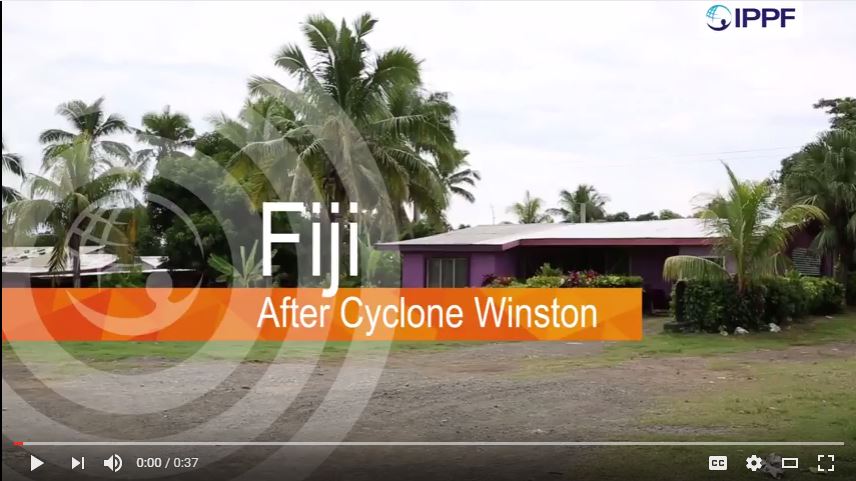
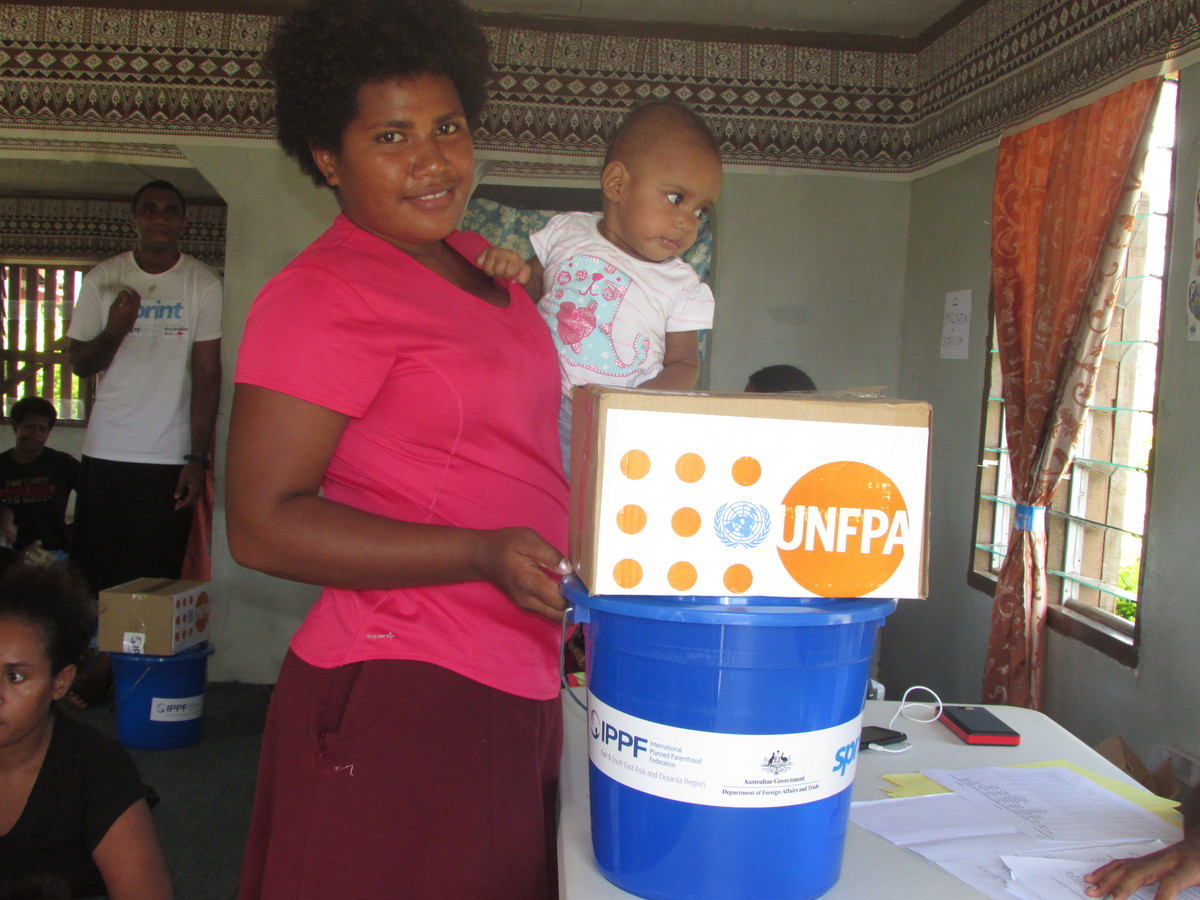
Improving the sexual health of young people after Cyclone Winston, Fiji
Even before Cyclone Winston, there was very little knowledge about contraception and sexually transmitted infections in Fiji. IPPF health professionals are now providing the affected population with counselling and advice on family planning and sexual health.
IPPF reacts to US Government decision to withdraw funding from UNFPA
IPPF Director General Tewodros Melesse has said that a decision by the US Government to withdraw funding from the United Nations Population Fund will have “devastating consequences” for women and girls around the world. Mr Melesse said: “The money the US administration now wants to withdraw would have been spent on health care for some of the poorest and most vulnerable women and girls in the world. “It will take away funding for contraception, maternal care and the safe delivery of babies, as well as programmes to counter gender-based violence. “IPPF works closely with UNFPA in some of the most difficult situations in the world to provide this kind of care, especially in the poorest regions of the world’s poorest countries. The women and girls living in these situations are especially vulnerable, and this will have devastating consequences for them.” Mr Melesse added: “This is the second blow this year delivered to health care for women and girls around the world by the new US Administration. “The re-enactment of the Global Gag Rule (also known as the Mexico City Policy) has already denied US funding for contraception services, HIV programmes and work to counter the Zika outbreak to IPPF and other health organisations. “We estimate that the $100m in funding IPPF expects to lose will stop us from preventing 20,000 maternal deaths, will lead to 4.8m unintended pregnancies and 1.7 million unsafe abortions. “We should be clear. None of the funding being withdrawn by the US administration is spent in the provision of abortion or in support of coercive reproductive policies. This is a smokescreen for cuts in funding, nothing more. “As a rights-based organisation, IPPF works in partnership with UNFPA and other health and human rights organisations to provide tens of millions of women and girls with the right to choose how and when they use contraception and to access other live-saving health services. “UNFPA brings governments together to work on commonly-agreed policies such as the Sustainable Development Goals, which are vital in the fight to try to ensure sexual and reproductive health care for everyone. “I am deeply sorry that for a second time in the space of three months the US Administration has decided to deny critical health services to the people who need them most. We know that tens of thousands of lives will be lost as a result.”
01 April 2017
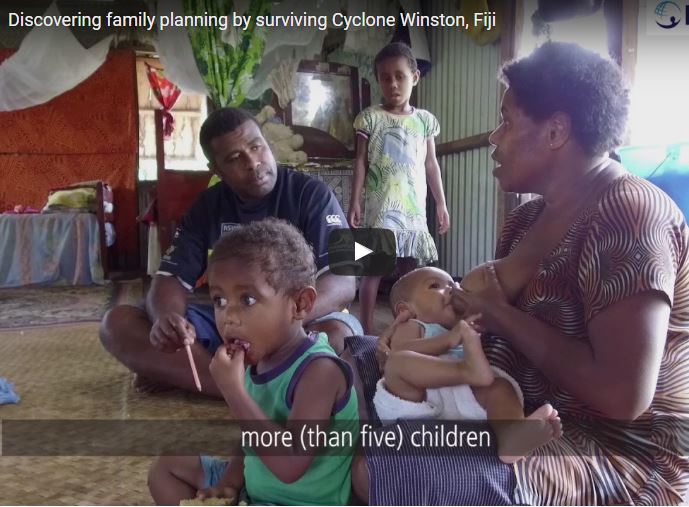
Discovering family planning by surviving Cyclone Winston, Fiji
For many mothers in Fiji, the IPPF outreach established after the Cyclone Winston were the first place where they heard about family planning. They can now decide how many children they want. Read more stories

IPPF responds to the announcement of funding from the Government of Japan
IPPF’s Director General, Tewodros Melesse, has paid tribute to the Government and people of Japan, following the announcement that Japan will support the provision of sexual and reproductive health and rights (SRHR) for 2017. The Japanese Government has announced that it will contribute approximately 3.1 billion yen (roughly $28 million) to IPPF and the United Nations Population Fund (UNFPA) in annual support. Mr Melesse said: “IPPF is grateful for Japan’s continuing support to SRHR through funding IPPF and UNFPA. Particularly in the current negative climate around SRHR, Japan’s expression of its strong will to continue its support for SRHR is warmly welcome.” “Japan’s long-lasting support for IPPF and for sexual and reproductive health care and rights has always been appreciated. These funds will help IPPF member associations around the world mitigate the cuts in funding we are seeing from some other sources. This will help protect health and save the lives of many people, especially women and girls.” Mr Melesse added: “We agree completely with the Government of Japan when it says that the provision of services relating to sexual and reproductive health and rights is essential for realizing universal health coverage (UHC), that ensures affordable access to basic health services for all whenever they need them throughout their lives. This is stated clearly in the Basic Design for Peace and Health, Japan’s global health policy and one of the outcome documents of the G7 Ise-Shima Summit, as well as in an outcome document from the The World Assembly for Women in Tokyo 2016 (WAW), the Third United Nations World Conference on Disaster Risk Reduction and the Sixth Tokyo International Conference on African Development (TICAD VI). IPPF would like to congratulate Japan’s leadership and commits to working closely with the Government of Japan to make a real difference to the lives of women, men and young people in around world and to achieve the Strategic Development Goals.” IPPF received approximately $1.13m from Japan in early 2017 for its activities targeted to Syrian refugees and internally displaced people, and will receive funding of $7.76m which was recently approved by the Japanese Parliaments.
Sayana efforts will help widen contraceptive choice for world’s poorest and neglected women says IPPF
Expanding contraceptive choices offers the potential to put power into women’s hands said the International Planned Parenthood Federation (IPPF) in reaction to the Sayana Press announcement by Pfizer BD, and the Bill and Melinda Gates Foundation, and CIFF today. IPPF is already playing a major role in the introduction of Sayana Press to increase access to the world’s most poorest and underserved women and girls. Sayana Press is offered as part of the contraceptive mix by IPPF’s Member Associations in Uganda, Nigeria, Burkina Faso and Senegal. They are doing this by providing Sayana Press at our extensive network of clinics, and by training community volunteers and government staff to give women Sayana Press in their own communities. Tewodros Melesse, Director General IPPF said; “This announcement is a great opportunity to enable women and girls who are often left behind because they are poor, unable to make decisions because of their partners, too far from a clinic or disabled to access contraception. Sayana Press has the potential to reach those who have never been able to access family planning before. We have seen that Sayana Press is popular with women in remote communities who can’t easily get to a clinic or drug shop. We are keen to see countries move towards community based distribution and ultimately, self-injections. All efforts must truly reach the last mile. Enabling women to administer in their own time and wherever they are is the only way to put power truly into women’s hands. It is a great step in helping to tackle the needs of the most poorest or neglected women and girls. But like any contraceptive, it must be offered as part of a broader mix of methods available and not favored more than others. Choice means every women and girl has the right to choose about their contraception wherever and whoever they are.” IPPF launched its annual global I Decide Campaign on family planning today. IPPF is fighting for a world where women everywhere can say "I decide". Support our call for universal access to contraception! Add your voice
08 May 2017
Under-served and over-looked - Executive summary
The evidence is clear: family planning saves lives. Yet, the poorest and most marginalized women and girls are being left behind during one of the most successful advances in public health in the past half century. IPPF’s report Under-served and Over-looked offers an overview of the women and girls that are being left behind and unable to access the life-saving contraception they want and need. IPPF is fighting for a world where women everywhere can say "I decide". Support our call for universal access to contraception! Add your voice
26 April 2017
Empowering school students for change
Stopping unsafe abortion and stigma through education Rural communities in Uganda have a high prevalence rate of gender inequality, sexual abuse and incest. There is little provision of sexual and reproductive health services and abortion is highly restricted. The Safe Abortion Action Fund, hosted by IPPF, is financing the grassroots organization, VODA, to empower young people as changemakers in their schools and communities. With training and support, peer educators have been educating friends about sexual and reproductive health, and local health providers are serving women in need. Death from unsafe abortion was once a widespread problem but through the power of peer education, these have almost disappeared and community attitudes towards safe abortion has been transformed. READ MORE Maria Midwife Grace "I took care of Anne after she tried an unsafe abortion, she was bleeding a lot, she may have even died. She had been raped ." READ MY STORY Margret Mother Margret "I lost my daughter, Gladys. She was 16 and studying at senior secondary school. I didn't know she was pregnant" READ MY STORY Mary COUNSELOR Mary "Sometimes we receive cases related to incest. I thank VODA for coming to aid these desperate young girls who have had experiences like mine." READ MY STORY John Owoli RELIGIOUS LEADER John Owoli "I decided to join a campaign that focuses on stopping unsafe abortion because I just want to save lives. Stigma was a very widespread problem here." READ MY STORY See more about the Safe Abortion Action Fund in Uganda
11 April 2017
IPPF at the She Decides Conference, Brussels, 2017
In response to President Trump's reinstatement of the Global Gag Rule 50 countries and leading civil society organizations rallied together. The aim of the She Decides Conference was for these governments to reaffirm their commitments to sexual and reproductive health and rights. These are human rights which are now at risk around the world because the Global Gag Rule blocks critical USAID funding to health organizations like IPPF. IPPF is losing $100m in funding from USAID which means programs to deliver life-saving health services will be jeopardised. With increased commitments from other leading governments around the world, civil society organizations like IPPF can continue to provide the access to service and information that millions of women need.
07 April 2017
IPPF defends UN agency on BBC World News
IPPF Director General Tewodros Melesse has defended the record of the United Nations Population Fund (UNFPA) in an interview with BBC World News, the BBC’s global television news channel. Speaking to presenter Philippa Thomas on the programme “Impact”, Mr Melesse rubbished claims from the Trump administration – used to justify the withdrawal of US funding – that UNFPA in any way supported coercive family policies in China. He explained that IPPF and UNFPA, with which IPPF partners across the world to provide vital reproductive health care for millions of women and girls – were committed to defending rights and increasing choice. He added that the loss of funding to UNFPA and IPPF – through the re-imposition of the so-called Global Gag Rule by President Trump – would cost the lives of tens of thousands of women and lead to millions of additional unplanned pregnancies and unsafe abortions. Subscribe to IPPF's updates!
IPPF defends UN agency on BBC World News
IPPF Director General Tewodros Melesse has defended the record of the United Nations Population Fund (UNFPA) in an interview with BBC World News, the BBC’s global television news channel. Speaking to presenter Philippa Thomas on the programme “Impact”, Mr Melesse rubbished claims from the Trump administration – used to justify the withdrawal of US funding – that UNFPA in any way supported coercive family policies in China. He explained that IPPF and UNFPA, with which IPPF partners across the world to provide vital reproductive health care for millions of women and girls – were committed to defending rights and increasing choice. He added that the loss of funding to UNFPA and IPPF – through the re-imposition of the so-called Global Gag Rule by President Trump – would cost the lives of tens of thousands of women and lead to millions of additional unplanned pregnancies and unsafe abortions. Subscribe to IPPF's updates!
05 April 2017
Improving the sexual health of young people after Cyclone Winston, Fiji
Even before Cyclone Winston, there was very little knowledge about contraception and sexually transmitted infections in Fiji. IPPF health professionals are now providing the affected population with counselling and advice on family planning and sexual health.
IPPF reacts to US Government decision to withdraw funding from UNFPA
IPPF Director General Tewodros Melesse has said that a decision by the US Government to withdraw funding from the United Nations Population Fund will have “devastating consequences” for women and girls around the world. Mr Melesse said: “The money the US administration now wants to withdraw would have been spent on health care for some of the poorest and most vulnerable women and girls in the world. “It will take away funding for contraception, maternal care and the safe delivery of babies, as well as programmes to counter gender-based violence. “IPPF works closely with UNFPA in some of the most difficult situations in the world to provide this kind of care, especially in the poorest regions of the world’s poorest countries. The women and girls living in these situations are especially vulnerable, and this will have devastating consequences for them.” Mr Melesse added: “This is the second blow this year delivered to health care for women and girls around the world by the new US Administration. “The re-enactment of the Global Gag Rule (also known as the Mexico City Policy) has already denied US funding for contraception services, HIV programmes and work to counter the Zika outbreak to IPPF and other health organisations. “We estimate that the $100m in funding IPPF expects to lose will stop us from preventing 20,000 maternal deaths, will lead to 4.8m unintended pregnancies and 1.7 million unsafe abortions. “We should be clear. None of the funding being withdrawn by the US administration is spent in the provision of abortion or in support of coercive reproductive policies. This is a smokescreen for cuts in funding, nothing more. “As a rights-based organisation, IPPF works in partnership with UNFPA and other health and human rights organisations to provide tens of millions of women and girls with the right to choose how and when they use contraception and to access other live-saving health services. “UNFPA brings governments together to work on commonly-agreed policies such as the Sustainable Development Goals, which are vital in the fight to try to ensure sexual and reproductive health care for everyone. “I am deeply sorry that for a second time in the space of three months the US Administration has decided to deny critical health services to the people who need them most. We know that tens of thousands of lives will be lost as a result.”
01 April 2017
Discovering family planning by surviving Cyclone Winston, Fiji
For many mothers in Fiji, the IPPF outreach established after the Cyclone Winston were the first place where they heard about family planning. They can now decide how many children they want. Read more stories
IPPF responds to the announcement of funding from the Government of Japan
IPPF’s Director General, Tewodros Melesse, has paid tribute to the Government and people of Japan, following the announcement that Japan will support the provision of sexual and reproductive health and rights (SRHR) for 2017. The Japanese Government has announced that it will contribute approximately 3.1 billion yen (roughly $28 million) to IPPF and the United Nations Population Fund (UNFPA) in annual support. Mr Melesse said: “IPPF is grateful for Japan’s continuing support to SRHR through funding IPPF and UNFPA. Particularly in the current negative climate around SRHR, Japan’s expression of its strong will to continue its support for SRHR is warmly welcome.” “Japan’s long-lasting support for IPPF and for sexual and reproductive health care and rights has always been appreciated. These funds will help IPPF member associations around the world mitigate the cuts in funding we are seeing from some other sources. This will help protect health and save the lives of many people, especially women and girls.” Mr Melesse added: “We agree completely with the Government of Japan when it says that the provision of services relating to sexual and reproductive health and rights is essential for realizing universal health coverage (UHC), that ensures affordable access to basic health services for all whenever they need them throughout their lives. This is stated clearly in the Basic Design for Peace and Health, Japan’s global health policy and one of the outcome documents of the G7 Ise-Shima Summit, as well as in an outcome document from the The World Assembly for Women in Tokyo 2016 (WAW), the Third United Nations World Conference on Disaster Risk Reduction and the Sixth Tokyo International Conference on African Development (TICAD VI). IPPF would like to congratulate Japan’s leadership and commits to working closely with the Government of Japan to make a real difference to the lives of women, men and young people in around world and to achieve the Strategic Development Goals.” IPPF received approximately $1.13m from Japan in early 2017 for its activities targeted to Syrian refugees and internally displaced people, and will receive funding of $7.76m which was recently approved by the Japanese Parliaments.