



One of our main priorities is to ensure universal access to, and informed use of effective contraception. Millions of people lack the knowledge and information to determine when or whether they have children, and they are unable to protect themselves against sexually transmitted infections (STIs).
Articles about Contraception
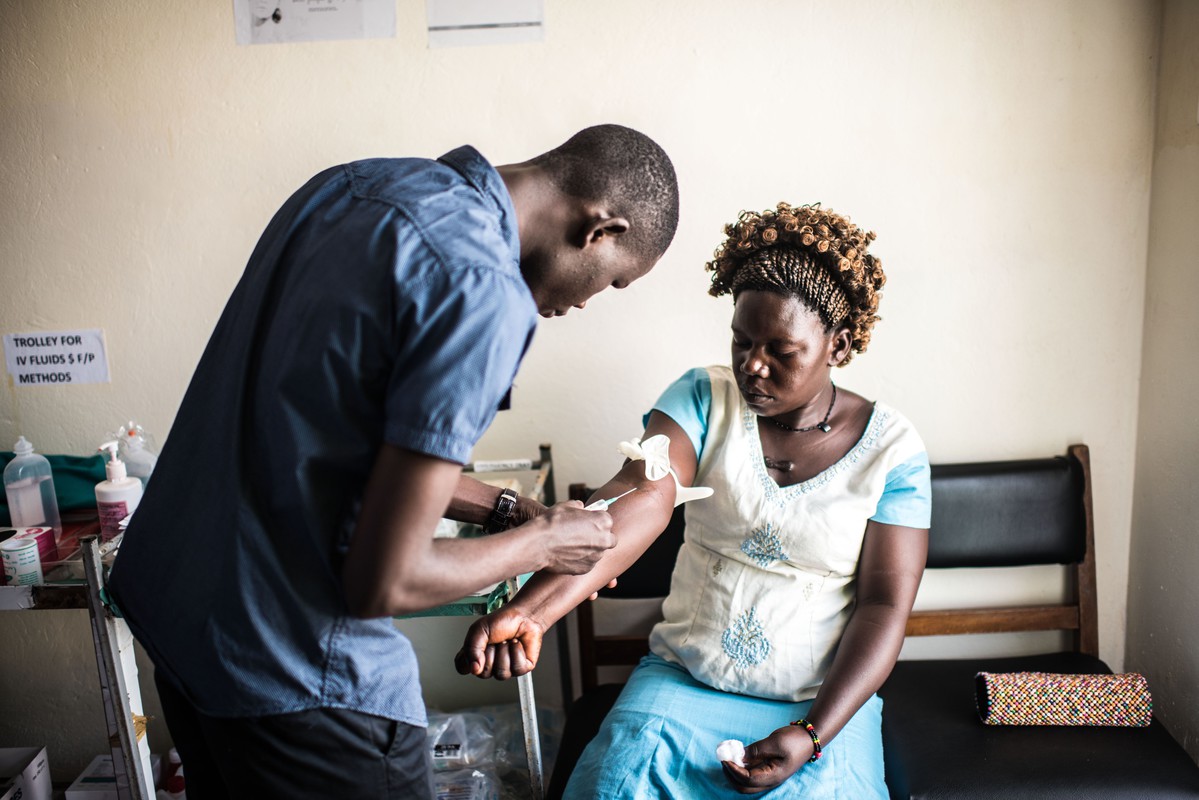
Social behavior change communications increases outreach in rural Uganda
Dorcas Lanyero is a married teacher who lives near to the Gulu Clinic but this is the first time she has ever been for treatment. She found out about RHU on the radio and through hearing her friends talking about the Gulu Clinic. “I came because I wasn’t feeling well, I was feeling some pain in my abdomen. They helped me, they tested me and took me for a scan. I have some infection so they have given me medicine. “I was so happy that they welcomed me and they served me well, the four different doctors and nurse talked to me well, they gave me all the services and now I am getting treatment,” she said. Dorcas said she had been told to come back for another check-up in one month and to get family planning too. “I would definitely recommend this clinic to other people. I have seen the environment and people working here are so friendly. They give you treatment and counselling.” Follow a day in the life of our team and clients in Gulu, Uganda 07:00 08:00 9:00 10:00 11:00 12:00 13:00 14:00 15:00 16:00 17:00 22:00 Prev Next 7am: The team prepare for the long day ahead "Every year tens of thousands of Ugandans come to our clinic. Everyone is welcome. Here are just a few of the people that we served in one day last month." READ MORE 8am: Nancy, 19, becomes a volunteer "I was suffering but when I came here, I was treated and I got better. Now I'm inspired to volunteer here" READ MORE 9am: Monica, 25, a sex worker's story "I am sex working. I came here for Hepatitis B testing and also counselling. I have so many personal problems, but here….they’re so caring." READ MORE 10am: Jane, 23, saved by family planning "After multiple miscarriages, family planning here has helped me a lot. I'm glad we've been able to space the number of children we've had. I am not growing old, I am fresh." READ MORE 11am: Vicky, handling disabilities "I'm deaf so accessing services is hard, but here they really try to speak in sign language." READ MORE 12pm: Dorcus, first time patient "This is the first time I've ever come here, I like the service. They give good counselling so I recommend coming." READ MORE 1pm: Christine, 45, a grandmother's tale of living with HIV "I am living with HIV and had HPV. They treated me and now I'm free of cervical cancer." READ MORE 2pm: Lilian, struggling mother of six with sickle cell " I have sickle cell disease and so do all my children. I want to have my tube removed so that I don't get pregnant again but I don't know if my husband will allow it." READ MORE 3pm: Brenda and Francis get fertility treatments "Fertility treatment is a sensitive issue in Uganda but they help us a lot and we get proper treatment." READ MORE 4pm: Joyce, 25, repected regardless of her disability "I realised that at this place they don't segregate. Us people with disabilities have challenges at the main hospitals. You go there, people around look at you as if you are not a human being and you don't fall sick." READ MORE 5pm: Mobile clinic provides outreach services to remote villages "Our outreach to remote communities is a 'one-stop-centre'. We give family planning, vaccines for HPV, malaria, and Hepatitis B, HIV testing and more." READ MORE 22pm: Still giving the last client our very best "Together, we have great teamwork. Sometimes we're still working up to 10pm because we never chase out our clients. We’ll never close the place when we have a client inside. People come when they have no hope." READ MORE
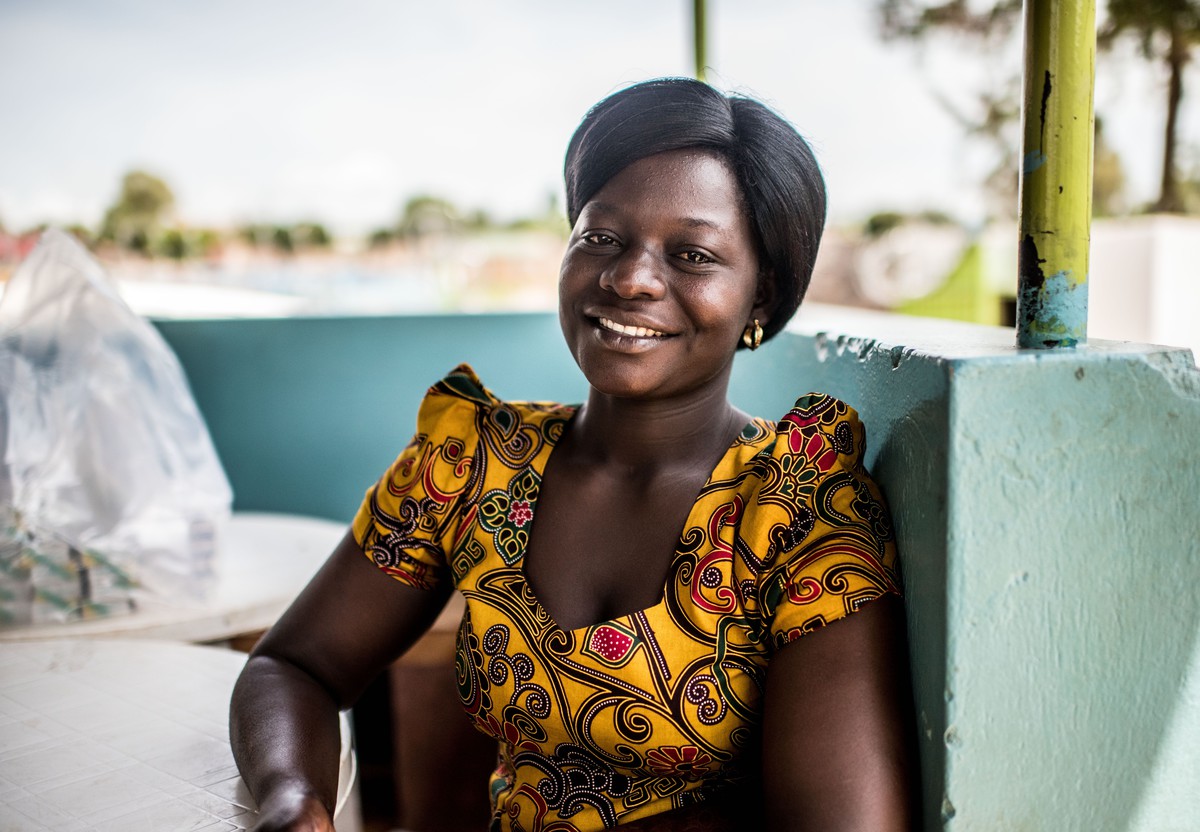
Dealing with a disability: one woman's story about healthcare in rural Uganda
Vicky Acora is a married mother of two. She faces all the usual challenges that women face when it comes to getting sexual and reproductive health services but Vicky’s life is further complicated because she is deaf. She says the biggest challenge in accessing services is communication. “For example I come to the health centre, I meet a nurse but how will I communicate with her? “They speak to me in English but I know Acholi and then there’s sign language which they don’t know. Many times interpreters want money if you are to come with them,” explains Acora. Vicky stopped education in primary school after both of her parents died at the peak of the 20-year insurgency in Northern Uganda. Vicky learnt sign language through Gulu's Disable Person’s Union where she is a board member representing Deaf Women. She also went through the Gulu Deaf Association where she learnt how to communicate in sign language. Acora, first came to know about Reproductive Health Uganda in January this year when she was invited to volunteer to cook for participants at a training session. Then in June, she returned to the clinic to test for HIV. She says she had previously had a bad experience at a hospital in Gulu when she was seeking antenatal services when she was pregnant. “When I was pregnant, I entered the hospital, I sat in a queue, and the nurse asked me how can I help you? It was very hard for me to explain. I didn’t know what she was asking. And then the nurse asked what the problem with this woman was." Her experience at Gulu Clinic, however, was very different. “They are really most welcoming and they try to communicate even in the little sign language they know. They are really very warm.” She says she has since been advising other deaf people to seek services with Reproductive Health Uganda. Through her interpreter Acora said: “I also encourage disabled people who use wheelchairs to come and access services here – not just deaf people.” Follow a day in the life of our team and clients in Gulu, Uganda 07:00 08:00 9:00 10:00 11:00 12:00 13:00 14:00 15:00 16:00 17:00 22:00 Prev Next 7am: The team prepare for the long day ahead "Every year tens of thousands of Ugandans come to our clinic. Everyone is welcome. Here are just a few of the people that we served in one day last month." READ MORE 8am: Nancy, 19, becomes a volunteer "I was suffering but when I came here, I was treated and I got better. Now I'm inspired to volunteer here" READ MORE 9am: Monica, 25, a sex worker's story "I am sex working. I came here for Hepatitis B testing and also counselling. I have so many personal problems, but here….they’re so caring." READ MORE 10am: Jane, 23, saved by family planning "After multiple miscarriages, family planning here has helped me a lot. I'm glad we've been able to space the number of children we've had. I am not growing old, I am fresh." READ MORE 11am: Vicky, handling disabilities "I'm deaf so accessing services is hard, but here they really try to speak in sign language." READ MORE 12pm: Dorcus, first time patient "This is the first time I've ever come here, I like the service. They give good counselling so I recommend coming." READ MORE 1pm: Christine, 45, a grandmother's tale of living with HIV "I am living with HIV and had HPV. They treated me and now I'm free of cervical cancer." READ MORE 2pm: Lilian, struggling mother of six with sickle cell " I have sickle cell disease and so do all my children. I want to have my tube removed so that I don't get pregnant again but I don't know if my husband will allow it." READ MORE 3pm: Brenda and Francis get fertility treatments "Fertility treatment is a sensitive issue in Uganda but they help us a lot and we get proper treatment." READ MORE 4pm: Joyce, 25, repected regardless of her disability "I realised that at this place they don't segregate. Us people with disabilities have challenges at the main hospitals. You go there, people around look at you as if you are not a human being and you don't fall sick." READ MORE 5pm: Mobile clinic provides outreach services to remote villages "Our outreach to remote communities is a 'one-stop-centre'. We give family planning, vaccines for HPV, malaria, and Hepatitis B, HIV testing and more." READ MORE 22pm: Still giving the last client our very best "Together, we have great teamwork. Sometimes we're still working up to 10pm because we never chase out our clients. We’ll never close the place when we have a client inside. People come when they have no hope." READ MORE
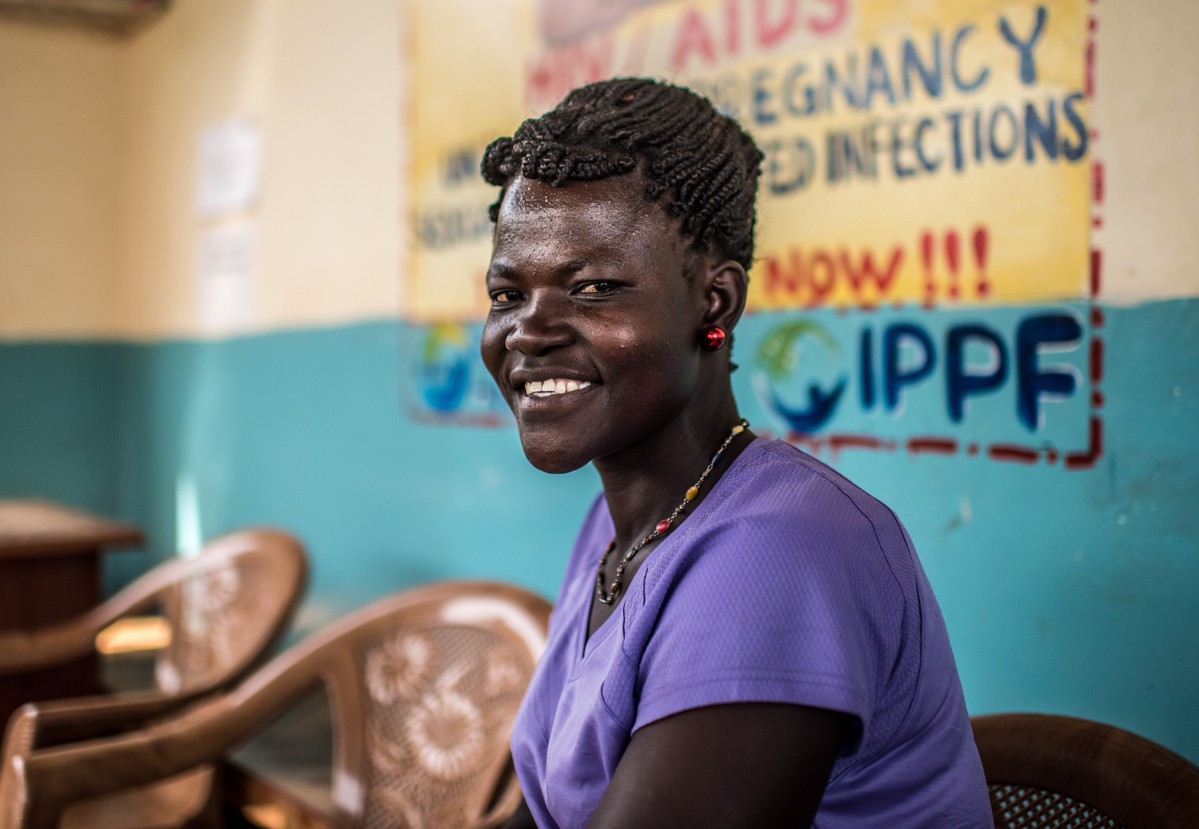
A husband and wife make a joint decision about family planning
23-year-old Jane Atenyo Franca is a mother of two. She got pregnant at school when she was 17. Her boyfriend left her and she was forced to drop out of education. She later married someone else who already had two wives but left him after suffering multiple miscarriages. She has since married again and had a second child. She learnt about RHU’s Gulu Clinic after attending a health forum that the clinic had organised in her village. “They talked about family planning, HIV, and they talked about very many diseases. “I decided to come back for family planning. I came back with my husband and we had counselling together. We agreed to go for the implant method. “My husband was initially worried about being seen by other people. He was worried that people might think we had a sexually transmitted disease but I talked to him about reproductive health and about the importance of not having too many children. “I am glad that we have been able to space the number of children we have. “Family planning has helped me a lot. Some of my friends have had many children and they seem old and tired. I am not growing old, I am fresh. “Some people used to say that you would bleed until you die with an implant but there is nothing wrong with me: I am free and fresh.” Atenyo Franca Jane said she now goes to the clinic for a range of services. “I am back today because I have pain in my abdomen. I also have a swollen foot.” She said she would recommend RHU and Gulu Clinic to all her friends because the staff were friendly, welcoming and gave good advice. Follow a day in the life of our team and clients in Gulu, Uganda 07:00 08:00 9:00 10:00 11:00 12:00 13:00 14:00 15:00 16:00 17:00 22:00 Prev Next 7am: The team prepare for the long day ahead "Every year tens of thousands of Ugandans come to our clinic. Everyone is welcome. Here are just a few of the people that we served in one day last month." READ MORE 8am: Nancy, 19, becomes a volunteer "I was suffering but when I came here, I was treated and I got better. Now I'm inspired to volunteer here" READ MORE 9am: Monica, 25, a sex worker's story "I am sex working. I came here for Hepatitis B testing and also counselling. I have so many personal problems, but here….they’re so caring." READ MORE 10am: Jane, 23, saved by family planning "After multiple miscarriages, family planning here has helped me a lot. I'm glad we've been able to space the number of children we've had. I am not growing old, I am fresh." READ MORE 11am: Vicky, handling disabilities "I'm deaf so accessing services is hard, but here they really try to speak in sign language." READ MORE 12pm: Dorcus, first time patient "This is the first time I've ever come here, I like the service. They give good counselling so I recommend coming." READ MORE 1pm: Christine, 45, a grandmother's tale of living with HIV "I am living with HIV and had HPV. They treated me and now I'm free of cervical cancer." READ MORE 2pm: Lilian, struggling mother of six with sickle cell " I have sickle cell disease and so do all my children. I want to have my tube removed so that I don't get pregnant again but I don't know if my husband will allow it." READ MORE 3pm: Brenda and Francis get fertility treatments "Fertility treatment is a sensitive issue in Uganda but they help us a lot and we get proper treatment." READ MORE 4pm: Joyce, 25, repected regardless of her disability "I realised that at this place they don't segregate. Us people with disabilities have challenges at the main hospitals. You go there, people around look at you as if you are not a human being and you don't fall sick." READ MORE 5pm: Mobile clinic provides outreach services to remote villages "Our outreach to remote communities is a 'one-stop-centre'. We give family planning, vaccines for HPV, malaria, and Hepatitis B, HIV testing and more." READ MORE 22pm: Still giving the last client our very best "Together, we have great teamwork. Sometimes we're still working up to 10pm because we never chase out our clients. We’ll never close the place when we have a client inside. People come when they have no hope." READ MORE
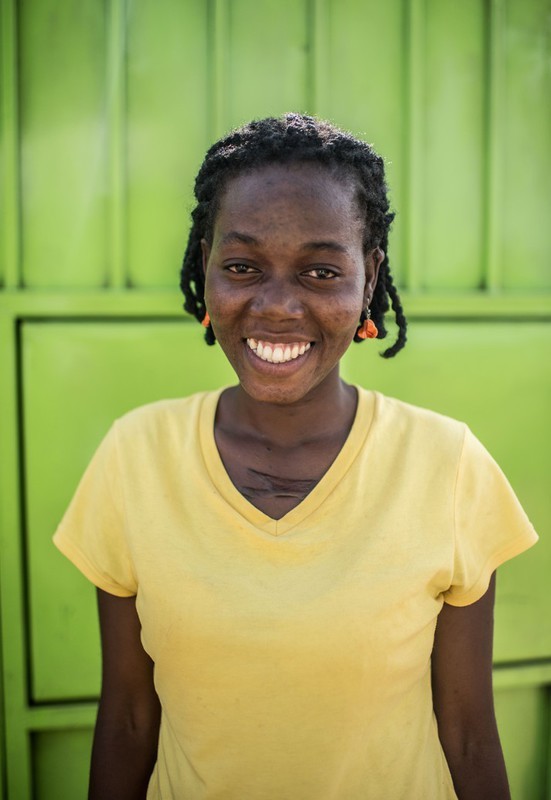
Providing Hepatitis B outreach in rural Uganda: one sex worker's story
"I’m 25-years-old and a mother of two children. I lost my parents during the war, so I grew up alone. I ended up dropping out of school and I went for sex working. I am selling myself in order for me to sustain a living. "My second born is 10 months old and my first born is 7 years. He’s at home with me because I have no money to pay for his school fees. "I heard about Reproductive Health Uganda a few years ago but I couldn’t access it until they did their outreaches where I was staying. I stay far from town. "I came purposely here to RHU for Hepatitis B testing and also counselling because I have so many personal problems. I’m also on family planning and about to start using an IUD, I want to get that from here now also. "I like coming here, I’m satisfied with all the services because it's free of charge, they’re so caring, the way that they handle people. They handled us in a good way, they know how to talk to us. I’m so happy about the way I was welcomed here. Follow a day in the life of our team and clients in Gulu, Uganda 07:00 08:00 9:00 10:00 11:00 12:00 13:00 14:00 15:00 16:00 17:00 22:00 Prev Next 7am: The team prepare for the long day ahead "Every year tens of thousands of Ugandans come to our clinic. Everyone is welcome. Here are just a few of the people that we served in one day last month." READ MORE 8am: Nancy, 19, becomes a volunteer "I was suffering but when I came here, I was treated and I got better. Now I'm inspired to volunteer here" READ MORE 9am: Monica, 25, a sex worker's story "I am sex working. I came here for Hepatitis B testing and also counselling. I have so many personal problems, but here….they’re so caring." READ MORE 10am: Jane, 23, saved by family planning "After multiple miscarriages, family planning here has helped me a lot. I'm glad we've been able to space the number of children we've had. I am not growing old, I am fresh." READ MORE 11am: Vicky, handling disabilities "I'm deaf so accessing services is hard, but here they really try to speak in sign language." READ MORE 12pm: Dorcus, first time patient "This is the first time I've ever come here, I like the service. They give good counselling so I recommend coming." READ MORE 1pm: Christine, 45, a grandmother's tale of living with HIV "I am living with HIV and had HPV. They treated me and now I'm free of cervical cancer." READ MORE 2pm: Lilian, struggling mother of six with sickle cell " I have sickle cell disease and so do all my children. I want to have my tube removed so that I don't get pregnant again but I don't know if my husband will allow it." READ MORE 3pm: Brenda and Francis get fertility treatments "Fertility treatment is a sensitive issue in Uganda but they help us a lot and we get proper treatment." READ MORE 4pm: Joyce, 25, repected regardless of her disability "I realised that at this place they don't segregate. Us people with disabilities have challenges at the main hospitals. You go there, people around look at you as if you are not a human being and you don't fall sick." READ MORE 5pm: Mobile clinic provides outreach services to remote villages "Our outreach to remote communities is a 'one-stop-centre'. We give family planning, vaccines for HPV, malaria, and Hepatitis B, HIV testing and more." READ MORE 22pm: Still giving the last client our very best "Together, we have great teamwork. Sometimes we're still working up to 10pm because we never chase out our clients. We’ll never close the place when we have a client inside. People come when they have no hope." READ MORE

Collaborating with public health providers in Nigeria
"I feel satisfied as a service provider and as a member of the outreach team." Shodunke Mary, 53, has been a midwife from the Local Government Area Council for seven years. Now she is working with PPFN providing family planning counselling and a range of integrated sexual and reproductive health services. In addition, Mary also conducts on the job training to other facilities which are providing services for the PPFN model. "The model used by PPFN is successful because the services we provide are free for those in need, the providers are motivated and the community leaders are also involved in the implementation. Also, the commodities and equipment are always available." As seen above, Mary administers an implant to Bukola Akami, who has one baby. The number of new contraceptive users has dramatically increased by 400,000 in less than a year as a result of PPFN's outreach and service delivery. Yetunde, 26, like Bukola, is a client with a young baby and was also seeking family planning. She says: "I don't want to have another baby in the next three years. I have a lot of things I want to do and I want to have time to take care of my children. My baby is really affecting my work and I always have to leave her with my mother-in-law. I will be recommending PPFN's family planning to my friends so they can also know what to do when they don't want to get pregnant again." The team Read more about the team behind Nigeria's amazing success
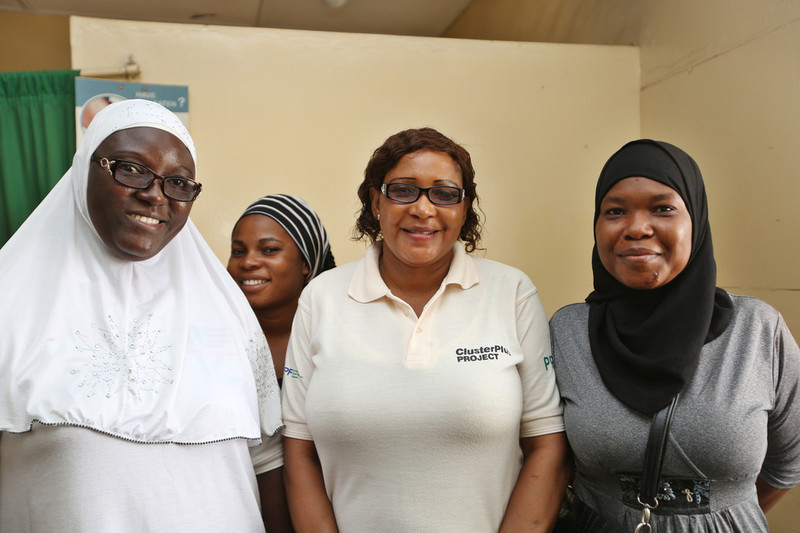
Providing more than just one service to the community
"As a child I loved the medical profession so much. I always wanted to go with my aunt to the hospital for her antenatal check-ups. The neat and well-tailored uniform of the health workers always caught my eyes. And I knew one day, I would be wearing one of those uniforms serving my community.” Latifat Balogun explains how her childhood experiences led her to decide to train and work as a Community Health Extension Worker with the Planned Parenthood Federation of Nigeria (PPFN), where she has worked for 20 years. She plays an integral part in delivering a wide range of services to women in her community. Here she is about to treat Zainab Akinsola, 52-years-old, who is waiting to have cervical cancer screening during a PPFN outreach programme at the Eni Ayo clinic in Ibadan, South West Nigeria. As a result of the strong integrated service delivery, non-contraceptive services increased from 42,700 in 2014 to 226,000 in 2015. Latifat's colleague, Adeyinka, is a faith-based health worker who encouraged a friend to undergo cervical cancer screening. "I counselled her and she went for screening, not knowing that she was going to test positive. If it wasn't for PPFN she might have died of cancer. I so nearly lost a friend. So I cannot forget that day. But now my friend is bouncing up and down, so excited about the project! During our last outreach she brought so many people." The team Read more about the team behind Nigeria's amazing success
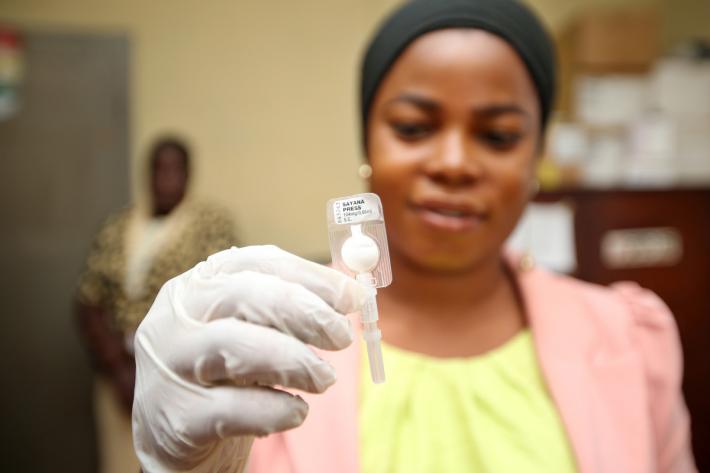
Sayana Press: Finding the right contraception
"How do I feel about my role? I'm excited!" Emiade Kudirat, 24, is a Community Health Extension Worker doing outreach with the Planned Parenthood Federation of Nigeria (PPFN) for the last 18 months. She specializes in the Sayana Press - a three-month, progestin-only injectable contraceptive favoured for its convenience in administration and portability. "I go from house-to-house to provide health education and introduce family planning services. I do counselling and provision of these services too. The PPFN model can really reduce the mortality rate of women in the community. We're taking the clinic to women at the market, to their homes and to their work." One patient, 24-year-old Bukola Polpoola, says she is happy that her treatment was free and easy. "In my village we don’t have any information about this. At first I was afraid it would stop me from getting pregnant again. I’d heard stories of side effects. I’m a nurse and even I began to wonder about it. But I called the clinic and they counselled me and reassured me.” She talked to her partner before she decided to get an implant. Now, she says, she’d recommend it to anyone. "I would be happy to spread the word in my village. Taking this will help you plan your life. For example, you know that for the next two years you can’t get pregnant and you’ll be able to plan your life properly because an unwanted pregnancy can stop you from getting an education or a job. This removes that fear for a time." The team Read more about the team behind Nigeria's amazing success
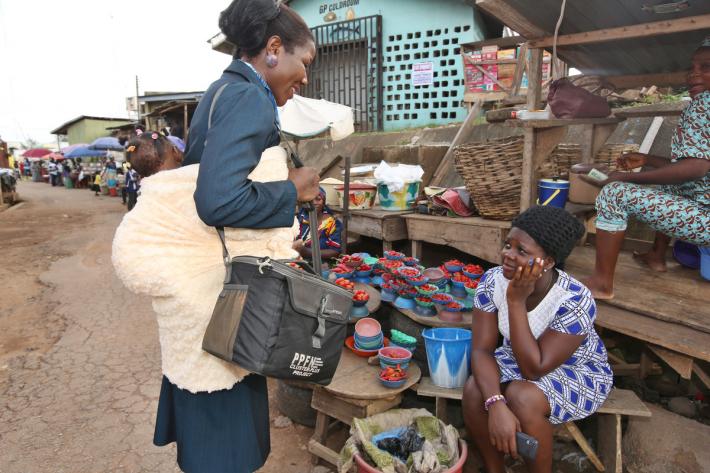
Nigeria's Cluster Plus model: Working in the community
"I find this work very interesting. I love to interact with the women in the markets. And I get to work all day with my 10-month-old baby, Bejide, with me!" Olusula, 40, is a Community Health Extension Worker, conducting outreach for the Planned Parenthood Federation of Nigeria (PPFN). In 2014, PPFN received a one year grant from the Bill & Melinda Gates Foundation through IPPF. The purpose of the grant was to expand family planning and reproductive health services. PPFN used this grant to improve on its current model of service delivery known as the Cluster model. PPFN piloted a successful project over 9 months around family planning. This project exceeded targets significantly and has the potential to be rolled out in Nigeria and other countries. "I refer clients through vouchers to the facility of their choice for long acting and reversible contraceptive methods too", explains Olusula. She works closely with her local community providing information and choice about contraceptive methods. Women and men are able to make informed decisions that ensure suitability to them and their circumstances. Choice promotes convenience and acceptability. "This PPFN outreach and service model will reduce a lot of abortions in our community. It also encourages women to space their children and lets them do the other things they want." The team Read more about the team behind Nigeria's amazing success
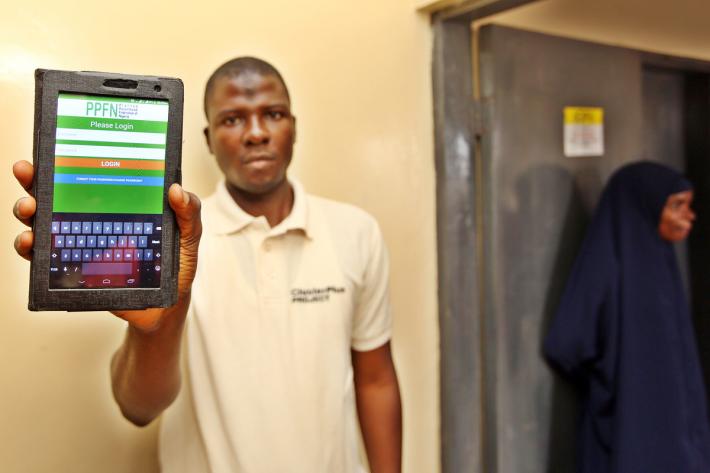
Preventing stock-outs and ensuring people can get the contraception they want
"We capture the data directly into this app. It maps out what the demand will be and ensures that we never run out of those supplies.” Monitoring and evaluation officer, Babatunde, is responsible for ensuring the supply of contraceptives for all the cluster facilities. "My job entails the use of a mobile app built for direct data information capture (DDIC). I created an account for each of the 10 facilities that were under the Clusterplus Model. Before I stock up their store, I audit their supplies and can review their monthly report via the app. I put this into the mobile app as well as the commodities I have supplied them. Every two months, the app will forecast what a particular facility will need based on the contraceptive demand.” "I provided training on the mobile app for the store keepers at the facilities we worked with. All through the nine months of the Clusterplus Project, no facility ever ran out. This meant family planning methods were always available to those that needed them.” Babatunde has developed a wealth of knowledge about family planning and the many methods available. Clients favour long-acting methods Implanol and the IUCD. Two of Babatunde's colleagues Afolabi and Olufemi tell us they have both had some very memorable experiences during their careers as Community Health Extension Workers. Afolabi, 32, says the crux of her work is in breaking down the meaning of family planning to rural communities. "I discovered lots of misconception and misinformation, fears and rumors about family planning. But my job is to educate them on the benefits of family planning and allay their fears. We keep educating them and breaking down the 'walls' they have built around family planning methods, like the false thinking that implants require an operation." "I so much look forward to the outreach sessions. It is a time to help women make better choices that will help them plan for their family and future. The fact that the family planning method is administered free has contributed to its high level of acceptance by the people." "In some of our communities, the people are so poor that they can't feed themselves properly. Let alone to have money for family planning. Poverty is real and not planning your family, escalates the challenges of having a poor quality of life. No money should mean fewer children. But the reverse is the case and poverty goes together with low level of education." Olufemi agrees. "I counselled a woman who I thought was 50-years-old. But I was surprised to find out she was just 29-years-old and had 12 children. The burden and labour of delivering 12 children could be seen all over her". "It was a pathetic case for me. I imagined, how can a 29-year-old have 12 children? We spoke about the different family planning methods available. She decided to have a long term method that will last for five years. "Months later, she called me to thank me. I was so happy knowing that she appreciated it. Because I wondered, how will she raise all those children without a good livelihood? I was glad to have contributed to helping her plan her family." The team Read more about the team behind Nigeria's amazing success
Creating a one-stop shop of services in Nigeria
"We saw changes, broke barriers, removed myths. My joy will be to see this approach rolled out across the country. I am to be helping and empowering women in our rural communities to make informed choices about their health." Ambibola is a programme officer for IPPF's Member Association in Nigeria, working on the ambitious Cluster Plus model. “The project was a one-stop shop which brought services together. So a woman could have screening for breast and cervical cancer, counselling and have access to all methods of family planning at the same place. Also if a woman was detected with early stage of cervical cancer, we were able to carry out a curative operation." "Our success is due to our grassroots approach. We asked the communities to nominate the community health workers they would like to work with. These workers go into the community to counsel people about their health issues. This gave the communities a sense of ownership and kept them fully engaged.” "We also held meetings with traditional and religious leaders who then went into the community to tell people about our projects. Now many private centres want to adopt our approach. In these communities the rate of teenage and unwanted pregnancies has gone down, maternal and abortion mortality has also been cut. We were able to take family planning to the doorsteps of the women in our rural communities the ones who needed family planning but couldn't afford it." The team Read more about the team behind Nigeria's amazing success
Social behavior change communications increases outreach in rural Uganda
Dorcas Lanyero is a married teacher who lives near to the Gulu Clinic but this is the first time she has ever been for treatment. She found out about RHU on the radio and through hearing her friends talking about the Gulu Clinic. “I came because I wasn’t feeling well, I was feeling some pain in my abdomen. They helped me, they tested me and took me for a scan. I have some infection so they have given me medicine. “I was so happy that they welcomed me and they served me well, the four different doctors and nurse talked to me well, they gave me all the services and now I am getting treatment,” she said. Dorcas said she had been told to come back for another check-up in one month and to get family planning too. “I would definitely recommend this clinic to other people. I have seen the environment and people working here are so friendly. They give you treatment and counselling.” Follow a day in the life of our team and clients in Gulu, Uganda 07:00 08:00 9:00 10:00 11:00 12:00 13:00 14:00 15:00 16:00 17:00 22:00 Prev Next 7am: The team prepare for the long day ahead "Every year tens of thousands of Ugandans come to our clinic. Everyone is welcome. Here are just a few of the people that we served in one day last month." READ MORE 8am: Nancy, 19, becomes a volunteer "I was suffering but when I came here, I was treated and I got better. Now I'm inspired to volunteer here" READ MORE 9am: Monica, 25, a sex worker's story "I am sex working. I came here for Hepatitis B testing and also counselling. I have so many personal problems, but here….they’re so caring." READ MORE 10am: Jane, 23, saved by family planning "After multiple miscarriages, family planning here has helped me a lot. I'm glad we've been able to space the number of children we've had. I am not growing old, I am fresh." READ MORE 11am: Vicky, handling disabilities "I'm deaf so accessing services is hard, but here they really try to speak in sign language." READ MORE 12pm: Dorcus, first time patient "This is the first time I've ever come here, I like the service. They give good counselling so I recommend coming." READ MORE 1pm: Christine, 45, a grandmother's tale of living with HIV "I am living with HIV and had HPV. They treated me and now I'm free of cervical cancer." READ MORE 2pm: Lilian, struggling mother of six with sickle cell " I have sickle cell disease and so do all my children. I want to have my tube removed so that I don't get pregnant again but I don't know if my husband will allow it." READ MORE 3pm: Brenda and Francis get fertility treatments "Fertility treatment is a sensitive issue in Uganda but they help us a lot and we get proper treatment." READ MORE 4pm: Joyce, 25, repected regardless of her disability "I realised that at this place they don't segregate. Us people with disabilities have challenges at the main hospitals. You go there, people around look at you as if you are not a human being and you don't fall sick." READ MORE 5pm: Mobile clinic provides outreach services to remote villages "Our outreach to remote communities is a 'one-stop-centre'. We give family planning, vaccines for HPV, malaria, and Hepatitis B, HIV testing and more." READ MORE 22pm: Still giving the last client our very best "Together, we have great teamwork. Sometimes we're still working up to 10pm because we never chase out our clients. We’ll never close the place when we have a client inside. People come when they have no hope." READ MORE
Dealing with a disability: one woman's story about healthcare in rural Uganda
Vicky Acora is a married mother of two. She faces all the usual challenges that women face when it comes to getting sexual and reproductive health services but Vicky’s life is further complicated because she is deaf. She says the biggest challenge in accessing services is communication. “For example I come to the health centre, I meet a nurse but how will I communicate with her? “They speak to me in English but I know Acholi and then there’s sign language which they don’t know. Many times interpreters want money if you are to come with them,” explains Acora. Vicky stopped education in primary school after both of her parents died at the peak of the 20-year insurgency in Northern Uganda. Vicky learnt sign language through Gulu's Disable Person’s Union where she is a board member representing Deaf Women. She also went through the Gulu Deaf Association where she learnt how to communicate in sign language. Acora, first came to know about Reproductive Health Uganda in January this year when she was invited to volunteer to cook for participants at a training session. Then in June, she returned to the clinic to test for HIV. She says she had previously had a bad experience at a hospital in Gulu when she was seeking antenatal services when she was pregnant. “When I was pregnant, I entered the hospital, I sat in a queue, and the nurse asked me how can I help you? It was very hard for me to explain. I didn’t know what she was asking. And then the nurse asked what the problem with this woman was." Her experience at Gulu Clinic, however, was very different. “They are really most welcoming and they try to communicate even in the little sign language they know. They are really very warm.” She says she has since been advising other deaf people to seek services with Reproductive Health Uganda. Through her interpreter Acora said: “I also encourage disabled people who use wheelchairs to come and access services here – not just deaf people.” Follow a day in the life of our team and clients in Gulu, Uganda 07:00 08:00 9:00 10:00 11:00 12:00 13:00 14:00 15:00 16:00 17:00 22:00 Prev Next 7am: The team prepare for the long day ahead "Every year tens of thousands of Ugandans come to our clinic. Everyone is welcome. Here are just a few of the people that we served in one day last month." READ MORE 8am: Nancy, 19, becomes a volunteer "I was suffering but when I came here, I was treated and I got better. Now I'm inspired to volunteer here" READ MORE 9am: Monica, 25, a sex worker's story "I am sex working. I came here for Hepatitis B testing and also counselling. I have so many personal problems, but here….they’re so caring." READ MORE 10am: Jane, 23, saved by family planning "After multiple miscarriages, family planning here has helped me a lot. I'm glad we've been able to space the number of children we've had. I am not growing old, I am fresh." READ MORE 11am: Vicky, handling disabilities "I'm deaf so accessing services is hard, but here they really try to speak in sign language." READ MORE 12pm: Dorcus, first time patient "This is the first time I've ever come here, I like the service. They give good counselling so I recommend coming." READ MORE 1pm: Christine, 45, a grandmother's tale of living with HIV "I am living with HIV and had HPV. They treated me and now I'm free of cervical cancer." READ MORE 2pm: Lilian, struggling mother of six with sickle cell " I have sickle cell disease and so do all my children. I want to have my tube removed so that I don't get pregnant again but I don't know if my husband will allow it." READ MORE 3pm: Brenda and Francis get fertility treatments "Fertility treatment is a sensitive issue in Uganda but they help us a lot and we get proper treatment." READ MORE 4pm: Joyce, 25, repected regardless of her disability "I realised that at this place they don't segregate. Us people with disabilities have challenges at the main hospitals. You go there, people around look at you as if you are not a human being and you don't fall sick." READ MORE 5pm: Mobile clinic provides outreach services to remote villages "Our outreach to remote communities is a 'one-stop-centre'. We give family planning, vaccines for HPV, malaria, and Hepatitis B, HIV testing and more." READ MORE 22pm: Still giving the last client our very best "Together, we have great teamwork. Sometimes we're still working up to 10pm because we never chase out our clients. We’ll never close the place when we have a client inside. People come when they have no hope." READ MORE
A husband and wife make a joint decision about family planning
23-year-old Jane Atenyo Franca is a mother of two. She got pregnant at school when she was 17. Her boyfriend left her and she was forced to drop out of education. She later married someone else who already had two wives but left him after suffering multiple miscarriages. She has since married again and had a second child. She learnt about RHU’s Gulu Clinic after attending a health forum that the clinic had organised in her village. “They talked about family planning, HIV, and they talked about very many diseases. “I decided to come back for family planning. I came back with my husband and we had counselling together. We agreed to go for the implant method. “My husband was initially worried about being seen by other people. He was worried that people might think we had a sexually transmitted disease but I talked to him about reproductive health and about the importance of not having too many children. “I am glad that we have been able to space the number of children we have. “Family planning has helped me a lot. Some of my friends have had many children and they seem old and tired. I am not growing old, I am fresh. “Some people used to say that you would bleed until you die with an implant but there is nothing wrong with me: I am free and fresh.” Atenyo Franca Jane said she now goes to the clinic for a range of services. “I am back today because I have pain in my abdomen. I also have a swollen foot.” She said she would recommend RHU and Gulu Clinic to all her friends because the staff were friendly, welcoming and gave good advice. Follow a day in the life of our team and clients in Gulu, Uganda 07:00 08:00 9:00 10:00 11:00 12:00 13:00 14:00 15:00 16:00 17:00 22:00 Prev Next 7am: The team prepare for the long day ahead "Every year tens of thousands of Ugandans come to our clinic. Everyone is welcome. Here are just a few of the people that we served in one day last month." READ MORE 8am: Nancy, 19, becomes a volunteer "I was suffering but when I came here, I was treated and I got better. Now I'm inspired to volunteer here" READ MORE 9am: Monica, 25, a sex worker's story "I am sex working. I came here for Hepatitis B testing and also counselling. I have so many personal problems, but here….they’re so caring." READ MORE 10am: Jane, 23, saved by family planning "After multiple miscarriages, family planning here has helped me a lot. I'm glad we've been able to space the number of children we've had. I am not growing old, I am fresh." READ MORE 11am: Vicky, handling disabilities "I'm deaf so accessing services is hard, but here they really try to speak in sign language." READ MORE 12pm: Dorcus, first time patient "This is the first time I've ever come here, I like the service. They give good counselling so I recommend coming." READ MORE 1pm: Christine, 45, a grandmother's tale of living with HIV "I am living with HIV and had HPV. They treated me and now I'm free of cervical cancer." READ MORE 2pm: Lilian, struggling mother of six with sickle cell " I have sickle cell disease and so do all my children. I want to have my tube removed so that I don't get pregnant again but I don't know if my husband will allow it." READ MORE 3pm: Brenda and Francis get fertility treatments "Fertility treatment is a sensitive issue in Uganda but they help us a lot and we get proper treatment." READ MORE 4pm: Joyce, 25, repected regardless of her disability "I realised that at this place they don't segregate. Us people with disabilities have challenges at the main hospitals. You go there, people around look at you as if you are not a human being and you don't fall sick." READ MORE 5pm: Mobile clinic provides outreach services to remote villages "Our outreach to remote communities is a 'one-stop-centre'. We give family planning, vaccines for HPV, malaria, and Hepatitis B, HIV testing and more." READ MORE 22pm: Still giving the last client our very best "Together, we have great teamwork. Sometimes we're still working up to 10pm because we never chase out our clients. We’ll never close the place when we have a client inside. People come when they have no hope." READ MORE
Providing Hepatitis B outreach in rural Uganda: one sex worker's story
"I’m 25-years-old and a mother of two children. I lost my parents during the war, so I grew up alone. I ended up dropping out of school and I went for sex working. I am selling myself in order for me to sustain a living. "My second born is 10 months old and my first born is 7 years. He’s at home with me because I have no money to pay for his school fees. "I heard about Reproductive Health Uganda a few years ago but I couldn’t access it until they did their outreaches where I was staying. I stay far from town. "I came purposely here to RHU for Hepatitis B testing and also counselling because I have so many personal problems. I’m also on family planning and about to start using an IUD, I want to get that from here now also. "I like coming here, I’m satisfied with all the services because it's free of charge, they’re so caring, the way that they handle people. They handled us in a good way, they know how to talk to us. I’m so happy about the way I was welcomed here. Follow a day in the life of our team and clients in Gulu, Uganda 07:00 08:00 9:00 10:00 11:00 12:00 13:00 14:00 15:00 16:00 17:00 22:00 Prev Next 7am: The team prepare for the long day ahead "Every year tens of thousands of Ugandans come to our clinic. Everyone is welcome. Here are just a few of the people that we served in one day last month." READ MORE 8am: Nancy, 19, becomes a volunteer "I was suffering but when I came here, I was treated and I got better. Now I'm inspired to volunteer here" READ MORE 9am: Monica, 25, a sex worker's story "I am sex working. I came here for Hepatitis B testing and also counselling. I have so many personal problems, but here….they’re so caring." READ MORE 10am: Jane, 23, saved by family planning "After multiple miscarriages, family planning here has helped me a lot. I'm glad we've been able to space the number of children we've had. I am not growing old, I am fresh." READ MORE 11am: Vicky, handling disabilities "I'm deaf so accessing services is hard, but here they really try to speak in sign language." READ MORE 12pm: Dorcus, first time patient "This is the first time I've ever come here, I like the service. They give good counselling so I recommend coming." READ MORE 1pm: Christine, 45, a grandmother's tale of living with HIV "I am living with HIV and had HPV. They treated me and now I'm free of cervical cancer." READ MORE 2pm: Lilian, struggling mother of six with sickle cell " I have sickle cell disease and so do all my children. I want to have my tube removed so that I don't get pregnant again but I don't know if my husband will allow it." READ MORE 3pm: Brenda and Francis get fertility treatments "Fertility treatment is a sensitive issue in Uganda but they help us a lot and we get proper treatment." READ MORE 4pm: Joyce, 25, repected regardless of her disability "I realised that at this place they don't segregate. Us people with disabilities have challenges at the main hospitals. You go there, people around look at you as if you are not a human being and you don't fall sick." READ MORE 5pm: Mobile clinic provides outreach services to remote villages "Our outreach to remote communities is a 'one-stop-centre'. We give family planning, vaccines for HPV, malaria, and Hepatitis B, HIV testing and more." READ MORE 22pm: Still giving the last client our very best "Together, we have great teamwork. Sometimes we're still working up to 10pm because we never chase out our clients. We’ll never close the place when we have a client inside. People come when they have no hope." READ MORE
Collaborating with public health providers in Nigeria
"I feel satisfied as a service provider and as a member of the outreach team." Shodunke Mary, 53, has been a midwife from the Local Government Area Council for seven years. Now she is working with PPFN providing family planning counselling and a range of integrated sexual and reproductive health services. In addition, Mary also conducts on the job training to other facilities which are providing services for the PPFN model. "The model used by PPFN is successful because the services we provide are free for those in need, the providers are motivated and the community leaders are also involved in the implementation. Also, the commodities and equipment are always available." As seen above, Mary administers an implant to Bukola Akami, who has one baby. The number of new contraceptive users has dramatically increased by 400,000 in less than a year as a result of PPFN's outreach and service delivery. Yetunde, 26, like Bukola, is a client with a young baby and was also seeking family planning. She says: "I don't want to have another baby in the next three years. I have a lot of things I want to do and I want to have time to take care of my children. My baby is really affecting my work and I always have to leave her with my mother-in-law. I will be recommending PPFN's family planning to my friends so they can also know what to do when they don't want to get pregnant again." The team Read more about the team behind Nigeria's amazing success
Providing more than just one service to the community
"As a child I loved the medical profession so much. I always wanted to go with my aunt to the hospital for her antenatal check-ups. The neat and well-tailored uniform of the health workers always caught my eyes. And I knew one day, I would be wearing one of those uniforms serving my community.” Latifat Balogun explains how her childhood experiences led her to decide to train and work as a Community Health Extension Worker with the Planned Parenthood Federation of Nigeria (PPFN), where she has worked for 20 years. She plays an integral part in delivering a wide range of services to women in her community. Here she is about to treat Zainab Akinsola, 52-years-old, who is waiting to have cervical cancer screening during a PPFN outreach programme at the Eni Ayo clinic in Ibadan, South West Nigeria. As a result of the strong integrated service delivery, non-contraceptive services increased from 42,700 in 2014 to 226,000 in 2015. Latifat's colleague, Adeyinka, is a faith-based health worker who encouraged a friend to undergo cervical cancer screening. "I counselled her and she went for screening, not knowing that she was going to test positive. If it wasn't for PPFN she might have died of cancer. I so nearly lost a friend. So I cannot forget that day. But now my friend is bouncing up and down, so excited about the project! During our last outreach she brought so many people." The team Read more about the team behind Nigeria's amazing success
Sayana Press: Finding the right contraception
"How do I feel about my role? I'm excited!" Emiade Kudirat, 24, is a Community Health Extension Worker doing outreach with the Planned Parenthood Federation of Nigeria (PPFN) for the last 18 months. She specializes in the Sayana Press - a three-month, progestin-only injectable contraceptive favoured for its convenience in administration and portability. "I go from house-to-house to provide health education and introduce family planning services. I do counselling and provision of these services too. The PPFN model can really reduce the mortality rate of women in the community. We're taking the clinic to women at the market, to their homes and to their work." One patient, 24-year-old Bukola Polpoola, says she is happy that her treatment was free and easy. "In my village we don’t have any information about this. At first I was afraid it would stop me from getting pregnant again. I’d heard stories of side effects. I’m a nurse and even I began to wonder about it. But I called the clinic and they counselled me and reassured me.” She talked to her partner before she decided to get an implant. Now, she says, she’d recommend it to anyone. "I would be happy to spread the word in my village. Taking this will help you plan your life. For example, you know that for the next two years you can’t get pregnant and you’ll be able to plan your life properly because an unwanted pregnancy can stop you from getting an education or a job. This removes that fear for a time." The team Read more about the team behind Nigeria's amazing success
Nigeria's Cluster Plus model: Working in the community
"I find this work very interesting. I love to interact with the women in the markets. And I get to work all day with my 10-month-old baby, Bejide, with me!" Olusula, 40, is a Community Health Extension Worker, conducting outreach for the Planned Parenthood Federation of Nigeria (PPFN). In 2014, PPFN received a one year grant from the Bill & Melinda Gates Foundation through IPPF. The purpose of the grant was to expand family planning and reproductive health services. PPFN used this grant to improve on its current model of service delivery known as the Cluster model. PPFN piloted a successful project over 9 months around family planning. This project exceeded targets significantly and has the potential to be rolled out in Nigeria and other countries. "I refer clients through vouchers to the facility of their choice for long acting and reversible contraceptive methods too", explains Olusula. She works closely with her local community providing information and choice about contraceptive methods. Women and men are able to make informed decisions that ensure suitability to them and their circumstances. Choice promotes convenience and acceptability. "This PPFN outreach and service model will reduce a lot of abortions in our community. It also encourages women to space their children and lets them do the other things they want." The team Read more about the team behind Nigeria's amazing success
Preventing stock-outs and ensuring people can get the contraception they want
"We capture the data directly into this app. It maps out what the demand will be and ensures that we never run out of those supplies.” Monitoring and evaluation officer, Babatunde, is responsible for ensuring the supply of contraceptives for all the cluster facilities. "My job entails the use of a mobile app built for direct data information capture (DDIC). I created an account for each of the 10 facilities that were under the Clusterplus Model. Before I stock up their store, I audit their supplies and can review their monthly report via the app. I put this into the mobile app as well as the commodities I have supplied them. Every two months, the app will forecast what a particular facility will need based on the contraceptive demand.” "I provided training on the mobile app for the store keepers at the facilities we worked with. All through the nine months of the Clusterplus Project, no facility ever ran out. This meant family planning methods were always available to those that needed them.” Babatunde has developed a wealth of knowledge about family planning and the many methods available. Clients favour long-acting methods Implanol and the IUCD. Two of Babatunde's colleagues Afolabi and Olufemi tell us they have both had some very memorable experiences during their careers as Community Health Extension Workers. Afolabi, 32, says the crux of her work is in breaking down the meaning of family planning to rural communities. "I discovered lots of misconception and misinformation, fears and rumors about family planning. But my job is to educate them on the benefits of family planning and allay their fears. We keep educating them and breaking down the 'walls' they have built around family planning methods, like the false thinking that implants require an operation." "I so much look forward to the outreach sessions. It is a time to help women make better choices that will help them plan for their family and future. The fact that the family planning method is administered free has contributed to its high level of acceptance by the people." "In some of our communities, the people are so poor that they can't feed themselves properly. Let alone to have money for family planning. Poverty is real and not planning your family, escalates the challenges of having a poor quality of life. No money should mean fewer children. But the reverse is the case and poverty goes together with low level of education." Olufemi agrees. "I counselled a woman who I thought was 50-years-old. But I was surprised to find out she was just 29-years-old and had 12 children. The burden and labour of delivering 12 children could be seen all over her". "It was a pathetic case for me. I imagined, how can a 29-year-old have 12 children? We spoke about the different family planning methods available. She decided to have a long term method that will last for five years. "Months later, she called me to thank me. I was so happy knowing that she appreciated it. Because I wondered, how will she raise all those children without a good livelihood? I was glad to have contributed to helping her plan her family." The team Read more about the team behind Nigeria's amazing success
Creating a one-stop shop of services in Nigeria
"We saw changes, broke barriers, removed myths. My joy will be to see this approach rolled out across the country. I am to be helping and empowering women in our rural communities to make informed choices about their health." Ambibola is a programme officer for IPPF's Member Association in Nigeria, working on the ambitious Cluster Plus model. “The project was a one-stop shop which brought services together. So a woman could have screening for breast and cervical cancer, counselling and have access to all methods of family planning at the same place. Also if a woman was detected with early stage of cervical cancer, we were able to carry out a curative operation." "Our success is due to our grassroots approach. We asked the communities to nominate the community health workers they would like to work with. These workers go into the community to counsel people about their health issues. This gave the communities a sense of ownership and kept them fully engaged.” "We also held meetings with traditional and religious leaders who then went into the community to tell people about our projects. Now many private centres want to adopt our approach. In these communities the rate of teenage and unwanted pregnancies has gone down, maternal and abortion mortality has also been cut. We were able to take family planning to the doorsteps of the women in our rural communities the ones who needed family planning but couldn't afford it." The team Read more about the team behind Nigeria's amazing success