- - -

Articles about Arab World

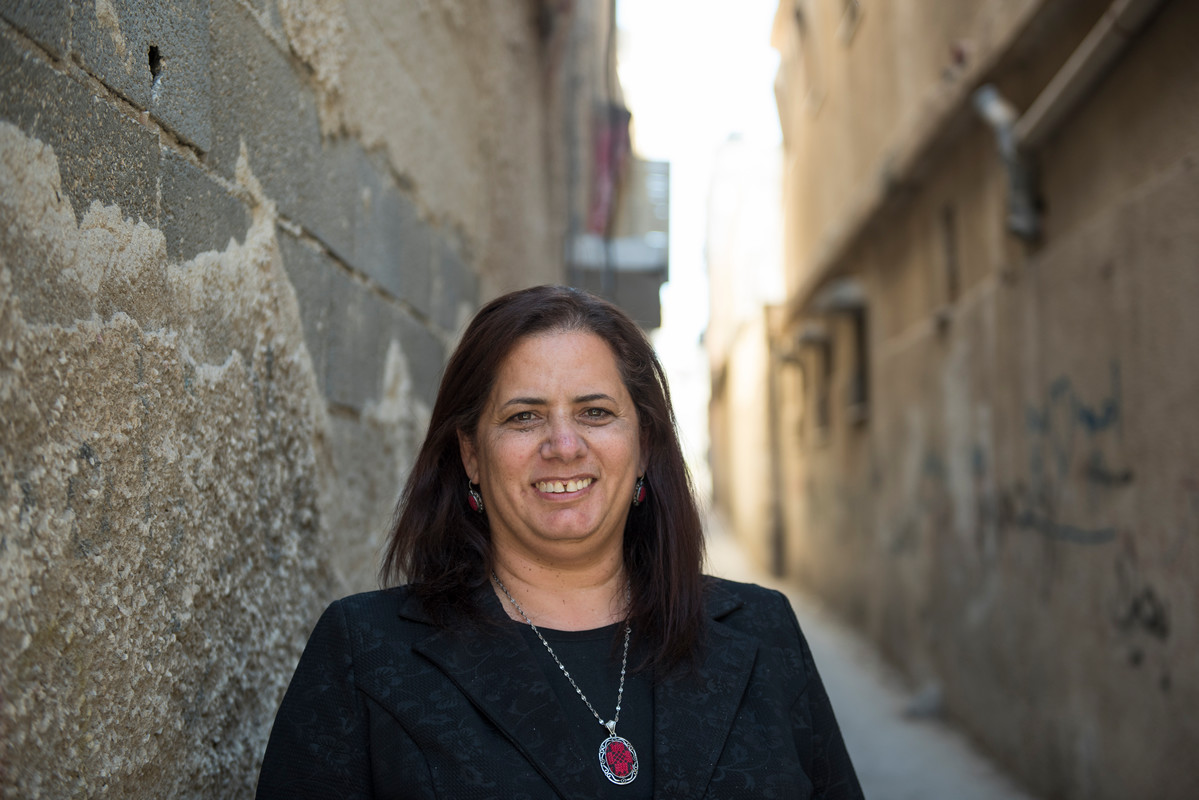
Ammal Awadallah, ED, Palestine Family Planning and Protection Association (PFPPA)
05 January 2022

Women in Leadership: Ammal Awadallah, Palestine

Ammal Awadallah began her career as a finance and administrative director for the Palestine Family Planning and Protection Association (PFPPA), a position she held for 12 years. During that time her passion in women’s rights and sexual and reproductive healthcare continued to grow, and in 2019, she took on the role of PFPPA’s Executive Director. As part of our Women in Leadership series, IPPF spoke to Ammal about leading an organization through emergency responses, pushing for change, and empowering women.  Growing up in Palestine what was your experience of sexual and reproductive health and rights (SRHR), did you receive sex education?  Although I do not recall specifically, I think it would have to have been sometime in my early teens. Although that was quite a while back, I went to a Quakers school in Palestine, and I do recall a visit from a health worker to our classroom to explain to us about family planning methods and protected sex.   What led to your interest in sexual and reproductive health?  I was always a strong supporter of women’s rights; however, it was not until I began working with PFPPA that I actually became specifically aware and developed an in-depth interest in SRHR.   Noting that although I joined the PFPPA team as a Financial Director, it was clear from the start that my role would be more than just that. I was passionate of what we were working towards, and the more information I gained the more passionate I became, I felt that what I was working towards was reflecting what I truly believe in. I found a way to support a joint goal with colleagues, not only locally and nationally but also globally through the IPPF.  How would you describe your role as Executive Director (ED) of PFPPA?  Responsibility, leadership, management, supervising, delegating, following up, monitoring, evaluating, responsibility, transparency, accountability.  How did you incorporate all these leadership skills in the recent emergency response following the airstrikes in Gaza?  Being a leader, and as the ED, I think it was truly one of my main responsibilities to be accountable both to the community (the people in Gaza) and to the donor providing the money.   We got in contact with our service providers that were living in the zone - some of them had their homes effected during the attacks on Gaza - and we were asking them what the best and safest way is to deal with it and what is best for everyone. Together we agreed on the best approach to provide sexual and reproductive services. This was a joint venture; I know what’s happening in the field from the service providers, and that they are the real heroes and I have a huge responsibility to my team. We try to be as transparent and accountable as possible.  For us as an association, working since 1964, we have been providing services within a protracted humanitarian crisis setting for decades. This has made us stronger and increased our commitment to ensure continuity to provide essential services regardless of the difficulties we encounter.    What challenges have you faced leading SRHR services in humanitarian emergencies during the COVID-19 pandemic?  Although they are numerous, the one that was extremely challenging was ensuring that our regular clients were being followed up, particularly those that were adopting methods such as condoms, pills or injections as family planning methods and feared that they would not be able to obtain these methods during the lockdowns and would result in unwanted pregnancies.   However, it was the prompt response and experience of the team in facing lockdowns imposed by the Occupational Forces in previous years that allowed them to come up with approaches to reach women in their homes directly, to lessen the chances of unwanted pregnancies occurring.   In addition, it was also a challenge to ensure that women could get in contact with our team to at least receive counselling and consultation. However, this was also quickly dealt with by utilizing social media channels to disseminate contact phone numbers of doctors, midwives, social workers, psychologists, and even lawyers. Furthermore, before a month of lockdowns passed, a free hotline was established, and a social worker was taking calls and also referring cases to the service providers mentioned earlier or to other partner associations for further assistance.   What changes have you seen in Palestine over the years when it comes to sexual health and rights?  Youth are becoming more encouraged and empowered in addressing SRHR issues. They are more outspoken, more aware and have the ability to be significant leaders and agents of change.   What areas are still taboo in Palestine, and how do you push for change?  Speaking about women's rights in general is still extremely challenging. The way we push for change is always based on respect for the opinion of others and our country context.   We try to address the topics from a scientific evidence-based approach, highlighting the positive experiences of other countries when change was made. We approach the general public in order to provide them with information and empowerment to make well informed decisions. At the same time, we work to advocate for change with decision makers.  Noting, as an Association, we are always respectful of others' opinions and work in alignment with out country's context and culture.  Can you see yourself doing anything other than what you are doing right now?  No, I don’t think so! I’ve never really thought about it. I believe in the work of NGOs, and I believe NGOSs do make an impact on the lives of people within the community. So, I feel like my work gives back. I’ve had a good life and so I feel like I should give back to my community that deserves it. So, I can’t think of ever working with anything that doesn’t involve giving back to my community to become a better place.  One of my favourite slogans for the IPPF particularly is our work being  ‘globally connected and locally owned’ which I believe supports our Association to make a stronger and more effective difference towards SRHR.  What’s the best thing about your role?  I feel like my work with the PFPPA I can make a difference in improving and empowering specifically women and youth in their lives, not only having an impact on them directly but also on those around them. Can you share an example of how you empower local women?  There are certain moments in my life when I feel like all the sleepless nights are worth it. It might not be every day, but I can tell you for example when I attend an event and women share their stories of their experiences of how through this training, they have learnt about family planning methods, and they now feel that they have the information they need to make decisions on their own.   When we have sessions for women for our survivors of sexual and gender-based violence, we continue to support with life skills training, and at times we give them small grants to begin projects and they say that with the money they are making, they are more independent and are able to have an impact on decisions made within their families, such as being they now have control of this money and are able to support their children. These are times when I say this whole year was worth it!  How do you like to spend your free time?  I laughed when I saw the words “free time”. However, all joking aside… I like to spend time with my family, I enjoy cooking and baking, and in the winter, I often like to knit (although it’s been a few years since I have had time too).   Finally, if there’s one thing in the world that you have the power to change what would that be?  For Palestinians to live in Palestine freely, independently, and with respect and dignity.   

Amal during her outreach work to end FGM in Somaliland

"Dignity, respect and bravery are guiding principles for our work on female genital mutilation (FGM)"

I left Somaliland when I was 9 years old with my mother, brother, uncles, aunts and cousins. It was the civil war and we were lucky enough to reach Canada as refugees. I remember that time as a pleasant, warm, loving time where my cousins and I had a lot of freedom to play, walk to school and daydream. I am from Somaliland so of course I am part of the 97-98% or so of girls who undergo the female genital cut. I think it happened when I was around seven years old. I remember being restrained. I remember strangers being around and I remember peeing standing up and it burning. These memories don’t come up often and they don’t cause me pain. It’s a distant, childhood event. A cousin and a niece my age were there and we went through it together and afterwards our mothers and aunts took care of us. I grew up, went to school, questioned the world and my role in it for a time, got married, had kids and eventually went back to Somaliland. There I met Edna Adan Ismail and asked to volunteer with her. She opened her office, hospital and life to me and I became immersed in the maternal health issues of the women in my home country. The effort to end FGM Most were not as lucky as I had been. Because of FGM/C (female genital mutilation/circumcision), most had experienced recurring infections and difficulties in child birth. Some had formed cysts, some became infertile, and some had obstetric fistula. But few linked these problem to the cutting. At SOFHA (Somaliland Family Health Association) we’ve been working to help women (and men) understand these links and get the help they need. That’s only a part of the work. The effort to end FGM/C in Somaliland goes back almost 40 years. FGM/C programs and projects have been happening for at least the last 25 years. We’re now at the point where it’s recognized as a legitimate, critical, health and social issue. We’re on the cusp of a law against the practice and I have personally witnessed a transformation among the individuals who engage in this work. NGO and government staff tasked with working on FGM/C used to go into communities apologetically, “Sorry but we have to talk to you about this ‘issue’, we know it’s unpleasant but bear with us” to “I have 2 daughters and I have not cut them. This is a terrible practice and we must stop it now”. It fills me with great joy to see young women and men taking this personal stance and doing it confidently and proudly. But it’s not easy for most people to do this. It certainly wasn’t for me. This is personal. This is private. Before I got into the work I might have said, “What business is it of yours anyway? Do you really want me digging into your private life? Into your past and history? I am not a victim. I may be a survivor but not in the way you think and not for the reasons you imagine. I am bigger than this. This doesn’t define me.” Dignity, bravery, respect And it may not define most Somali women. I think that’s what confuses many people. Maybe it’s because it happens in childhood and those memories are lost or hidden or maybe because mothers and grandmothers have such good intentions or maybe because it’s so universal within the community? That’s why it’s a completely different experience for a young Somali girl born and brought up somewhere else. The experience is very personal and it varies from person to person. Dignity, respect and bravery are guiding principles for our work on female genital mutilation. In Somaliland, a dynamic young generation connected to the world through the internet, and integrated multi-pronged FGM/C programming, is helping us to influence a generation of Somalis to abandon the cut and break the cycle. It’s still some distance away but we see the end in sight. Words Amal Ahmed, the executive director of our Member Association in Somaliland (SOFHA) 

Yemeni Association for Reproductive Health

Established in June 2009 as a not-for-profit voluntary non-governmental organization, the Yemeni Association for Reproductive Health (YARH) is registered with the Ministry of Social Affairs. YARH became an IPPF Member Association in 2010. YARH carries out its activities to contribute in achieving the following goals:

  • Providing services and rights in the field of high-quality reproductive health provided, enables through the outlets of partners in the public and private sectors, and information and family planning based on of voluntary acceptance and conscious choice without exerting any pressure.
  • Providing family with preventive and curative services in the field of RH/FP and Primary Health Care.
  • Participate and contribute to the implementation of sustainable development programs and humanitarian programs that promote the health and well-being of society.
  • Enhancing the commitment of decision makers to activate legislation and policies on SRH and FP methods.
  • Enhancing the role of women and youth leaderships as advocates for change.
  • Increase youth access to CSE.
  • Raising community awareness by engaging influencers and media professionals in promoting reproductive rights and health.
  • Strengthening the association’s institutional capabilities, increasing its financial resources, and diversifying its sources of income.
  • Increasing the number of volunteers and active activists in the association. 


Through 2 static clinics and 1 youth-friendly service centre, the Member Association provides quality services to the people of Yemen. It has about 484 volunteers and staff working on SRHR, HIV, CSE, and Youth issues on the promotion of awareness amongst young people to empower them to make informed decisions concerning their SRH.

YARH plays a key role in building strategic partnerships with other organisations concerned with young people's programmes in Yemen, and involves the young in identifying, articulating, implementing, monitoring and evaluating youth-friendly projects. YARH provides SRH, FP, Primary Health Care, and MCH. The average no. of services at the static clinics between 23,500 services, this number increased during our implementation projects funded by donors.  

During 2018-2019 we implemented one year project funded by both GoJ-SB, and JTF projects targeted IDP’s and host communities, services provided reached more than 65.000 clients.


Lebanese Association for Family Health

SALAMA, the Lebanese Association for Family Health, is an NGO founded in 2008 under the statement of registration No 1740. SALAMA advocates for sexual and reproductive health and rights SRHR by inducing the concerned authorities in Lebanon to support and protect SRHR, promotes and provides high quality SRH services (for children, young people, men and women), and raises awareness for all groups in the society (particularly the underserved and marginalized) in order that they make informed decisions regarding their SRHR. SALAMA is a member of different working groups and networks in Lebanon and at the Arab world regional level.

SALAMA’s objectives are:

  • Gain Support of decision makers and champions to modify, approve and activate laws and develop national strategies related to SRHR issues.
  • Strengthen partnerships with non- governmental and private organizations, women and youth groups, and champions to advocate for SRHR.
  • Empower youth on comprehensive sexuality education CSE in order to fulfill their sexual and reproductive rights.
  • Increase awareness of community and individuals on SRHR issues, stressing on engaging champions, intellectuals and media.
  • Provide high quality SRH services, particularly to the marginalized and displaced people.
  • Enable SRH services especially to the marginalized and displaced people through other stakeholders.
  • Enhance The effectiveness of the association & Mobilize Resources.
  • Expand the volunteers and activists base and enhance their capacities.

SALAMA has 1 clinic in Bekaa- Zahle (Karak), targeting around 4,000 beneficiaries and providing around 40,000 services per year.


Association Algérienne pour la Planification Familiale

The Algerian Association for Family Planning (AAPF) is a non-profit, non-governmental organisation (NGO), created in 1987. The Algerian Association for Family Planning works for the well-being and development of the individual and the family and promotion of sexual and reproductive rights, and the rights of women and young people.

Vision:

An Algeria where all individuals make free and informed choices and enjoy full sexual and reproductive health rights, without discrimination or stigma.

Mission:

To advocate for rights, facilitate sexual and reproductive health services, and ensure access to information for all, especially for vulnerable and underserved groups.

AAPF believes:

  • In social inclusion, with a commitment to vulnerable and underserved populations to benefit from sexual and reproductive health rights.
  • In diversity and respect for all people without discrimination.
  • That passion inspires and encourages adherence to and advocacy for sexual and reproductive health rights.
  • That accountability requires transparency and performance that meets the expectations of partners and beneficiaries.

Objectives and targets include:

  • Strengthen the commitment of decision-makers to improve the legislative and policy framework for sexual and reproductive health rights, policies in favour of sexual and reproductive health rights and improve the legislative and policy framework for sexual and reproductive health rights. 
  • To increase the support and commitment of civil society, particularly women's and youth groups, to the defence of sexual and reproductive health rights.
  • Improve access to comprehensive sexuality education for young people.
  • To increase the population's knowledge of sexual and reproductive health rights.
  • To increase the supply of quality sexual and reproductive health services in collaboration with health partners.
  • To improve the operational efficiency and double the income of AAPF.
  • Expand the base of volunteers and people interested and involved. 


Bahrain Reproductive Health Association

The Bahrain Reproductive Health Association (BRHA) is a public association, but does not provide any clinical services. It was established on 1975, by a group of Bahraini youth to serve the Bahrain community with commitment and accountability towards national and human responsibility. 

Through voluntary trained and specialized personnel, SRH targets include: 

  • Increase awareness and knowledge about reproductive health and the importance of family planning as a human need for the community.
  • Increase women's knowledge about their reproductive rights, and enable them to practice their rights and make their own decisions. 
  • Increase men's responsibility and participation in reproductive health issues.
  • Prepare youth for parenthood responsibilities, and improve care provided to adolescents.
  • Communicate with decision makers and community leaders to support positive attitude towards reproductive health. 

These are achieved by the following:

  • Increase awareness about reproductive health among the community through seminars, lectures, leaflets and educational articles. 
  • Train volunteers to become specialists in reproductive health and family planning.
  • Provide reproductive health counselling through the counselling centre in the association.
  • Increase cooperation and coordination with governmental authorities, associations, social clubs and different media facilities to promote reproductive health.
  • Increase cooperation and coordination with all agents concerned in combating and preventing HIV. 

Association Mauritanienne pour la Promotion de la Famille

The Mauritanian Association for the Promotion of the Family is a member association of the IPPF. It was created in 1988 and works mainly in the provision of SRH/FP services. AMPF works to ensure that all individuals, especially the underserved and vulnerable, have access to high quality SRH information and services.

Services are delivered through 4 fixed centers (Dar Naim, Carrefour, Rosso, Nouadhibou): 

  • 2 maternity centers (1 in the Malian refugee camp in M'Berra and 1 in Dar Naim);
  • 3 mobile teams and 4 youth information and education centers (1 in Rosso, 1 in Kaédi,
  • 1 in Dar Naim and 1 in Nouadhibou)


Association Marocaine de Planification Familiale

The Moroccan Family Planning Association (AMPF) is a non-governmental organization, created in 1971 and recognized as being of public utility in 1972. AMPF is under the Honorary Presidency of Her Royal Highness Lalla Meryem and the effective Presidency of Mrs. Zahara Meziane Ammor.

The Moroccan Family Planning Association (AMPF) is a member of the International Planned Parenthood Federation (IPPF) since 1971. Thus, it is part of a civil society movement, present internationally and managed locally and nationally, that provides and facilitates access to sexual and reproductive health services and advocates for the rights of all individuals without discrimination or stigmatization: women, youth, and men, especially the underserved and marginalized groups.

AMPF's mission is to promote Sexual and Reproductive Health Rights (SRHR), provide comprehensive and quality sexual and reproductive health services, and facilitate access to SRH services for the population, especially the underserved and vulnerable.

This mission is part of a global vision of a Morocco where all individuals enjoy their SRH rights and exercise free, informed choice without stigma or discrimination.

Our values are:

  • Accountability
  • Social Inclusion
  • Volunteerism
  • Diversity
  • Commitment

AMPF has 8 branch committees, about more than 110 active volunteers, several branch youth committees with 1000 youth in total, 27 Service Delivery Centers and an offer of 398,000 various services performed for the benefit of the population in 2019.

The main services we offer are gyneacological consultations, ultrasound, screening tests, and biological tests and family planning counselling. Other types of consultations are also available to meet the needs of our beneficiaries.


Palestinian Family Planning and Protection Association (PFPPA)

Established in Jerusalem in 1964, the Palestinian Family Planning and Protection Association (PFPPA) is locally registered as an independent, non-profit and non-governmental associations with its headquarter office being in Jerusalem.

According to PFPPA’s 2016- 2022 Strategic plan, it aims to:

  • Modify policies and decisions to respect Sexual Reproductive Health Rights (SRHR) and gender equity.
  • Provide information for people to make well informed decision and choices regarding their SRHR.
  • Deliver rights based, high quality integrated SRH services. 
  • Enhance the association is high performing, efficient, transparent and accountable.

PFPPA has service delivery points, located in the West Bank Areas of Ramallah, Bethlehem, Hebron and Halhoul, in addition to one in the Gaza Strip. Furthermore, and in cooperation with local partners PFPPA is also responsible for 5 safe spaces to provide Gender Based Violence (GBV) related services in the Jerusalem area.

PFPPA is known for the provision of comprehensive and diverse services, mainly related to:

  • Sexual and reproductive health services (including that related to GBV), particularly for girls and women.
  • Demand generation and mobile medical team activities reaching the most marginalized groups and areas. 
  • Raising awareness on SRH including comprehensive sexuality education (in and out of schools). 
  • Mobilizing activists and civil society actors to advocate for reforming laws that advance SRH and influence national policy.
  • Conducting applied national studies related to unmet SRH needs. 
  • Training for young leaders, staff, service providers and community leaders from local governmental and non-governmental organizations. 

In the past two years alone, PFPPA has been able to reach nearly 190,000 clients with over 850,000 services, over 80% being poor and vulnerable and over 85% being female also noting the vast majority being served within a humanitarian context.

Somaliland Family Health Association

The Somaliland Family Health Association (SOFHA) is a community-based organization rooted in improving the SRHR lives of the communities we serve. Our aim is to provide more direct SRH services, advance legislation that supports quality SRHR and reach a broad range of community members, especially young people and the poor. 

In our 2 clinics we serve around 4000 women and girls each year. We provide comprehensive integrated SRH services including antenatal, postnatal, delivery, family planning and paediatric services. We also reach 1,000s of women, young people and men each year in our community health education programmes. 


Ammal Awadallah, ED, Palestine Family Planning and Protection Association (PFPPA)
05 January 2022

Women in Leadership: Ammal Awadallah, Palestine

Ammal Awadallah began her career as a finance and administrative director for the Palestine Family Planning and Protection Association (PFPPA), a position she held for 12 years. During that time her passion in women’s rights and sexual and reproductive healthcare continued to grow, and in 2019, she took on the role of PFPPA’s Executive Director. As part of our Women in Leadership series, IPPF spoke to Ammal about leading an organization through emergency responses, pushing for change, and empowering women.  Growing up in Palestine what was your experience of sexual and reproductive health and rights (SRHR), did you receive sex education?  Although I do not recall specifically, I think it would have to have been sometime in my early teens. Although that was quite a while back, I went to a Quakers school in Palestine, and I do recall a visit from a health worker to our classroom to explain to us about family planning methods and protected sex.   What led to your interest in sexual and reproductive health?  I was always a strong supporter of women’s rights; however, it was not until I began working with PFPPA that I actually became specifically aware and developed an in-depth interest in SRHR.   Noting that although I joined the PFPPA team as a Financial Director, it was clear from the start that my role would be more than just that. I was passionate of what we were working towards, and the more information I gained the more passionate I became, I felt that what I was working towards was reflecting what I truly believe in. I found a way to support a joint goal with colleagues, not only locally and nationally but also globally through the IPPF.  How would you describe your role as Executive Director (ED) of PFPPA?  Responsibility, leadership, management, supervising, delegating, following up, monitoring, evaluating, responsibility, transparency, accountability.  How did you incorporate all these leadership skills in the recent emergency response following the airstrikes in Gaza?  Being a leader, and as the ED, I think it was truly one of my main responsibilities to be accountable both to the community (the people in Gaza) and to the donor providing the money.   We got in contact with our service providers that were living in the zone - some of them had their homes effected during the attacks on Gaza - and we were asking them what the best and safest way is to deal with it and what is best for everyone. Together we agreed on the best approach to provide sexual and reproductive services. This was a joint venture; I know what’s happening in the field from the service providers, and that they are the real heroes and I have a huge responsibility to my team. We try to be as transparent and accountable as possible.  For us as an association, working since 1964, we have been providing services within a protracted humanitarian crisis setting for decades. This has made us stronger and increased our commitment to ensure continuity to provide essential services regardless of the difficulties we encounter.    What challenges have you faced leading SRHR services in humanitarian emergencies during the COVID-19 pandemic?  Although they are numerous, the one that was extremely challenging was ensuring that our regular clients were being followed up, particularly those that were adopting methods such as condoms, pills or injections as family planning methods and feared that they would not be able to obtain these methods during the lockdowns and would result in unwanted pregnancies.   However, it was the prompt response and experience of the team in facing lockdowns imposed by the Occupational Forces in previous years that allowed them to come up with approaches to reach women in their homes directly, to lessen the chances of unwanted pregnancies occurring.   In addition, it was also a challenge to ensure that women could get in contact with our team to at least receive counselling and consultation. However, this was also quickly dealt with by utilizing social media channels to disseminate contact phone numbers of doctors, midwives, social workers, psychologists, and even lawyers. Furthermore, before a month of lockdowns passed, a free hotline was established, and a social worker was taking calls and also referring cases to the service providers mentioned earlier or to other partner associations for further assistance.   What changes have you seen in Palestine over the years when it comes to sexual health and rights?  Youth are becoming more encouraged and empowered in addressing SRHR issues. They are more outspoken, more aware and have the ability to be significant leaders and agents of change.   What areas are still taboo in Palestine, and how do you push for change?  Speaking about women's rights in general is still extremely challenging. The way we push for change is always based on respect for the opinion of others and our country context.   We try to address the topics from a scientific evidence-based approach, highlighting the positive experiences of other countries when change was made. We approach the general public in order to provide them with information and empowerment to make well informed decisions. At the same time, we work to advocate for change with decision makers.  Noting, as an Association, we are always respectful of others' opinions and work in alignment with out country's context and culture.  Can you see yourself doing anything other than what you are doing right now?  No, I don’t think so! I’ve never really thought about it. I believe in the work of NGOs, and I believe NGOSs do make an impact on the lives of people within the community. So, I feel like my work gives back. I’ve had a good life and so I feel like I should give back to my community that deserves it. So, I can’t think of ever working with anything that doesn’t involve giving back to my community to become a better place.  One of my favourite slogans for the IPPF particularly is our work being  ‘globally connected and locally owned’ which I believe supports our Association to make a stronger and more effective difference towards SRHR.  What’s the best thing about your role?  I feel like my work with the PFPPA I can make a difference in improving and empowering specifically women and youth in their lives, not only having an impact on them directly but also on those around them. Can you share an example of how you empower local women?  There are certain moments in my life when I feel like all the sleepless nights are worth it. It might not be every day, but I can tell you for example when I attend an event and women share their stories of their experiences of how through this training, they have learnt about family planning methods, and they now feel that they have the information they need to make decisions on their own.   When we have sessions for women for our survivors of sexual and gender-based violence, we continue to support with life skills training, and at times we give them small grants to begin projects and they say that with the money they are making, they are more independent and are able to have an impact on decisions made within their families, such as being they now have control of this money and are able to support their children. These are times when I say this whole year was worth it!  How do you like to spend your free time?  I laughed when I saw the words “free time”. However, all joking aside… I like to spend time with my family, I enjoy cooking and baking, and in the winter, I often like to knit (although it’s been a few years since I have had time too).   Finally, if there’s one thing in the world that you have the power to change what would that be?  For Palestinians to live in Palestine freely, independently, and with respect and dignity.   

Amal during her outreach work to end FGM in Somaliland

"Dignity, respect and bravery are guiding principles for our work on female genital mutilation (FGM)"

I left Somaliland when I was 9 years old with my mother, brother, uncles, aunts and cousins. It was the civil war and we were lucky enough to reach Canada as refugees. I remember that time as a pleasant, warm, loving time where my cousins and I had a lot of freedom to play, walk to school and daydream. I am from Somaliland so of course I am part of the 97-98% or so of girls who undergo the female genital cut. I think it happened when I was around seven years old. I remember being restrained. I remember strangers being around and I remember peeing standing up and it burning. These memories don’t come up often and they don’t cause me pain. It’s a distant, childhood event. A cousin and a niece my age were there and we went through it together and afterwards our mothers and aunts took care of us. I grew up, went to school, questioned the world and my role in it for a time, got married, had kids and eventually went back to Somaliland. There I met Edna Adan Ismail and asked to volunteer with her. She opened her office, hospital and life to me and I became immersed in the maternal health issues of the women in my home country. The effort to end FGM Most were not as lucky as I had been. Because of FGM/C (female genital mutilation/circumcision), most had experienced recurring infections and difficulties in child birth. Some had formed cysts, some became infertile, and some had obstetric fistula. But few linked these problem to the cutting. At SOFHA (Somaliland Family Health Association) we’ve been working to help women (and men) understand these links and get the help they need. That’s only a part of the work. The effort to end FGM/C in Somaliland goes back almost 40 years. FGM/C programs and projects have been happening for at least the last 25 years. We’re now at the point where it’s recognized as a legitimate, critical, health and social issue. We’re on the cusp of a law against the practice and I have personally witnessed a transformation among the individuals who engage in this work. NGO and government staff tasked with working on FGM/C used to go into communities apologetically, “Sorry but we have to talk to you about this ‘issue’, we know it’s unpleasant but bear with us” to “I have 2 daughters and I have not cut them. This is a terrible practice and we must stop it now”. It fills me with great joy to see young women and men taking this personal stance and doing it confidently and proudly. But it’s not easy for most people to do this. It certainly wasn’t for me. This is personal. This is private. Before I got into the work I might have said, “What business is it of yours anyway? Do you really want me digging into your private life? Into your past and history? I am not a victim. I may be a survivor but not in the way you think and not for the reasons you imagine. I am bigger than this. This doesn’t define me.” Dignity, bravery, respect And it may not define most Somali women. I think that’s what confuses many people. Maybe it’s because it happens in childhood and those memories are lost or hidden or maybe because mothers and grandmothers have such good intentions or maybe because it’s so universal within the community? That’s why it’s a completely different experience for a young Somali girl born and brought up somewhere else. The experience is very personal and it varies from person to person. Dignity, respect and bravery are guiding principles for our work on female genital mutilation. In Somaliland, a dynamic young generation connected to the world through the internet, and integrated multi-pronged FGM/C programming, is helping us to influence a generation of Somalis to abandon the cut and break the cycle. It’s still some distance away but we see the end in sight. Words Amal Ahmed, the executive director of our Member Association in Somaliland (SOFHA) 

Yemeni Association for Reproductive Health

Established in June 2009 as a not-for-profit voluntary non-governmental organization, the Yemeni Association for Reproductive Health (YARH) is registered with the Ministry of Social Affairs. YARH became an IPPF Member Association in 2010. YARH carries out its activities to contribute in achieving the following goals:

  • Providing services and rights in the field of high-quality reproductive health provided, enables through the outlets of partners in the public and private sectors, and information and family planning based on of voluntary acceptance and conscious choice without exerting any pressure.
  • Providing family with preventive and curative services in the field of RH/FP and Primary Health Care.
  • Participate and contribute to the implementation of sustainable development programs and humanitarian programs that promote the health and well-being of society.
  • Enhancing the commitment of decision makers to activate legislation and policies on SRH and FP methods.
  • Enhancing the role of women and youth leaderships as advocates for change.
  • Increase youth access to CSE.
  • Raising community awareness by engaging influencers and media professionals in promoting reproductive rights and health.
  • Strengthening the association’s institutional capabilities, increasing its financial resources, and diversifying its sources of income.
  • Increasing the number of volunteers and active activists in the association. 


Through 2 static clinics and 1 youth-friendly service centre, the Member Association provides quality services to the people of Yemen. It has about 484 volunteers and staff working on SRHR, HIV, CSE, and Youth issues on the promotion of awareness amongst young people to empower them to make informed decisions concerning their SRH.

YARH plays a key role in building strategic partnerships with other organisations concerned with young people's programmes in Yemen, and involves the young in identifying, articulating, implementing, monitoring and evaluating youth-friendly projects. YARH provides SRH, FP, Primary Health Care, and MCH. The average no. of services at the static clinics between 23,500 services, this number increased during our implementation projects funded by donors.  

During 2018-2019 we implemented one year project funded by both GoJ-SB, and JTF projects targeted IDP’s and host communities, services provided reached more than 65.000 clients.


Lebanese Association for Family Health

SALAMA, the Lebanese Association for Family Health, is an NGO founded in 2008 under the statement of registration No 1740. SALAMA advocates for sexual and reproductive health and rights SRHR by inducing the concerned authorities in Lebanon to support and protect SRHR, promotes and provides high quality SRH services (for children, young people, men and women), and raises awareness for all groups in the society (particularly the underserved and marginalized) in order that they make informed decisions regarding their SRHR. SALAMA is a member of different working groups and networks in Lebanon and at the Arab world regional level.

SALAMA’s objectives are:

  • Gain Support of decision makers and champions to modify, approve and activate laws and develop national strategies related to SRHR issues.
  • Strengthen partnerships with non- governmental and private organizations, women and youth groups, and champions to advocate for SRHR.
  • Empower youth on comprehensive sexuality education CSE in order to fulfill their sexual and reproductive rights.
  • Increase awareness of community and individuals on SRHR issues, stressing on engaging champions, intellectuals and media.
  • Provide high quality SRH services, particularly to the marginalized and displaced people.
  • Enable SRH services especially to the marginalized and displaced people through other stakeholders.
  • Enhance The effectiveness of the association & Mobilize Resources.
  • Expand the volunteers and activists base and enhance their capacities.

SALAMA has 1 clinic in Bekaa- Zahle (Karak), targeting around 4,000 beneficiaries and providing around 40,000 services per year.


Association Algérienne pour la Planification Familiale

The Algerian Association for Family Planning (AAPF) is a non-profit, non-governmental organisation (NGO), created in 1987. The Algerian Association for Family Planning works for the well-being and development of the individual and the family and promotion of sexual and reproductive rights, and the rights of women and young people.

Vision:

An Algeria where all individuals make free and informed choices and enjoy full sexual and reproductive health rights, without discrimination or stigma.

Mission:

To advocate for rights, facilitate sexual and reproductive health services, and ensure access to information for all, especially for vulnerable and underserved groups.

AAPF believes:

  • In social inclusion, with a commitment to vulnerable and underserved populations to benefit from sexual and reproductive health rights.
  • In diversity and respect for all people without discrimination.
  • That passion inspires and encourages adherence to and advocacy for sexual and reproductive health rights.
  • That accountability requires transparency and performance that meets the expectations of partners and beneficiaries.

Objectives and targets include:

  • Strengthen the commitment of decision-makers to improve the legislative and policy framework for sexual and reproductive health rights, policies in favour of sexual and reproductive health rights and improve the legislative and policy framework for sexual and reproductive health rights. 
  • To increase the support and commitment of civil society, particularly women's and youth groups, to the defence of sexual and reproductive health rights.
  • Improve access to comprehensive sexuality education for young people.
  • To increase the population's knowledge of sexual and reproductive health rights.
  • To increase the supply of quality sexual and reproductive health services in collaboration with health partners.
  • To improve the operational efficiency and double the income of AAPF.
  • Expand the base of volunteers and people interested and involved. 


Bahrain Reproductive Health Association

The Bahrain Reproductive Health Association (BRHA) is a public association, but does not provide any clinical services. It was established on 1975, by a group of Bahraini youth to serve the Bahrain community with commitment and accountability towards national and human responsibility. 

Through voluntary trained and specialized personnel, SRH targets include: 

  • Increase awareness and knowledge about reproductive health and the importance of family planning as a human need for the community.
  • Increase women's knowledge about their reproductive rights, and enable them to practice their rights and make their own decisions. 
  • Increase men's responsibility and participation in reproductive health issues.
  • Prepare youth for parenthood responsibilities, and improve care provided to adolescents.
  • Communicate with decision makers and community leaders to support positive attitude towards reproductive health. 

These are achieved by the following:

  • Increase awareness about reproductive health among the community through seminars, lectures, leaflets and educational articles. 
  • Train volunteers to become specialists in reproductive health and family planning.
  • Provide reproductive health counselling through the counselling centre in the association.
  • Increase cooperation and coordination with governmental authorities, associations, social clubs and different media facilities to promote reproductive health.
  • Increase cooperation and coordination with all agents concerned in combating and preventing HIV. 

Association Mauritanienne pour la Promotion de la Famille

The Mauritanian Association for the Promotion of the Family is a member association of the IPPF. It was created in 1988 and works mainly in the provision of SRH/FP services. AMPF works to ensure that all individuals, especially the underserved and vulnerable, have access to high quality SRH information and services.

Services are delivered through 4 fixed centers (Dar Naim, Carrefour, Rosso, Nouadhibou): 

  • 2 maternity centers (1 in the Malian refugee camp in M'Berra and 1 in Dar Naim);
  • 3 mobile teams and 4 youth information and education centers (1 in Rosso, 1 in Kaédi,
  • 1 in Dar Naim and 1 in Nouadhibou)


Association Marocaine de Planification Familiale

The Moroccan Family Planning Association (AMPF) is a non-governmental organization, created in 1971 and recognized as being of public utility in 1972. AMPF is under the Honorary Presidency of Her Royal Highness Lalla Meryem and the effective Presidency of Mrs. Zahara Meziane Ammor.

The Moroccan Family Planning Association (AMPF) is a member of the International Planned Parenthood Federation (IPPF) since 1971. Thus, it is part of a civil society movement, present internationally and managed locally and nationally, that provides and facilitates access to sexual and reproductive health services and advocates for the rights of all individuals without discrimination or stigmatization: women, youth, and men, especially the underserved and marginalized groups.

AMPF's mission is to promote Sexual and Reproductive Health Rights (SRHR), provide comprehensive and quality sexual and reproductive health services, and facilitate access to SRH services for the population, especially the underserved and vulnerable.

This mission is part of a global vision of a Morocco where all individuals enjoy their SRH rights and exercise free, informed choice without stigma or discrimination.

Our values are:

  • Accountability
  • Social Inclusion
  • Volunteerism
  • Diversity
  • Commitment

AMPF has 8 branch committees, about more than 110 active volunteers, several branch youth committees with 1000 youth in total, 27 Service Delivery Centers and an offer of 398,000 various services performed for the benefit of the population in 2019.

The main services we offer are gyneacological consultations, ultrasound, screening tests, and biological tests and family planning counselling. Other types of consultations are also available to meet the needs of our beneficiaries.


Palestinian Family Planning and Protection Association (PFPPA)

Established in Jerusalem in 1964, the Palestinian Family Planning and Protection Association (PFPPA) is locally registered as an independent, non-profit and non-governmental associations with its headquarter office being in Jerusalem.

According to PFPPA’s 2016- 2022 Strategic plan, it aims to:

  • Modify policies and decisions to respect Sexual Reproductive Health Rights (SRHR) and gender equity.
  • Provide information for people to make well informed decision and choices regarding their SRHR.
  • Deliver rights based, high quality integrated SRH services. 
  • Enhance the association is high performing, efficient, transparent and accountable.

PFPPA has service delivery points, located in the West Bank Areas of Ramallah, Bethlehem, Hebron and Halhoul, in addition to one in the Gaza Strip. Furthermore, and in cooperation with local partners PFPPA is also responsible for 5 safe spaces to provide Gender Based Violence (GBV) related services in the Jerusalem area.

PFPPA is known for the provision of comprehensive and diverse services, mainly related to:

  • Sexual and reproductive health services (including that related to GBV), particularly for girls and women.
  • Demand generation and mobile medical team activities reaching the most marginalized groups and areas. 
  • Raising awareness on SRH including comprehensive sexuality education (in and out of schools). 
  • Mobilizing activists and civil society actors to advocate for reforming laws that advance SRH and influence national policy.
  • Conducting applied national studies related to unmet SRH needs. 
  • Training for young leaders, staff, service providers and community leaders from local governmental and non-governmental organizations. 

In the past two years alone, PFPPA has been able to reach nearly 190,000 clients with over 850,000 services, over 80% being poor and vulnerable and over 85% being female also noting the vast majority being served within a humanitarian context.

Somaliland Family Health Association

The Somaliland Family Health Association (SOFHA) is a community-based organization rooted in improving the SRHR lives of the communities we serve. Our aim is to provide more direct SRH services, advance legislation that supports quality SRHR and reach a broad range of community members, especially young people and the poor. 

In our 2 clinics we serve around 4000 women and girls each year. We provide comprehensive integrated SRH services including antenatal, postnatal, delivery, family planning and paediatric services. We also reach 1,000s of women, young people and men each year in our community health education programmes.